
Wisdom Tooth Extraction: A Specialist Surgeon’s Perspective on Oral Health and Total Rehabilitation

What if the decision to delay your wisdom tooth extraction isn't just about avoiding a few days of discomfort, but is actually risking the structural integrity of your entire smile? In my clinical experience, I've seen how silent impactions lead to significant bone loss or the crowding of perfectly aligned teeth. Data from the American Association of Oral and Maxillofacial Surgeons indicates that 85% of these teeth eventually require removal to prevent disease, yet the fear of surgical pain often prevents proactive care.
I understand the trepidation you might feel. You're likely concerned about nerve safety, sedation protocols, or how much time you'll need to take away from your professional life. I believe that a deep understanding of the procedure is the best antidote to anxiety. My goal is to provide you with a specialist's perspective on how we transform a routine surgery into a precise, science-led step toward total oral rehabilitation and long-term well-being.
In this guide, I'll walk you through the advanced diagnostics we use to protect your delicate facial nerves and the meticulous recovery protocols that ensure your transition back to daily life is seamless. We'll examine the surgical precision required for complex cases and why a foundation of clinical mastery is essential for a truly pain-free outcome.
Key Takeaways
Understand the biological evolution of the third molar and why modern jaw structures often necessitate surgical intervention to preserve oral health.
Discover how high-resolution CBCT 3D imaging enhances the precision of a wisdom tooth extraction by safeguarding critical structures like the inferior alveolar nerve.
Learn about my treatment philosophy of minimising surgical trauma through advanced sedation options to ensure a seamless and comfortable patient experience.
Gain insights into the biological timeline of tissue repair and the essential protocols required to manage inflammation effectively during the first 24 hours.
Recognise the importance of proactive management in achieving total rehabilitation and protecting your long-term quality of life.
Table of Contents The Biological Reality of Wisdom Tooth Impaction Advanced Diagnostics: Why Precision Matters in Oral Surgery The Surgical Philosophy: Prioritising Comfort and Clinical Excellence Recovery and Beyond: Navigating the Post-Surgical Journey My Perspective: The Long-term Impact of Proactive Management
The Biological Reality of Wisdom Tooth Impaction
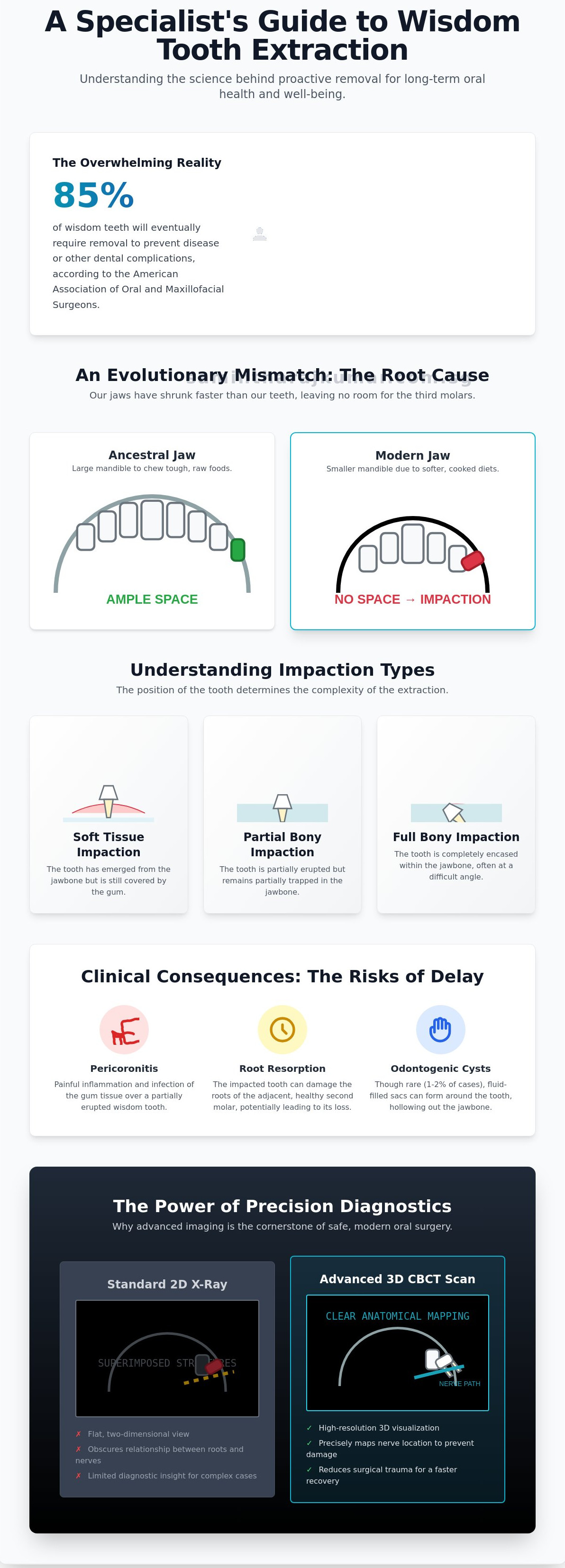
The third molar, or wisdom tooth, is a vestigial remnant of our ancestral past. Approximately 10,000 years ago, our hunter-gatherer predecessors required these robust teeth to process a diet of raw roots, nuts, and tough meats. However, as human diets softened and our brain cases expanded, our jaw size significantly decreased. This evolutionary mismatch is the fundamental reason for impacted wisdom teeth; there is simply no longer enough room in the modern mandible for these teeth to emerge correctly.
To better understand this concept, watch this helpful video:
The Problem: Why Wisdom Teeth Become Impacted
Impaction occurs when a tooth fails to reach its functional position because it's obstructed by other teeth, bone, or dense gingival tissue. From a biological perspective, the "lack of space" dilemma is the primary driver for wisdom tooth extraction. When a tooth is angled horizontally or vertically against the second molar, it creates a stagnant environment for bacteria. I typically categorise these based on their depth and orientation:
Soft Tissue Impaction: The crown has pierced the bone but remains covered by the gum line.
Partial Bony Impaction: The tooth is partially encased in the jawbone, making it difficult to clean.
Full Bony Impaction: The tooth is entirely trapped within the jaw, often lying at a difficult angle.
Clinical Consequences: Why Proactive Removal Matters
Neglecting an impacted tooth often leads to chronic clinical issues that extend beyond simple toothache. Pericoronitis is a common result, where the gum flap over a partially erupted tooth becomes a reservoir for food debris. This leads to recurrent inflammation and infection. In my clinical experience, early detection is the cornerstone of preventing future complications. If left unaddressed, impacted molars can cause root resorption of the adjacent second molars, potentially compromising two teeth instead of one.
More significantly, the fluid-filled sac that surrounds an unerupted tooth can occasionally develop into odontogenic cysts. While these occur in roughly 1% to 2% of patients, they can expand and hollow out portions of the jawbone if not monitored. As a clinician and founder, I advocate for early screening. Addressing these issues before the roots are fully formed, usually between ages 17 and 21, ensures a more predictable wisdom tooth extraction and a faster recovery. The best outcomes begin with understanding the root cause of the discomfort.
Advanced Diagnostics: Why Precision Matters in Oral Surgery
In my clinical experience, the success of a complex wisdom tooth extraction isn't determined solely by the surgeon’s hand, but by the depth of the initial diagnostic insight. We've moved beyond the era of flat, 2D panoramic X-rays. While these traditional scans provide a basic overview, they often obscure the intricate relationship between the tooth roots and the surrounding anatomy. As a clinician and founder, I've seen how precision at the diagnostic stage significantly dictates the ease of the patient's recovery.
The Role of 3D CBCT Imaging
Cone Beam Computed Tomography (CBCT) is the gold standard for modern oral surgery, providing high-resolution 3D visualisations that traditional imaging cannot match. From a biological perspective, my primary concern is often the proximity of the tooth to the inferior alveolar nerve. Damaging this structure can lead to permanent paraesthesia, a risk we mitigate through meticulous 3D mapping. By understanding the exact millimetre of clearance, we reduce surgical trauma and ensure a more predictable recovery journey.
This level of detail is vital when assessing the symptoms and causes of impacted wisdom teeth, as it allows us to see how the impaction affects adjacent structures in three dimensions. In my practice, we've found that using CBCT can improve the identification of nerve positioning by over 25% compared to standard 2D imaging, allowing for a safer approach to every wisdom tooth extraction.
AI and Digital Planning in Oral Surgery
I've integrated AI-assisted diagnostics into our workflow to enhance surgical predictability. AI algorithms are now capable of identifying subtle pathologies or bone density variations that might be missed by the human eye during a routine review. We use these digital insights to conduct virtual surgical simulations before the patient even enters the theatre. This allows us to plan the most conservative entry point, which directly translates to less time under anaesthesia and a lower risk of post-operative swelling.
Virtual Simulations: We map the entire procedure digitally to avoid vital structures.
Conservative Entry: Smaller incisions lead to faster healing and less discomfort.
Enhanced Safety: AI provides a second set of objective "eyes" to verify clinical findings.
Digital treatment planning transforms the procedure from a reactive process into a precision-engineered intervention. I believe that technology should never replace the clinician’s intuition; it should inform it. When we combine AI-driven data with years of surgical expertise, we move closer to my goal of total rehabilitation with minimal patient discomfort. True clinical excellence is found in the details that aren't visible to the naked eye. Understanding your unique anatomy is the first step toward a confident surgical journey.
The Surgical Philosophy: Prioritising Comfort and Clinical Excellence
In my clinical experience, the success of a wisdom tooth extraction isn't measured solely by the removal of the tooth, but by the speed and quality of the patient's recovery. My philosophy centres on minimising surgical trauma to maximise the body's innate healing potential. From a biological perspective, every millimetre of bone preserved during surgery equates to a faster return to normal function and better long-term jaw health.
We've moved beyond the era of traditional force. As a clinician and founder, I advocate for a sterile, specialist-led environment where precision is the primary tool. This level of care is vital when navigating the post-surgical journey, as the surgical technique directly influences the inflammatory response. Whether a case requires local anaesthesia, IV sedation, or general anaesthesia, our goal is total rehabilitation. We ensure the extraction site heals with optimal bone density, preventing the "hollowing" effect that can sometimes follow less meticulous procedures.
Minimally Invasive Techniques
Precision is the hallmark of modern oral surgery. At Nuffield Dental, I have integrated piezoelectric surgery into our standard protocols for complex cases. Unlike traditional rotary drills that can catch soft tissue, piezoelectric technology uses ultrasonic vibrations to selectively cut mineralised bone. This spares the surrounding nerves and blood vessels, which is critical for safety during a wisdom tooth extraction near the alveolar nerve.
Bone-Sparing Precision: Piezoelectric inserts allow for thinner cuts, preserving more of the patient's natural bone architecture.
Soft Tissue Protection: Specialised instrumentation ensures that the gums and delicate membranes remain intact, reducing post-operative bleeding.
Enhanced Healing: Clinical data suggests that ultrasonic bone surgery can reduce post-operative swelling by approximately 25% to 30% compared to conventional methods.
Sedation and Patient Comfort
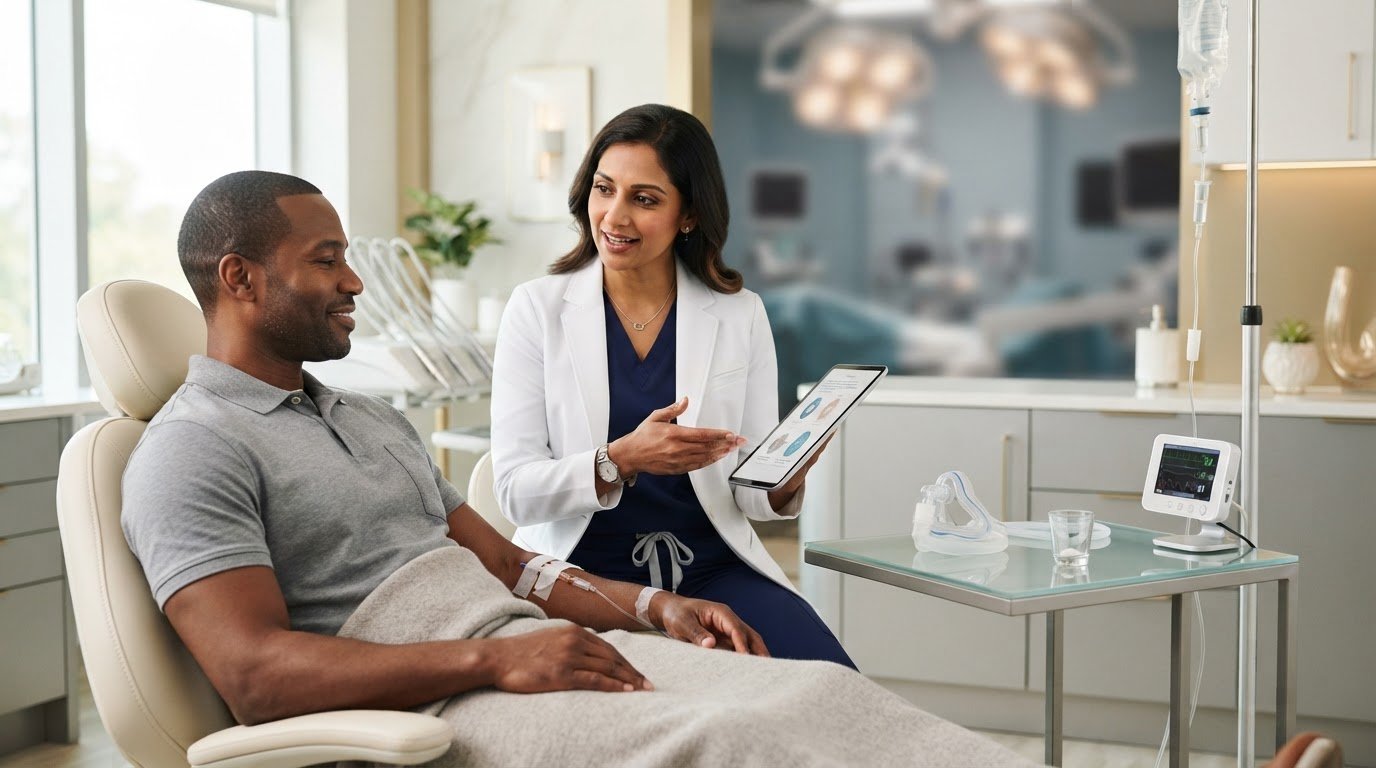
Addressing dental phobia is as important as the surgery itself. I believe that a patient's psychological well-being is intrinsically linked to their physiological recovery. For complex or multi-tooth cases, we provide personalised sedation protocols managed by a dedicated anaesthetist. This ensures the patient remains in a state of deep relaxation while their vitals are monitored with hospital-grade equipment.
By removing the "barrier of fear," we can perform more comprehensive procedures in a single session. This seamless, anxiety-free experience allows for a more controlled surgical environment, leading to the life-changing results our patients expect. The right diagnosis and a calm environment change everything.
Recovery and Beyond: Navigating the Post-Surgical Journey
In my clinical experience, the procedure is only half the journey. The biological process of tissue repair begins the moment you leave the chair. I often tell my patients that the first 24 hours are foundational. We focus on establishing a stable blood clot, which acts as a protective seal over the bone and nerve endings. During this window, you should avoid rinsing vigorously or using straws, as the negative pressure can dislodge the clot and lead to alveolar osteitis. I prioritise a seamless transition from surgery to home care, ensuring you have the tools to manage both comfort and clotting effectively.
The First 72 Hours: Critical Care
Managing a wisdom tooth extraction site requires a disciplined approach. You'll likely experience peak swelling between 48 and 72 hours. This is a natural inflammatory response. To manage this effectively, I recommend a structured protocol:
Apply cold compresses to the cheek in 20-minute intervals during the first day to constrict blood vessels and limit oedema.
Stick to a soft-food diet including lukewarm soups, congee, or blended smoothies to avoid mechanical irritation of the wound.
Elevate your head while sleeping to reduce local blood pressure at the surgical site.
Avoiding "dry socket" is my primary concern for you during this phase. This condition occurs when the clot fails to form or dissolves prematurely, exposing the underlying bone; it affects roughly 2% to 5% of extraction cases globally. The best outcomes begin with following post-op instructions.
Long-Term Healing and Systemic Health
From a biological perspective, removing an impacted or infected tooth does more than just stop local pain. Chronic oral infections are linked to systemic inflammation, which can affect cardiovascular health and glycemic control. By eliminating the source of infection, we reduce the total inflammatory load on your body. While the soft tissue heals within two weeks, the underlying jawbone undergoes a complex remodelling process that continues for 3 to 6 months. I monitor this progress through follow-up imaging to ensure the integrity of your smile remains uncompromised.
My Perspective: As a clinician and founder, I view recovery as a phase of total rehabilitation rather than just a period of "waiting to get better." We don't just remove teeth; we restore long-term oral balance and protect the health of the adjacent dentition. My goal is to ensure that your path to healing is as predictable and comfortable as the surgery itself.
The right diagnosis and a structured recovery plan change everything. Learn more about our approach to specialist oral care.
My Perspective: The Long-term Impact of Proactive Management
In my clinical experience, I've observed that proactive management defines the long-term trajectory of a patient's oral health. As a clinician and founder, I, Dr Samintharaj Kumar, view wisdom tooth extraction as a preventative necessity rather than a last resort. My practice, established in 2014, is built upon a dedication to patient safety and clinical innovation, values also upheld by award-winning providers like Star Dental Care. We've developed a culture where complex procedures are handled with a blend of surgical precision and compassionate care. This approach ensures that every patient feels secure while receiving world-class treatment.
I advocate for specialist care in complex maxillofacial cases because the anatomy of the jaw requires a deep understanding of neurological and vascular structures. When we address an impacted tooth, we aren't just removing a source of discomfort. We're protecting the integrity of the entire dental arch and preventing future complications like cystic lesions or bone loss. Modern oral surgery possesses a transformative power. It turns a period of potential pain into a foundation for lifelong health and confidence. It's about total rehabilitation and ensuring your quality of life remains uncompromised.
Choosing the Right Specialist
Selecting an oral and maxillofacial surgeon requires looking beyond basic qualifications. You should seek a practitioner who adheres to strict international protocols and global standards. At Dr Samintharaj Kumar's practice, our surgical frameworks ensure we maintain a high-tier clinical environment. I've found that the right diagnosis changes everything for the patient journey. By implementing 3D CBCT scans, we achieve a level of anatomical clarity that traditional 2D imaging cannot provide. This precision reduces surgical risks by providing a detailed map of nerve pathways, allowing for a more seamless recovery.
The Future of Oral Surgery
The future of our field lies in biological dentistry and the integration of regenerative medicine. I'm focused on building a technology-driven healthcare ecosystem where AI-assisted diagnostics and growth factors like Platelet-Rich Fibrin (PRF) become standard. This approach supports the body's natural ability to heal and speeds up tissue regeneration. My vision involves scaling these innovations to ensure that advanced wisdom tooth extraction and rehabilitative surgeries are accessible to a wider population in Singapore and beyond. We must prioritize the human outcome through technical excellence and ethical scale. The best outcomes begin with understanding the root cause.
Prioritising Your Future Health Through Clinical Excellence
Addressing the biological reality of impaction isn't just about immediate relief; it's about protecting the integrity of your entire dental arch. In my clinical experience as the founder of Nuffield Dental, I've seen how proactive management prevents the significant percentage of cases where adjacent teeth suffer from avoidable resorption or decay. By utilising advanced 3D imaging and AI diagnostics, we've transformed the standard of care into a precise, predictable science that prioritises your comfort and clinical outcomes.
A successful wisdom tooth extraction serves as a vital step in the journey toward total rehabilitation. As a specialist in oral and maxillofacial surgery, I'm committed to a surgical philosophy where technical mastery and empathetic care coexist. My goal is to ensure your recovery is seamless and your long-term oral health is secured. We don't just remove a source of discomfort; we establish a foundation for a lifetime of confidence and functional excellence.
The best outcomes begin with understanding the root cause. Explore our specialist approach to oral surgery
You're in capable hands as we work together toward your lasting transformation.
Frequently Asked Questions
Is wisdom tooth extraction considered a major surgery?
In my clinical experience, wisdom tooth extraction is classified as a minor oral surgical procedure rather than major surgery. Most cases are completed within 30 to 60 minutes under local anaesthesia or sedation. My focus is always on a seamless experience that prioritises your comfort and long-term recovery through meticulous surgical techniques.
How much time should I take off work for wisdom tooth removal?
Most patients require 2 to 3 days of rest before returning to a standard office environment. If your role involves strenuous physical activity, I recommend extending this period to 5 days to prevent post-operative complications. This recovery window allows the initial healing phase to progress without the stress of daily professional commitments.
Can I have all four wisdom teeth removed at the same time?
Yes, I frequently perform the removal of all four wisdom teeth in a single session to streamline the recovery process. This approach is often more efficient for the patient; it requires only one appointment and one healing period. From a biological perspective, managing the entire procedure at once can reduce the total time you spend away from your routine.
What are the risks of nerve damage during the procedure?
The risk of temporary nerve involvement is approximately 1% to 2% in complex cases, though permanent damage is exceptionally rare. To mitigate this, I use advanced 3D CBCT imaging to map the exact position of the alveolar nerve relative to the tooth roots. This level of precision ensures a higher standard of safety during your wisdom tooth extraction.
How do I know if my wisdom tooth is infected?
You'll often notice localised swelling, a persistent dull ache, or a foul taste in your mouth if an infection is present. In approximately 30% of impacted cases, patients develop pericoronitis, which is an inflammation of the gum tissue surrounding the tooth. If you experience difficulty opening your jaw or notice redness, a clinical assessment is necessary to prevent further spread.
Is IV sedation safe for wisdom tooth surgery?
IV sedation is a highly safe and effective method for managing anxiety during the wisdom tooth extraction process. At Nuffield Dental, we adhere to strict international protocols where a trained professional monitors your vitals throughout the entire procedure. This allows for a state of deep relaxation, ensuring you remain comfortable while I focus on the technical excellence of the surgery.
What happens if I choose not to remove my wisdom teeth?
Retaining impacted wisdom teeth can lead to the crowding of adjacent teeth or the formation of cysts in about 10% of cases. Over time, bacteria trapped around these teeth often causes decay in the healthy second molars. Choosing to delay a necessary extraction may result in more complex rehabilitative needs as you age.
When can I start exercising again after the extraction?
I advise patients to avoid vigorous physical activity for at least 3 to 5 days following the procedure. Increasing your heart rate too early can dislodge the surgical blood clot, leading to a painful condition called dry socket. You can typically resume light walking after 48 hours, but wait for my clinical clearance before returning to high-intensity gym sessions.

Comments