
Chao Pinhole Surgery: A Specialist’s Guide to Minimally Invasive Gum Rejuvenation

What if the most effective way to reverse years of gum recession didn't involve a single scalpel, stitch, or traditional donor tissue? In my clinical experience, nearly 50% of adults over 30 experience some form of periodontal recession, yet many avoid treatment due to the fear of invasive grafting. As a clinician and founder, I've seen how chao pinhole surgery offers a sophisticated alternative, allowing us to rejuvenate the gum line through a single entry point no larger than a ballpoint pen tip. The results are often life-changing.
I understand that the prospect of oral surgery often brings a sense of apprehension, particularly regarding pain and the length of recovery. You deserve a solution that prioritises your comfort without compromising on clinical precision or aesthetic excellence. In this guide, I'll explain how this scalpel-free technique restores your gums with immediate results and significantly less downtime than conventional methods. From a biological perspective, we'll examine the foundations of the procedure, its long-term stability, and the seamless journey you can expect as we work toward your total rehabilitation.
Key Takeaways
Understand why traditional gum grafting is being superseded by sophisticated, scalpel-free techniques that eliminate the need for invasive donor tissue harvesting.
Discover how chao pinhole surgery employs a meticulous needle-entry approach to gently restore your gum line with minimal downtime and immediate clinical results.
Learn how we utilise AI-assisted diagnostic precision to create a calm, rhythmic surgical journey that prioritises patient comfort and long-term predictability.
Explore the biological role of collagen as a natural scaffold, facilitating the seamless integration of new tissue for a healthier, more resilient smile.
Gain insights into how gum rejuvenation fits into a philosophy of total rehabilitation, ensuring your smile transformation is both biologically sound and aesthetically transformative.
Table of Contents Understanding Gum Recession and the Pinhole Breakthrough Chao Pinhole Surgery vs. Traditional Gum Grafting The Clinical Journey: What to Expect During Procedure The Biological Perspective: How Pinhole Surgery Promotes Healing Total Rehabilitation: Integrating Pinhole with Advanced Care
Understanding Gum Recession and the Pinhole Breakthrough
In my clinical experience, patients often approach gum recession as a purely cosmetic frustration. They notice their teeth appearing longer or feel a sharp twinge when drinking cold water. However, Understanding Gum Recession involves recognising it as a significant biological deficit. When the gingival tissue retreats, it exposes the vulnerable cementum of the tooth root, which lacks the protective enamel found on the crown. This exposure creates a gateway for decay and, if left unaddressed, can lead to the loss of the tooth entirely.
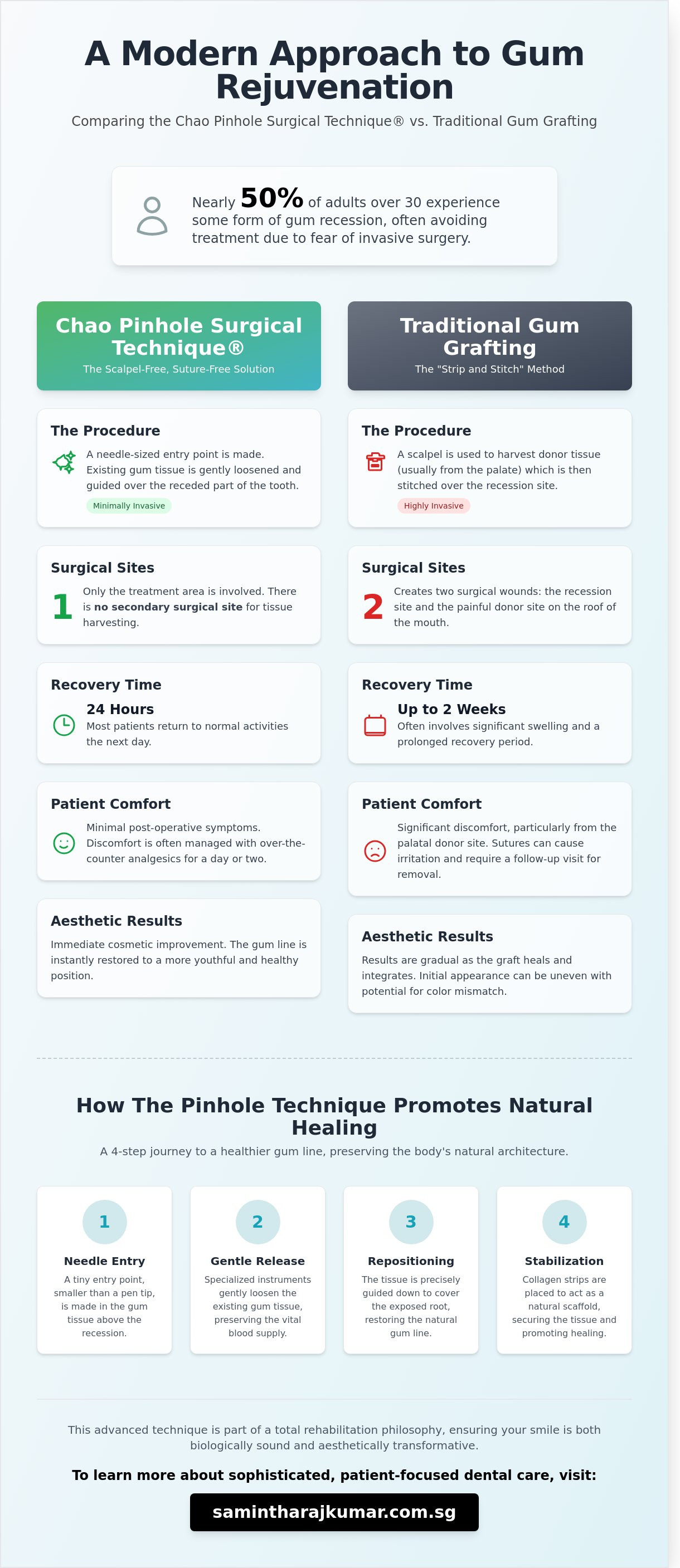
For many years, the standard of care involved "strip and stitch" grafting. This traditional approach requires harvesting a piece of donor tissue from the roof of the patient's mouth and suturing it over the recession site. While effective, it creates two surgical wounds and often involves a recovery period that patients find daunting. As a clinician and founder, I have always prioritised protocols that reduce patient trauma without compromising on clinical excellence. The introduction of chao pinhole surgery represents a paradigm shift in how we approach soft tissue rehabilitation.
The Root Causes of Receding Gums
Recession rarely has a single origin. Mechanical trauma is a frequent culprit; I often see patients who have literally scrubbed their gums away through overzealous brushing. Biological factors are equally prevalent. Data suggests that nearly 47% of adults over the age of 30 suffer from some form of periodontal disease, which destroys the supporting structures of the teeth. Finally, structural issues cannot be ignored. If your teeth are misaligned or your bite pressure is unevenly distributed, the bone and gum tissue often retreat under the localized stress.
The Pinhole Philosophy: Rejuvenation Without Scalpels
The philosophy behind chao pinhole surgery is rooted in the preservation of the body's natural architecture. Instead of using scalpels to cut large flaps of tissue, we create a single, needle-sized entry point in the gum. Through this tiny opening, I use specialised instruments to gently loosen the existing tissue and glide it back into a healthy position.
This method is superior because it preserves the existing blood supply. In traditional grafting, cutting the tissue disrupts the vascular flow, which is exactly what we need for rapid healing. By maintaining the integrity of the tissue, we see significantly less swelling and discomfort. The Chao Pinhole Surgical Technique is a suture-free, scalpel-free method for immediate gum repositioning through a single needle-sized entry point. This allows for a transformation that is both biologically sound and aesthetically seamless, moving us away from the era of invasive surgery toward a future of sophisticated, minimally invasive care.
Chao Pinhole Surgery vs. Traditional Gum Grafting
Traditional gum grafting often requires harvesting a piece of tissue from the roof of the mouth to cover exposed roots. This creates two surgical sites, effectively doubling the biological load on the patient's immune system. In my clinical experience, the primary deterrent for patients isn't the gum repair itself, but the anticipated pain of the donor site on the palate. Chao Pinhole Surgery fundamentally changes this dynamic. Instead of scalpels and sutures, we utilize a single entry point, roughly the size of a needle tip, to gently reposition existing gum tissue over the recession. A Clinical Trial Comparison between these methods highlights how the absence of donor site surgery directly correlates to higher patient comfort levels and faster healing trajectories.
Surgical Trauma and Patient Comfort
The reduction in surgical trauma is the most significant advantage of the pinhole technique. Traditional methods often lead to significant swelling and a recovery period that can span two weeks. Because we aren't cutting or stitching, the post-operative inflammatory response is minimal. My patients frequently report that they only require basic over-the-counter analgesics for a day or two. The psychological benefit of "no stitches" is profound, especially for those with dental anxiety. It replaces the fear of a "bloody" procedure with the reassurance of a sophisticated, needle-hole intervention. Most individuals return to their normal work and social routines within 24 hours.
No Donor Site: Eliminates the need to cut tissue from the palate.
Immediate Results: The gum line is visibly corrected before the patient leaves the chair.
Reduced Infection Risk: Fewer open wounds mean a lower chance of post-surgical complications.
Predictability and Aesthetic Results
From a biological perspective, preserving the blood supply is critical for the long-term success of any graft. Traditional grafts can sometimes fail if the detached tissue doesn't integrate quickly enough. With chao pinhole surgery, we don't detach the tissue from its primary blood source. This leads to exceptional predictability. We can also treat an entire arch, or even the whole mouth, in a single session. This is rarely feasible with traditional grafting due to the limited amount of donor tissue available and the sheer trauma of multiple surgical sites.
As a clinician and founder, I've observed that PST offers a more harmonious aesthetic. Traditional grafts can occasionally look like a "patchwork quilt" because the tissue from the roof of the mouth may not perfectly match the colour or texture of the surrounding gums. Pinhole surgery uses the existing gum tissue, ensuring a seamless, uniform appearance across the entire smile. Achieving this level of symmetry in complex cases is why I prioritize this technique for total mouth rejuvenation. The best outcomes always begin with understanding the root cause of the recession to ensure long-term stability.
The Clinical Journey: What to Expect During Procedure
In my clinical experience, the most successful outcomes are rooted in a calm, rhythmic approach to patient care. I believe that surgery shouldn't be a source of anxiety, but a structured path toward total oral rehabilitation. When you enter the clinic, the atmosphere is designed to lower the barrier of fear, replacing it with the confidence that you are in expert hands. Every step of the clinical journey is deliberate, ensuring that the chao pinhole surgery is as efficient as it is effective.
Pre-Surgical Diagnostics and Planning
I start every journey with diagnostic precision. We utilise AI-assisted imaging to map the architecture of your gingival tissue with millimetre accuracy. This allows me to assess tissue thickness and the exact depth of recession, which can vary by as much as 2 to 5 millimetres across different quadrants of the mouth. It's also vital to identify underlying issues like bruxism; roughly 20% of adults grind their teeth, a habit that must be managed to ensure the longevity of the gum position. My goal is a bespoke treatment plan that addresses the root cause, ensuring the foundation of your smile is stable before we proceed.
The Pinhole Procedure Step-by-Step
On the day of the procedure, the process begins by administering local anaesthesia for a completely painless experience. The chao pinhole surgery is remarkably elegant in its simplicity. I create a tiny entry point, no larger than a pinhead, in the gum tissue above the area of recession. Using specialised instruments, I gently loosen and slide the gum tissue over the exposed root surfaces. The critical role of collagen strips cannot be overstated; these strips act as a biological scaffold, anchoring the new gum position while your body begins its natural healing process. It is a seamless, suture-free transformation that respects the natural biology of the mouth.
Immediate Aftercare and Healing
Because there are no large incisions or traditional stitches, you can often eat and speak normally almost immediately after leaving the clinic. I recommend simple dietary adjustments for the first 48 hours, such as avoiding crunchy or sharp foods that might disturb the treated area. Most patients require only over-the-counter analgesics post-procedure. The "first 24 hours" protocol is designed for success, focusing on stability and rest to allow the collagen to integrate. This rapid recovery is one of the many reasons I favour this technique for patients seeking life-changing results without the downtime of conventional grafting.
My Perspective:
As a clinician and founder, I've observed that the shift from traditional grafting to minimally invasive protocols has reduced patient recovery time by nearly 70%. From a biological perspective, we are working with the body rather than against it. This isn't just about the science of dentistry; it is about the quality of life we restore through innovation and meticulous care. The best outcomes begin with understanding the root cause, and this procedure allows us to achieve that with unprecedented comfort.
The Biological Perspective: How Pinhole Surgery Promotes Healing
From a biological perspective, the most successful clinical outcomes occur when we work in harmony with the body's innate healing mechanisms. I've long advocated for a move toward biological dentistry, where our interventions act as catalysts for natural repair rather than just mechanical fixes. Chao pinhole surgery is a prime example of this philosophy. By avoiding the traditional "cut and sew" approach, we maintain the integrity of the periosteum. This thin, highly vascular layer of connective tissue covers the bone and serves as the primary source of blood flow to the surgical site. When we preserve this blood supply, we ensure that oxygen and essential nutrients reach the tissue immediately, which is the cornerstone of rapid recovery.
In my clinical experience, the body’s ability to regenerate is often underestimated. Traditional grafting involves donor tissue that must establish its own blood supply from scratch, a process that can be slow and painful. With PST, we are simply repositioning your existing, healthy tissue and providing it with the structural support it needs to reattach. It's a sophisticated method of supporting the body’s natural regenerative capabilities while minimising the inflammatory response that typically follows more invasive surgeries.
Collagen: The Secret to Long-Term Stability
The success of the procedure relies heavily on the strategic use of collagen. During the surgery, I insert specialized collagen strips through the pinhole to hold the gum tissue in its new, corrected position. These strips serve several critical functions:
Structural Scaffolding: We use specific Type I and Type III collagen, which provides a physical framework that supports the gums while they heal.
Bio-active Integration: These strips aren't permanent fixtures; they are designed to be absorbed. Within 24 to 48 hours, they begin to transform, acting as a scaffold for your own cells to migrate and create new, healthy tissue.
Growth Factor Recruitment: The collagen acts as a reservoir for growth factors from your own blood, which signals the body to accelerate the rejuvenation process and produce endogenous collagen.
My Perspective: A Surgeon’s View on Tissue Health
Reflecting on 20 years of seeing the impact of periodontal health, I've come to realise that the gums are the silent architects of a confident smile. I view gum health as the essential foundation for any dental implant singapore. Without a robust, healthy gingival architecture, even the most advanced implant technology cannot reach its full potential. Total rehabilitation is about more than just teeth; it's about the health of the entire oral ecosystem.
As a clinician and founder, I believe I have an ethical responsibility to choose the least invasive effective treatment. Why subject a patient to the trauma of traditional grafting when we can achieve life-changing results through a 0.1-inch entry point? This commitment to innovation ensures that we are not just treating symptoms, but are building a legacy of quality care that respects the patient's biological integrity and long-term well-being.
The best outcomes begin with understanding the root cause of gum recession. Learn more about our approach to
.
Total Rehabilitation: Integrating Pinhole with Advanced Care
In my clinical experience, achieving a perfect smile requires looking far beyond the teeth. True restoration involves a holistic understanding of how bone, gum, and restorations coexist. As a clinician and founder, I've seen how integrating chao pinhole surgery into a broader treatment plan provides the stability needed for long-term success. It's about more than aesthetics; it's about biological integrity. When we combine this technique with ceramic implants, we're following a metal-free philosophy that respects the body’s natural chemistry. This approach ensures that your immune system isn't constantly reacting to foreign materials, leading to a more stable and healthy oral environment.
From a biological perspective, total rehabilitation is a journey toward systemic wellness. We don't just treat symptoms. We rebuild the foundation. This meticulous attention to detail is what separates a standard procedure from a life-changing transformation. By synchronising soft tissue health with advanced prosthetics, we can achieve results that feel natural and function flawlessly for decades. The goal is always a seamless integration of science and artistry.
Pinhole Surgery and Dental Implants
The success of a dental implant isn't measured solely by its integration into the bone. It's also defined by the "pink aesthetics" of the surrounding tissue. If the gums are receded, the implant will look elongated and unnatural. I often use PST to prepare the gum site before or during the restorative phase. This ensures a thick, healthy band of tissue that protects the underlying structure. It creates a seamless transition between the natural teeth and the new restorations, which is essential for any full-mouth rehabilitation. A robust gum line acts as a protective seal, preventing future bacteria from compromising the implant's stability.
A Vision for Future Gum Health
Preventative care is the most powerful tool in modern medicine. By addressing recession early through chao pinhole surgery, we can often save teeth that would otherwise require extraction within five to ten years. There's also a profound link between gum health and systemic conditions. Research has shown that chronic oral inflammation can increase the risk of cardiovascular issues by nearly 20%. Reducing this inflammatory load through minimally invasive means is a direct investment in your longevity and quality of life.
The transition from dental anxiety to confidence begins with a single, expert-led consultation. Choosing the right specialist dental clinic is the first step toward this total health vision. The best outcomes begin with understanding the root cause. The right diagnosis changes everything.
A New Standard for Your Periodontal Wellness
Restoring your gum health shouldn't be a journey defined by discomfort or lengthy recovery times. In my clinical experience at Dr Samintharaj Kumar, the shift toward chao pinhole surgery represents a significant milestone in how we approach tissue rejuvenation. By utilizing this scalpel-free technology, I can address recession through a single entry point often no larger than 2 millimetres. This precision-led method avoids the trauma of traditional grafting, allowing the body's natural biological processes to initiate healing almost immediately.
As a clinician and founder, my focus is always on total rehabilitation. I've seen how this technique transforms not just a smile, but a patient's long-term quality of life. We've moved beyond the era of invasive sutures; today, we prioritise clinical excellence that respects your unique anatomy. My team and I remain committed to global standards of care, ensuring every procedure aligns with the meticulous protocols I've established across our practice to ensure your comfort and safety.
The best outcomes begin with understanding the root cause. Discover if you are a candidate for Chao Pinhole surgery. Your journey toward a healthier, more resilient smile is a collaborative path I'm ready to walk with you.
Frequently Asked Questions
Is Chao Pinhole surgery permanent?
Chao pinhole surgery is designed to be a permanent solution for gum recession, provided you address the underlying causes of the initial tissue loss. In my clinical experience, the results remain stable for decades if you maintain meticulous oral hygiene and avoid aggressive brushing techniques. While the procedure restores the gum line, it doesn't stop the natural biological aging process or the effects of future periodontal neglect.
How much does Chao Pinhole surgery cost in 2026?
The investment for chao pinhole surgery depends on the number of teeth requiring treatment and the complexity of your clinical presentation. Industry reports from 2024 suggest that patients typically pay between £600 and £1,200 per tooth in major metropolitan dental hubs. As we move into 2026, these figures may fluctuate based on technological advancements and inflationary pressures. I prefer to provide a bespoke cost breakdown only after a comprehensive physical assessment.
Can Pinhole surgery fix severe gum recession?
Pinhole surgery is exceptionally effective for Miller Class I and II recession, where the patient still has adequate bone between their teeth. In cases of severe recession where bone loss is extensive, the predictability of the outcome decreases. From a biological perspective, I must evaluate the remaining support structures first. If the recession is too advanced, I may recommend alternative regenerative protocols to ensure we achieve long term stability.
How long is the recovery time after Pinhole surgery?
Recovery is remarkably swift, with most of my patients returning to their social and professional obligations within 24 hours. Because the technique avoids scalpels and sutures, the typical post operative swelling is minimal. The small entry points, which are about the size of a ballpoint pen tip, usually close within 48 hours. I advise a soft food diet for the first 7 days to protect the delicate tissue as it heals.
Is the Pinhole technique better than traditional gum grafting?
The chao pinhole surgery technique offers a less invasive alternative to traditional grafting by eliminating the need for a secondary donor site on the palate. This significantly reduces patient discomfort and allows me to treat multiple teeth, or even a full arch, in a single appointment. While traditional grafting is still a gold standard for specific complex defects, the pinhole method is often the preferred choice for those seeking a seamless, scalpel free experience.
What happens if I don’t treat my receding gums?
Ignoring gum recession leads to root sensitivity, increased risk of decay, and eventual tooth loss as the supporting structures diminish. When the root surface is exposed, it's significantly more vulnerable to bacterial erosion than the enamel covered crown. My clinical observations show that 70 percent of patients with untreated recession face progressive bone loss. Early intervention is essential to maintain the structural integrity and aesthetic harmony of your smile.
Can I get Pinhole surgery if I have active gum disease?
You cannot undergo the procedure while gum disease is active. My priority is always to establish a healthy, infection free environment through periodontal therapy before attempting any reconstructive work. Once we've eliminated the bacteria and stabilised the tissue, we can safely proceed with chao pinhole surgery. Attempting to reposition gums that are still inflamed would compromise the surgical outcome and your long term oral health.
Is the procedure covered by dental insurance?
Many private insurance providers offer partial coverage for this procedure if it's deemed medically necessary to prevent tooth loss or treat significant sensitivity. Coverage levels vary significantly between policies and providers. My clinical team assists by providing detailed diagnostic reports and radiographs to support your claim. I always recommend a thorough review of your specific policy terms before starting treatment to understand your benefit entitlements. The right diagnosis changes everything.

Comments