
Consequences of an unstable bite: pain, headaches and more

Could the way your teeth meet be contributing to pain beyond your mouth? The consequences of an unstable bite can include tooth pain, headaches, facial soreness and jaw strain, as uneven pressure may affect teeth, chewing muscles and joints. These symptoms can have other causes, so their pattern matters.
In my clinical experience, patients often notice discomfort before realising their bite may be part of the picture. A tooth that hits harder than others, difficulty chewing comfortably or a tired jaw can all be useful clues. Understanding these experiences is a practical first step towards identifying the cause.
In this article, I’ll explain how bite imbalance may affect teeth, jaw joints and facial muscles, and why it can sometimes be associated with changes in chewing or speech. I’ll also explore how an assessment can distinguish bite-related strain from other problems, helping you understand what may be happening and what a considered next step involves.
Table of Contents
The Problem: Symptoms of an Unstable Bite
An unstable bite may contribute to tooth pain, headaches, facial soreness, ear discomfort and jaw strain. In my clinical experience, the pattern and timing of symptoms help guide an assessment, although symptoms alone cannot confirm their cause.
Headaches and Facial Pain
Bite-related headaches and facial pain may occur when uneven tooth contact makes the jaw muscles work harder. Discomfort can extend towards the temples, so I ask whether frequent headaches coincide with changes in how the teeth meet. That connection can help guide a fuller assessment.
Ear Discomfort and Dizziness
Tension around the temporomandibular joint can accompany facial pain and ear discomfort. Some patients also report dizziness, which has many possible causes. I consider it alongside jaw symptoms rather than treating dizziness alone as proof of bite imbalance.
Bite Imbalance and Tension Headaches
Muscles may work harder to compensate for uneven tooth contact, contributing to tension headaches. For example, temple pressure after prolonged chewing is a useful detail to discuss during an assessment. I consider when the discomfort occurs and what jaw activity comes before it.
Jaw Muscle Strain and Joint Stress
Muscles may compensate for uneven contact while the temporomandibular joint experiences added strain. Clicking, restricted movement or soreness during chewing can accompany joint problems. I assess these signs alongside your symptoms and jaw movement to understand how your bite may be related.
Why It Happens: Bite Imbalance and Muscle Strain
I assess how biting forces are shared by the teeth and jaw muscles. When upper and lower teeth meet unevenly, muscles may compensate during chewing. I look for signs such as clenching, grinding or fatigue after a meal, then consider how these patterns affect function.
Facial Symptoms of Muscle Tension
Facial muscle tension can feel like tightness in the cheeks or temples, or soreness after chewing. I ask patients to notice when symptoms arise, such as after a long meal or a day of frequent clenching. Uneven forces may make one side work harder. The location and timing of tension can help me understand how the muscles are adapting to the bite.
Jaw Muscle Fatigue
Jaw muscle fatigue feels like tiredness or reduced endurance after repeated chewing or clenching. I explore whether it appears while eating firm foods, speaking for a long time or on waking after overnight grinding, known as bruxism. Uneven contact can make the muscles work harder to guide the lower teeth. I also consider whether morning soreness or disrupted sleep accompanies the fatigue, as these details help clarify its pattern.
Why It Matters: Effects on Chewing, Speech and More
An unstable bite can make chewing less efficient and may accompany speech changes, mouth breathing, snoring or sleep apnoea. Less effective chewing may leave food less thoroughly broken down before swallowing.
Chewing Difficulties and Pain
Chewing difficulty means biting or grinding food feels uncomfortable or less effective. A tooth that hits first or harder may hurt during chewing, while sudden, severe pain on biting can indicate a cracked tooth. Uneven pressure can also make fillings and crowns wear, loosen or break sooner. Canine guidance describes how canine teeth help guide jaw movement; altered contact can affect how smoothly the teeth move during chewing.
Speech and Breathing Concerns
Speech changes may accompany a misaligned bite, while mouth breathing, snoring and sleep apnoea are also associated with bite problems. For example, altered tooth alignment may change how the tongue and teeth meet when forming sounds. These concerns matter because they can affect communication, breathing comfort and sleep, not just eating. An appointment can help assess how your bite and jaw function relate to these changes.
Clicking and Popping While Chewing
Clicking or popping during chewing can occur as the jaw moves and may accompany temporomandibular joint problems. Notice whether the sound happens as your mouth opens, closes or shifts sideways, and whether pain or restricted movement occurs too. These details help describe the pattern. If chewing also causes pain, a clinical assessment can examine jaw movement and how evenly your teeth meet.
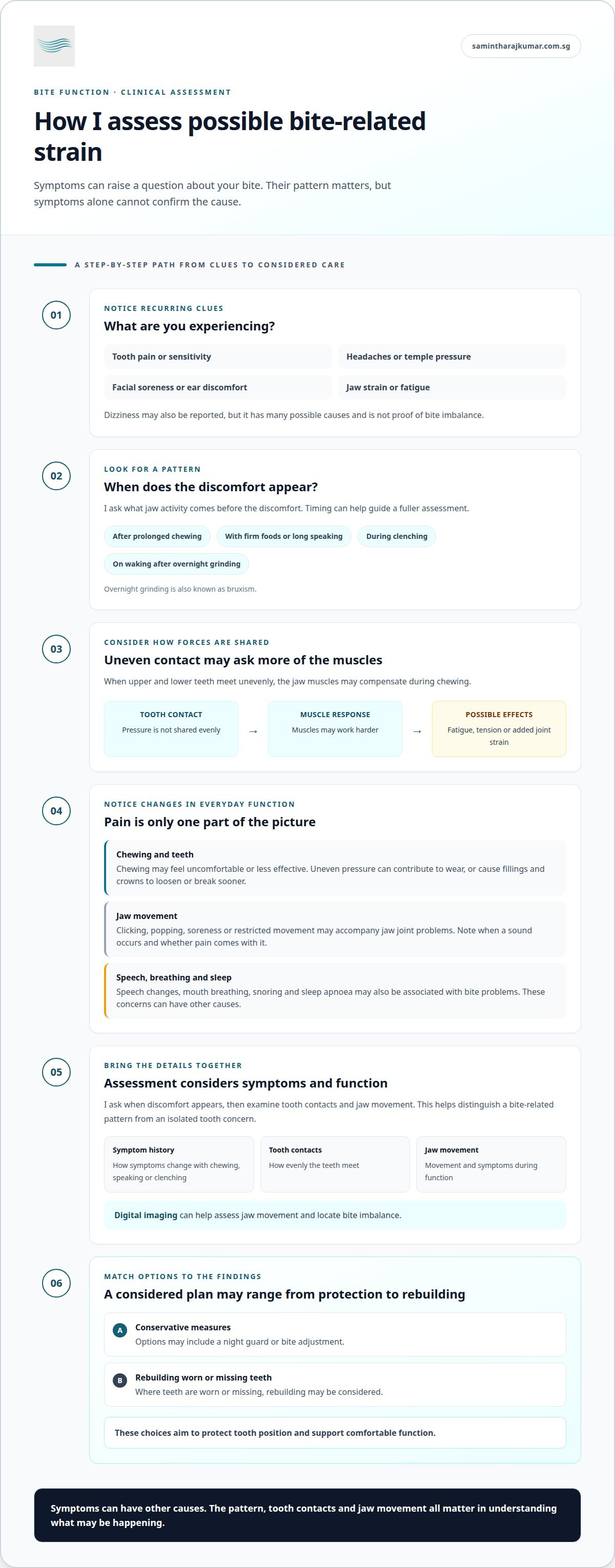
Treatment Philosophy: Early Evaluation and Bite Correction
An unstable bite, or occlusal instability, means the teeth do not meet evenly, so biting forces are distributed unevenly.
Understanding Occlusal Instability
In adults, causes include tooth loss, which can let neighbouring teeth move, and gradual shifting with age. Digital imaging and comprehensive treatment planning can assess jaw movement and locate bite imbalance. Early evaluation can guide conservative options, such as a night guard or bite adjustment; worn or missing teeth may need rebuilding. These choices aim to protect tooth position and support comfortable function.
Tooth Wear and Sensitivity Risks
Uneven pressure can wear enamel, shift or tilt teeth, and overload fillings or crowns, which can loosen or break sooner. Enamel wear may expose the softer tissue beneath it and contribute to discomfort. Cleveland Clinic notes an underbite can cause teeth to crack or wear down. Without assessment, ongoing pressure can continue damaging teeth and restorations; the extent depends on contact patterns and existing wear.
What Patients Can Expect
I begin by asking when discomfort appears, such as soreness during meals or jaw fatigue on waking. I ask how symptoms change with chewing, speaking and clenching, then examine tooth contacts and jaw movement. This history helps distinguish a bite-related pattern from an isolated tooth concern.
Assessment considers function as well as appearance. I observe how upper and lower teeth meet, whether the jaw shifts and which contacts occur first. Digital imaging and comprehensive treatment planning can help assess jaw movement and identify bite imbalance. I explain the findings and discuss suitable options, which may include conservative or protective care.
Treatment follows the agreed plan, with reviews to assess comfort, chewing and changes in tooth contact. Healing and adjustment depend on the treatment: wearing a night guard differs from rebuilding worn teeth. I also review restorations, because uneven forces can wear or loosen fillings and crowns. At follow-up, I consider symptoms alongside function, rather than judging progress by appearance alone. Sudden, severe pain when biting can indicate a cracked tooth and warrants urgent assessment.
Long-Term Impact
The consequences of an unstable bite can extend beyond discomfort, affecting how comfortably and confidently a person eats. Appropriate care may support balanced tooth contact and function over time. For example, if one tooth repeatedly takes excess pressure, addressing the imbalance may help protect it and nearby restorations from further wear. The aim is durable function, not simply a change in how the smile looks.
Comfort can affect confidence and quality of life. When jaw soreness or difficulty chewing eases, meals and conversation may feel less distracting. Progress can be assessed through practical changes, such as whether chewing feels more comfortable and daily activities feel easier. Regular dental reviews also help monitor jaw health and changes in bite function over time.
Prevention matters because teeth can shift with age, and neighbouring teeth may move after tooth loss. These changes can alter how the bite functions, making ongoing care relevant even after symptoms improve. Follow-up allows changes in tooth contact, wear and restorations to be noticed as they develop. A considered plan can guide timely decisions about protection or further care, linking comfort today with preserving function over time. This is one reason to understand the consequences of an unstable bite in the context of long-term oral health.
My Perspective as a Clinician and Founder
I approach bite concerns by looking beyond a single painful tooth. In my clinical experience, the relationship between tooth contact, jaw movement and symptoms matters. A tooth that hits first, for example, may affect how comfortably someone chews. I consider this functional picture alongside each patient’s concerns and goals.
The consequences of an unstable bite need to be understood in context. Headaches or jaw soreness can have different causes, so I consider symptom history, tooth wear, existing restorations and how the jaw moves. This helps distinguish a bite-related pattern from other concerns and supports a considered discussion of suitable next steps.
Where tooth loss has changed how neighbouring teeth meet, restoring function may form part of a wider plan. Dental implants are one option I offer when appropriate to the clinical need. The focus remains on the whole bite, not one procedure: diagnosis should guide treatment, with comfort, function and long-term oral health in view.
If pain when biting is sudden or severe, seek prompt dental assessment, as it may indicate a cracked tooth. For recurring discomfort, clicking or difficulty chewing, I welcome a conversation about your concerns and possible next steps. Please contact me to discuss your bite symptoms.
Frequently Asked Questions
Is It Bad to Have an Uneven Bite?
An uneven bite is not automatically harmful, but persistent imbalance can affect comfort and dental function. The practical distinction is whether you notice ongoing changes, such as avoiding one side when eating or feeling a particular tooth meet first. A dentist can assess these patterns alongside tooth and gum health. Symptoms and changes over time matter more than appearance alone.
Where Do Excessive Forces Go?
Excessive biting forces pass through the teeth to their supporting tissues, while the jaw muscles and joints help manage movement. If one tooth takes more pressure, its supporting area may become overloaded. These forces can also affect dental work, including fillings and crowns. Their impact depends on where the teeth contact and how the jaw moves during chewing.
How Is an Unstable Bite Diagnosed by a Dentist?
A dentist assesses how your teeth contact and how your jaw moves, then considers these findings alongside your symptoms and dental history. For example, the dentist may look for a tooth that contacts before the others and assess whether the jaw shifts as you close. Digital imaging can support assessment of jaw movement and bite imbalance. Headaches alone cannot establish a diagnosis.
What Are the Treatment Options for an Unstable Bite?
Treatment depends on what causes the imbalance and which teeth are affected. Options can include a night guard for protection, bite adjustment for selected mild problems, or rebuilding worn or missing teeth. Orthodontic treatment can address some alignment problems, while more complex cases may need a broader plan. The aim is to match treatment to the source of the pressure, not simply the symptom.
Comments