
Foods to Avoid with Ceramic Implants: A Specialist’s Guide to Biological Healing
- Dr Samintharaj Kumar

- May 21
- 13 min read
What if the most significant threat to your new smile isn't the surgical procedure itself, but the contents of your dinner plate during the first six weeks? As a clinician and founder, I've seen how the initial healing phase can be a period of immense hope tempered by the fear of making a mistake that compromises your investment. It's completely natural to feel overwhelmed by conflicting advice or to worry that a single wrong bite might lead to implant failure.
From a biological perspective, the success of your restoration depends on the delicate process of osseointegration. To support this, you need a precise understanding of the foods to avoid with ceramic implants during the critical integration window. This guide provides the essential dietary boundaries required to ensure your zirconia implants become a permanent, healthy part of your anatomy. I'll share a clear checklist of safe versus dangerous choices and explain the science behind these restrictions, giving you the confidence to manage your recovery with absolute certainty.
Key Takeaways
Understand the biological significance of osseointegration and how zirconia’s biocompatibility facilitates a seamless fusion between the ceramic post and your jawbone.
Master the 72-hour critical recovery window, including my specific "no-chew" protocol designed to manage inflammation and protect the initial healing site.
Identify the specific foods to avoid with ceramic implants to prevent micro-movements and ensure that sticky or hard textures don't compromise the soft tissue.
Learn the dietary habits necessary for the long-term longevity of your restoration, ensuring your ceramic implants remain functional and aesthetically brilliant for years to come.
Gain insight into my clinical philosophy that views dental rehabilitation as a holistic journey where patient lifestyle and surgical excellence must work in harmony.
Table of Contents
The Biological Role of Nutrition in Ceramic Implant Integration
The 72-Hour Critical Window: A Specialist’s Recovery Checklist
Compromising the Foundation: High-Risk Foods to Avoid During Healing
Beyond Recovery: Dietary Habits for Long-Term Ceramic Longevity
My Perspective: The Intersection of Clinical Excellence and Patient Lifestyle
The Biological Role of Nutrition in Ceramic Implant Integration
The biological journey of a ceramic implant is a masterclass in human physiology. These restorations are crafted from zirconia, a highly biocompatible, metal-free material that represents the pinnacle of modern restorative dentistry. Unlike traditional titanium, which is a foreign metal, zirconia is bio-inert. This means the body does not merely tolerate the implant; it actively embraces it. In my clinical experience, the first few weeks of this relationship dictate the lifetime success of the implant. The way your body responds to the surgical site is heavily influenced by the fuel you provide it through your diet.
From a biological perspective, the foundation of success lies in the biological process of osseointegration. This is the sophisticated mechanism where your jawbone fuses directly with the ceramic post. While ceramic integration is incredibly efficient, it differs slightly from traditional titanium systems regarding soft tissue health. Zirconia has a unique affinity for gum tissue, often resulting in a superior "pink aesthetic" and a tighter seal against bacteria. However, this delicate bond requires a stable environment to thrive. If the healing process is disrupted by poor choices, the long-term stability of the restoration is at risk.
To better understand this concept, watch this helpful video:
Why Zirconia Demands a Specialized Recovery Diet
As a clinician and founder, I always emphasise that the bio-inert nature of ceramic is its greatest strength, yet it requires protection during the early stages. The initial blood clot formation is the "scaffold" upon which new bone is built. This scaffold is fragile. Mechanical stress from the wrong textures can easily disrupt this early bone-to-implant contact. This is why knowing the specific foods to avoid with ceramic implants is essential for protecting the surgical site. A stable environment allows the gum tissue to attach to the zirconia neck without the interference of inflammatory triggers or physical trauma.
The Science of Micronutrients in Bone Healing
Success is not just about what you omit; it is about what you include. To support the synthesis of collagen around the ceramic neck, Vitamin C is non-negotiable. It acts as a biological glue for the surrounding soft tissues. Similarly, Calcium and Vitamin D work in tandem to strengthen the new bone matrix as it weaves into the zirconia surface. I also advise patients to remain meticulously hydrated. Proper fluid intake maintains the oral microbiome and ensures that saliva can perform its natural role in cleansing the mouth. When you understand the foods to avoid with ceramic implants alongside these nutritional pillars, you provide your body with the best possible chance for a profound, lasting restoration.
The 72-Hour Critical Window: A Specialist’s Recovery Checklist
The first 72 hours after dental implant surgery are the most critical for long-term success. In my clinical experience, this period is not about testing the strength of the zirconia; it's about stillness and inflammation control. Your body is working tirelessly to form a stable blood clot and initiate the healing cascade. Any disruption now can lead to complications that are difficult to reverse later. Identifying specific foods to avoid with ceramic implants is never more vital than during this immediate post-operative phase.
As a clinician and founder, I recommend a strict "no-chew" diet for the first three days following the procedure. This isn't merely a suggestion; it's a protective measure for the surgical site. Even soft chewing can create micro-movements in the implant post, which interferes with the delicate bone-knitting process. Beyond what you eat, how you consume it matters just as much. You must avoid using straws entirely. The negative pressure created by suction can dislodge the blood clot or disrupt your sutures, potentially leading to a painful condition known as dry socket.
The "No-Chew" Essential List
During these initial days, your focus should be on high-quality nutrition that requires zero mechanical effort. I advise patients to prepare a variety of nutrient-dense, liquid-based options before their surgery. This ensures you aren't tempted by convenience foods that might cause harm.
Blended Soups: Opt for cool or lukewarm vegetable purees. It's essential to strain these to remove small seeds, such as those from tomatoes or berries, which can easily become trapped in the incision site.
Greek Yogurt: This provides excellent protein and probiotics. Ensure it's completely smooth and free of fruit chunks or granola.
Thinned Nut Butters: You can incorporate smooth almond or peanut butter into shakes, provided they are thinned enough to drink without a straw.
Bone Broth: Lukewarm bone broth is an exceptional source of minerals like magnesium and phosphorus, which support bone density without requiring any jaw movement.
Temperature and Texture Warnings
Thermal stability is the cornerstone of early ceramic healing. Many patients don't realise that extreme temperatures can trigger localised inflammation and increase swelling. Ice-cold liquids can cause the surrounding tissue to contract, while scalding hot drinks can increase blood flow to the area, potentially causing the wound to re-open. You should also be wary of "sharp" textures. Foods like toast, crisps, or even certain raw vegetables can act like a blade against your healing gums. I've seen minor abrasions from a single crisp lead to significant setbacks in soft tissue closure. Establishing a foundation of trust with your specialist ensures you have the guidance to navigate these early hurdles. Understanding the biological nuances of recovery is the first step toward a successful restoration.
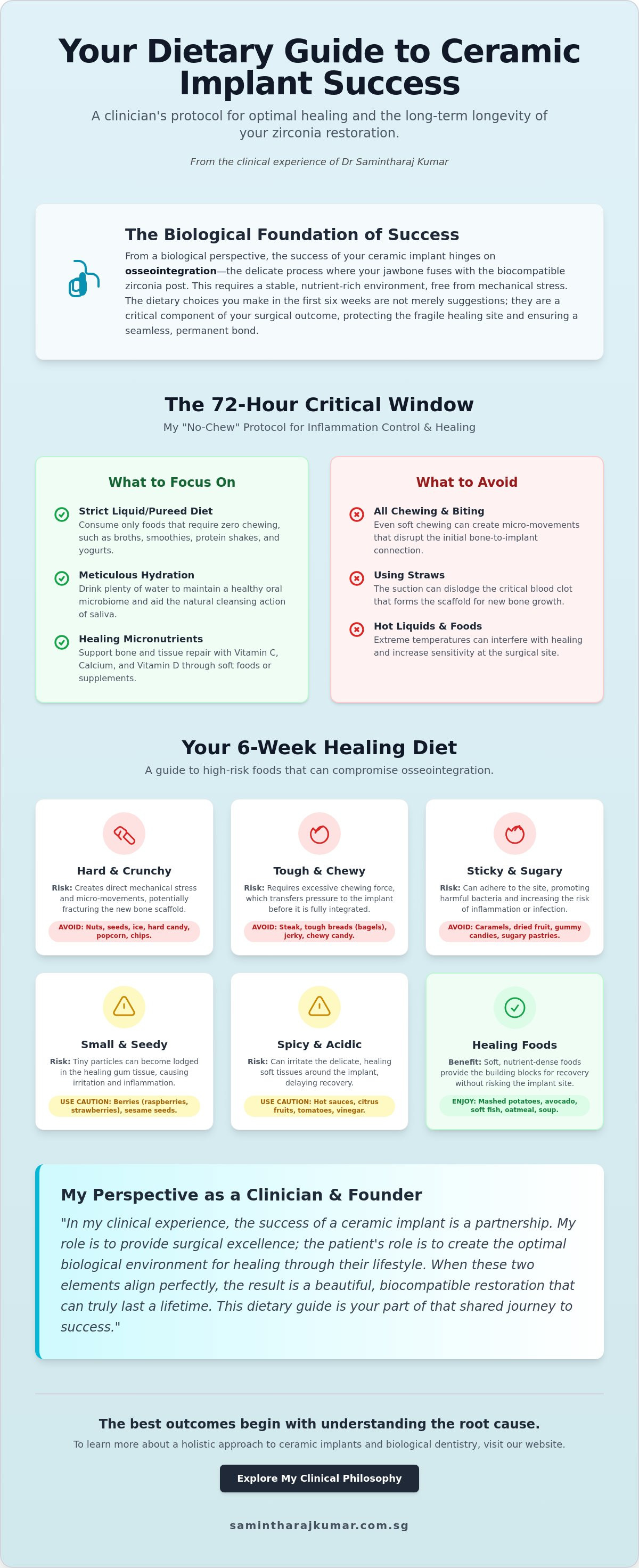
Compromising the Foundation: High-Risk Foods to Avoid During Healing
While modern zirconia formulations boast a flexural strength exceeding 1000 MPa, the strength of the material itself is not the primary concern during the first few months. The vulnerability lies at the interface where your living bone meets the bio-inert ceramic surface. As a clinician and founder, I've observed that many patients underestimate the physical forces generated by everyday chewing. From a biological perspective, micro-movements of just a few microns can prevent the jawbone from successfully weaving into the zirconia surface, potentially leading to early-stage failure. Identifying the specific foods to avoid with ceramic implants is about more than just avoiding discomfort; it's about safeguarding the structural integrity of your restoration.
The Mechanical "Danger Zone" Foods
In my clinical experience, the most common threats to a healing implant are foods that apply uneven or excessive lateral pressure. Hard nuts, seeds, and unpopped popcorn kernels are particularly hazardous. These textures don't just require force to break; they can slip and apply "shear" forces directly to the implant post or temporary crown. Sticky sweets, such as toffee, caramel, or gummy bears, present a different but equally significant risk. These substances can physically pull on the healing soft tissue margin or even dislodge a temporary restoration. Additionally, I advise patients to steer clear of fibrous, "chewy" meats like steak or jerky. The heavy grinding motion required to break down these fibres puts unnecessary strain on the surgical site before the bone has fully matured around the ceramic.
Hard Nuts and Seeds: These create concentrated pressure points that can disrupt the early bone-to-implant bond.
Sticky Confectionery: These can create a "suction" effect that pulls on the temporary crown or the delicate gum seal.
Crusty Breads and Crisps: These sharp textures can lacerate the healing gingival tissue, inviting bacterial ingress.
Chemical Irritants and Inflammation Triggers
Biological healing isn't only compromised by physical force; chemical environments matter too. Highly acidic foods, such as citrus fruits and carbonated sodas, can erode the early cellular repairs occurring at the gum margin. This acidity can delay the "sealing" of the soft tissue around the zirconia neck, which is crucial for preventing peri-implantitis. Spicy foods containing chilli or heavy peppers are another category of foods to avoid with ceramic implants during the initial weeks. These ingredients act as vasodilators, increasing blood flow to the area which can exacerbate swelling and post-operative throbbing.
I must also emphasize the critical impact of alcohol on the healing process. Alcohol is a primary enemy of osseointegration because it dehydrates the oral tissues and impairs the body's immune response. For at least 7 days post-surgery, alcohol must be avoided entirely to ensure the blood clot remains stable and the initial healing cascade is not interrupted. Similarly, tobacco use significantly restricts blood flow to the jawbone, which is the single most common cause of implant failure in my practice. The best outcomes begin with understanding the root cause of potential complications and choosing to protect your biological investment through disciplined nutrition.
Beyond Recovery: Dietary Habits for Long-Term Ceramic Longevity
Once the initial phase of osseointegration is complete, the focus of our journey shifts from protection to preservation. As a clinician and founder, I believe that a successful restoration is a lifelong commitment. While the immediate list of foods to avoid with ceramic implants narrows significantly after the first few months, your dietary choices continue to play a pivotal role in the longevity of your smile. Ceramic is exceptionally resilient, with flexural strengths often exceeding 1000 MPa, but it exists within a dynamic biological environment that requires consistent care.
From a biological perspective, the longevity of your implant is tied to the health of the supporting structures. Even though the zirconia post itself cannot decay, the bone and gum tissue surrounding it remain susceptible to inflammation and disease. Maintaining a balanced diet is the most effective way to prevent peri-implantitis, a condition that can compromise even the most precisely placed restoration. Your nutrition provides the building blocks for tissue resilience, ensuring that the foundation of your smile remains as strong as the day it was completed.
Maintaining the Aesthetic Excellence of Zirconia
Zirconia is prized for its incredible resistance to staining and decay. Unlike natural enamel, it won't discolour from coffee, tea, or red wine. This creates a unique clinical challenge: if your adjacent natural teeth stain while the implant remains bright, the visual harmony of your smile is compromised. I encourage a diet low in refined sugars not just for the implant, but to protect the health of the surrounding natural teeth. Regular professional cleanings are essential to remove biofilm that can accumulate at the gum line. For those seeking comprehensive visual perfection, exploring cosmetic dentistry in Singapore can provide the necessary framework for total smile harmony.
Protecting the Soft Tissue Seal
The "seal" where your gum tissue meets the ceramic neck is your primary defence against bacterial ingress. While crunchy vegetables like carrots or apples are excellent for natural tooth abrasion, I advise caution with how you apply force. Extremely abrasive or hard-crusted foods to avoid with ceramic implants in excess are those that might physically irritate the gingival margin if handled aggressively. To support this tissue, I recommend a diet rich in antioxidants, such as leafy greens and berries, which help maintain healthy, pink gums. This holistic approach is central to our philosophy of dental implant rehabilitation in Singapore. Investing in high-tier maintenance today ensures your restoration remains a legacy of health for decades to come.
My Perspective: The Intersection of Clinical Excellence and Patient Lifestyle
As a clinician and founder, I've always maintained that the most successful outcomes aren't solely the result of technical precision in the operating theatre. They begin with a deep understanding of the root cause of a patient's dental challenges. Total rehabilitation is a journey that extends far beyond the surgical appointment; it's defined by the days and weeks that follow. In my practice, I view the patient as an active partner in their own healing. While I provide the clinical mastery and the latest innovations in zirconia technology, the patient provides the biological environment for that technology to thrive. This partnership is what ensures a restoration doesn't just look beautiful but functions perfectly for a lifetime.
In my clinical experience, the transition period after surgery is where the most significant personal growth occurs. It requires a shift in mindset, moving from a focus on immediate gratification to long-term biological health. Following a specific protocol regarding foods to avoid with ceramic implants is not an exercise in restriction, but a strategic investment in your future quality of life. When we respect the body's natural pace of repair, we allow the bone to form a bond with the ceramic that is remarkably resilient. This disciplined approach to recovery is what separates a standard procedure from a truly transformative healthcare experience.
Why I Advocate for Ceramic Solutions
I champion the use of ceramic implants because they align with the core principles of biological dentistry. These metal-free restorations offer unparalleled aesthetic benefits and superior health outcomes, particularly for those concerned about biocompatibility. To ensure the most seamless integration, I utilise AI-assisted diagnostics to plan the perfect placement for every post. This technology allows me to anticipate how your new teeth will interact with your unique bite, making the transition back to a normal diet much safer. For patients requiring more extensive restoration, I often apply these same biological principles to All-on-4 dental implants to achieve total oral rehabilitation.
Your Journey to Total Oral Rehabilitation
Patient-centred care means recognising that adjusting your diet is a temporary step toward permanent freedom. From a biological perspective, the initial sacrifice of avoiding certain textures is a small price for the functional excellence you'll enjoy once healed. I've seen firsthand how a successful implant can restore not just a smile, but a patient's confidence and social wellbeing. It's essential to follow the personalised clinical protocols we establish together, as these are tailored to your specific healing rate and bone density. My goal is to guide you through this process with a blend of innovation and empathetic care, ensuring your journey is as comfortable as it is successful. The right diagnosis changes everything.
Securing Your Biological Legacy
The path to a restored smile is a meticulous journey where surgical precision meets your daily lifestyle. As a clinician and founder of Nuffield Dental, I've dedicated my career to mastering complex protocols, including All-on-4 and Zygomatic restorations, to ensure my patients receive the highest tier of care. We've explored the biological necessity of protecting the zirconia interface and established a clear roadmap for your recovery. By adhering to the 72-hour "no-chew" window and remaining vigilant about the specific foods to avoid with ceramic implants, you're not just following a post-operative list; you're actively participating in the creation of a lasting health legacy.
My international clinical presence has taught me that the most successful outcomes are built on a foundation of education and mutual trust. While the initial dietary restrictions are temporary, the confidence of a stable, biocompatible restoration is permanent. Your commitment to these biological boundaries today ensures a lifetime of functional excellence and aesthetic harmony. The best outcomes begin with understanding the root cause. Explore our approach to Ceramic Implants. You're in capable, experienced hands, and I'm optimistic about the profound personal impact your new smile will have on your quality of life.
Frequently Asked Questions
Can I drink coffee or tea immediately after my ceramic implant surgery?
You should avoid hot coffee or tea for at least the first 72 hours following your procedure. High temperatures increase blood flow to the surgical site, which can exacerbate swelling or cause the wound to reopen. Once the initial healing window has passed, you may enjoy these beverages at a lukewarm temperature. I always advise patients to avoid adding excessive sugar to prevent bacterial growth around the healing gingival tissues.
When can I start eating "normal" solid foods again?
Transitioning back to a normal diet typically occurs between six to twelve weeks post-surgery. This timeline depends on the speed of osseointegration, which we verify through clinical assessment. You'll start with a liquid diet, move to soft mashes like avocado or flaky fish, and gradually reintroduce firmer textures. Rushing this process is one of the primary reasons patients accidentally consume foods to avoid with ceramic implants, risking micro-movements.
Is it safe to use a straw for my smoothies during recovery?
Using a straw is strictly prohibited during the first week of your recovery. The negative pressure created by suction can dislodge the vital blood clot or disrupt delicate sutures, leading to dry socket or delayed healing. Instead, you should sip your smoothies or nutrient-dense shakes directly from a glass. This small adjustment protects the surgical site and ensures the biological scaffold remains undisturbed during the critical early days of integration.
What should I do if a small piece of food gets stuck near the implant site?
You must never use a toothpick or your finger to dislodge food from the surgical site. Instead, perform a very gentle rinse with warm salt water or a prescribed antimicrobial mouthwash. If the debris remains trapped, please contact my team at Nuffield Dental for a professional cleaning. Forcefully removing food can lacerate the healing gums or introduce bacteria, potentially compromising the aesthetic seal we aim to achieve with zirconia.
Are there any specific vitamins I should take to help my ceramic implant heal?
Vitamin C, Vitamin D, and Calcium are the three pillars of nutritional support for ceramic integration. Vitamin C is essential for collagen synthesis, which helps the gum tissue attach to the zirconia neck. Calcium and Vitamin D work together to ensure the jawbone density is sufficient to support the implant post. In my clinical experience, a well-supported immune system significantly reduces the risk of early-stage complications and accelerates soft tissue repair.
Can I chew on the opposite side of my mouth while the implant heals?
You can chew on the opposite side, but you must remain cautious with your food choices. Even when chewing on the other side, the muscles and jawbone on the surgical side are still engaged during the process. Hard or crunchy textures can still transmit vibrations and pressure across the jaw. It is best to stick to soft options for the first few weeks to ensure the healing ceramic post remains entirely stationary.
Does a ceramic implant feel different when chewing compared to a natural tooth?
Ceramic implants feel slightly more rigid than natural teeth because they lack the periodontal ligament, which acts as a natural shock absorber. While a natural tooth has a microscopic amount of give, zirconia is fused directly to the bone. Most patients describe the sensation as very sturdy and stable. Over time, your brain adapts to this difference, and the implant will eventually feel like a natural, functional part of your smile.
What are the signs that my diet might be negatively affecting my implant healing?
Increased swelling, persistent throbbing, or a sudden return of bleeding are clear indicators that your diet may be hindering recovery. If you've accidentally consumed foods to avoid with ceramic implants, such as something too hard or spicy, you may notice the surgical site feels irritated. From a biological perspective, any sign of instability or prolonged inflammation warrants a clinical review. The best outcomes begin with understanding the root cause of any discomfort.


Comments