
Gum Lift for Smile Symmetry: Recovery and Suitability

The teeth may not be the reason a smile looks uneven. An irregular gumline can affect how long individual teeth appear and how balanced a smile looks. If excess or uneven gum tissue is part of the cause, improving smile symmetry with a gum lift may be worth discussing.
It’s understandable to focus on visible differences between teeth. But the gumline frames each tooth, and even subtle changes in its shape can affect the overall harmony of a smile. A gum lift reshapes selected gum tissue, but it is not the right approach for every cause of asymmetry.
This article explains how gum contouring can affect smile balance, what recovery may involve and why gum health matters when assessing suitability. It also covers how to distinguish a gum-related concern from one with a different cause, helping you understand what a considered treatment plan involves.
Table of Contents
The Problem: Candidate Suitability and Gum Health
A gum lift may suit adults whose excess gum tissue makes teeth look short or the gum line appear uneven. Gum contouring is generally considered once teeth and gums have fully developed, usually around age 18 or older. I first assess gum health, since inflammation or infection needs attention before elective surgery.
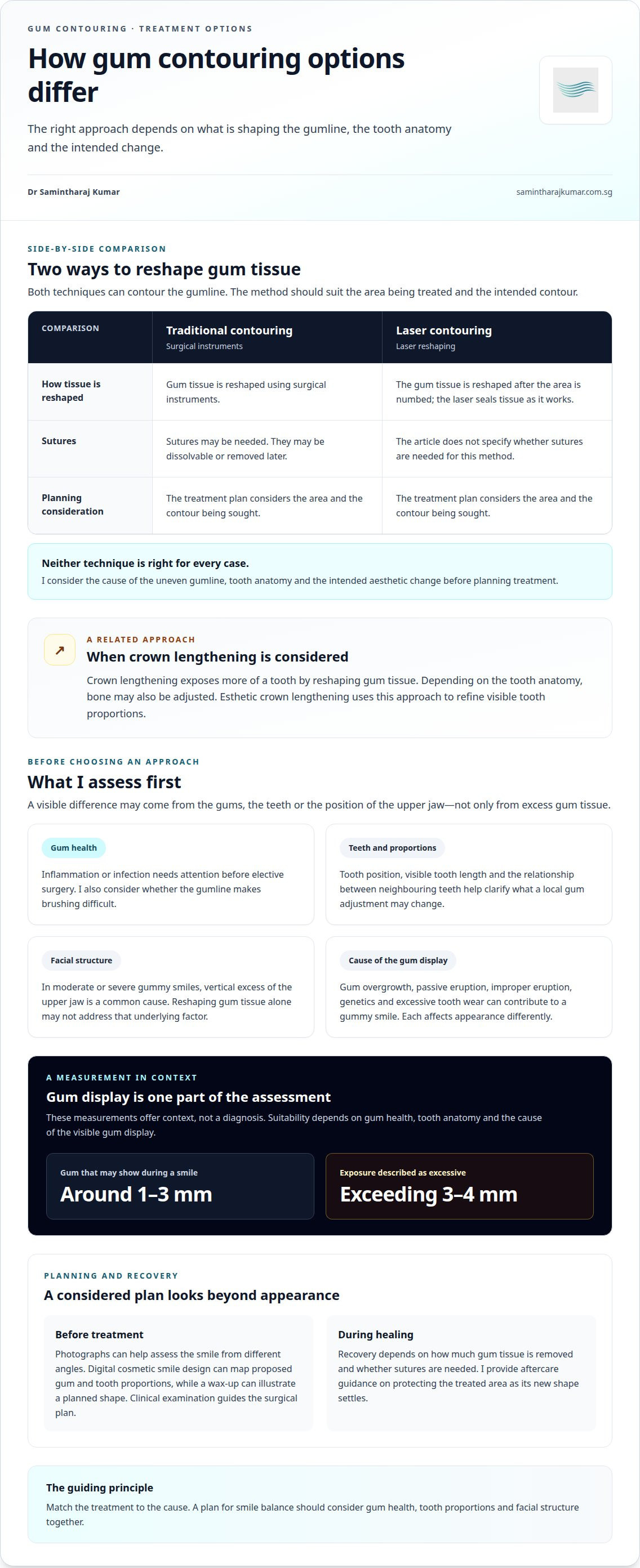
During consultation, I examine gum health, tooth proportions and facial structure. Around 1-3 mm of gum may show during a smile; exposure exceeding 3-4 mm is described as excessive. These measurements are context, not a diagnosis. I also consider whether irregular tissue makes brushing difficult or affects neighbouring teeth.
In my clinical experience, suitability depends on the cause of the gum display, your gum health and tooth anatomy. I explain the proposed changes, relevant risks and alternatives, and how each option may affect your gumline, bite and smile. Appearance is only one part of the assessment.
Photographs can help assess a smile from different angles. Digital cosmetic smile design can map proposed gum and tooth proportions, while a wax-up can illustrate a planned shape before treatment. These tools support discussion, but clinical examination guides the surgical plan.
Lip filler may not suit someone with marked vertical excess of the upper jaw, because it does not address the underlying jaw position. I identify the cause of visible gum display before considering an approach.
Why It Happens
An uneven gumline can reflect differences in how teeth erupted or how gum tissue developed around them. If gum tissue covers more of a tooth’s visible surface, that tooth may look shorter than its neighbour, even when their actual lengths are similar. This can make the smile appear asymmetrical.
Excess gum tissue may result from gum overgrowth or passive eruption, when teeth do not fully emerge from beneath the surrounding gum. Improper eruption, genetics and excessive tooth wear can also contribute to a gummy smile. These causes affect appearance differently: wear changes the visible tooth structure, while excess tissue changes how much of the tooth is exposed.
In moderate or severe gummy smiles, vertical excess of the upper jaw is a common cause. The position or proportions of the upper jaw contribute to greater gum display, so reshaping gum tissue alone may not address the underlying factor. Treatment should match the cause, not just the appearance.
In my clinical experience, examining tooth position, gum levels and facial proportions helps clarify what is shaping the smile. A considered assessment of smile proportions can distinguish a local gumline difference from a broader structural cause.
Why It Matters: How Facial and Smile Symmetry Affect Appearance
A balanced smile does not require mirror-image teeth. If gum tissue covers more of one central incisor than its neighbour, the teeth can look unequal despite having similar natural proportions. Improving smile symmetry with a gum lift aims to address a gum-related difference, not make every tooth identical. This keeps expectations grounded in natural facial features.
A gummy smile shows excess gum tissue above the teeth, changing the visible balance between pink gum and white enamel. If one side of the gumline sits higher, the contrast may make nearby teeth appear different in length. The effect depends on how the gumline relates to the teeth and surrounding facial features.
Appearance is not the only consideration. An irregular gumline can make brushing around a tooth more difficult, allowing bacteria to collect in hard-to-clean areas. Persistent plaque can contribute to gum disease. Treatment planning should therefore consider both the visible contour and access for daily oral hygiene.
Assessing the smile alongside facial proportions helps clarify what a local adjustment can achieve. A careful plan for improving smile symmetry with a gum lift considers whether the concern stems from gum tissue, tooth position or jaw structure. The proposed change should address the cause while taking appearance and gum health into account.
Treatment Philosophy: Why Choose Gum Contouring and Gum Lift?
The procedure should suit the cause of the uneven gumline, the tooth anatomy and the intended aesthetic change. The aim is a considered plan that supports proportion and oral hygiene.
Improving Gumline Balance
Gum contouring reshapes excess tissue to create a more even gumline. For example, adjusting the tissue above one tooth can help it appear closer in length to its neighbour. Planning the contour in relation to nearby teeth helps a local change contribute to the balance of the whole smile.
Traditional and Laser Techniques
Traditional contouring uses surgical instruments and may require sutures, which can be dissolvable or removed later. Laser treatment reshapes gum tissue after it is numbed, and the laser seals tissue as it works. The method should suit the area being treated and the intended contour; neither technique is right for every case.
Gum Contouring and Crown Lengthening
Crown lengthening exposes more of a tooth by reshaping gum tissue. Depending on the tooth anatomy, bone may also be adjusted. Esthetic crown lengthening uses this approach to refine visible tooth proportions. Insurance coverage depends on the policy and clinical basis for treatment.
Revealing More of the Teeth
Removing excess tissue can reveal more enamel and make teeth appear longer. Treated contours are considered permanent, although ageing, gum health and habits can influence how tissues settle. A personal smile assessment can help clarify which approach fits your goals.
What Patients Can Expect: Recovery and Healing Timeline
Recovery depends on how much gum tissue is removed and whether sutures are needed. I explain the expected healing process and provide aftercare guidance, including how to protect the treated area as its new shape settles.
Healing Progress
Swelling or tenderness may occur after gum contouring and often eases within a few days. Many patients return to normal activities within a few days, while full healing usually takes 1-2 weeks. The gum shape may take a few weeks to settle; the site’s new appearance can continue emerging over 2-3 months. I discuss whether sutures are appropriate based on the extent of the procedure.
Aftercare During Recovery
For the first 24 hours, avoid brushing the treated area, then clean gently as I direct. Avoid vigorous brushing or flossing around healing tissue. Choose soft foods and avoid spicy, crunchy, hard or sticky choices that could irritate the gums. Strenuous exercise may need to wait 3-5 days. I provide guidance on cleaning and pain relief to support healing and the planned contour.
Long-Term Impact
A gum lift changes the contour of the treated tissue, and that shape is considered permanent. However, the gumline can continue to settle as ageing, gum health and daily habits affect the surrounding tissues. A lasting result depends on more than the initial outline: it should complement natural tooth proportions and remain compatible with good oral hygiene.
A smoother contour can make brushing and flossing around the teeth easier. For example, a more accessible gumline may help you clean areas that were previously awkward to reach. Consistent oral care matters over time, because plaque left along the gum margin can affect gum health and the appearance of the tissue.
The personal impact can also extend beyond appearance. A smile that feels more balanced may help someone feel more at ease in photographs or conversation, though confidence is individual. My philosophy is to consider aesthetics alongside tissue health and function, rather than treating symmetry as an isolated goal. This perspective supports decisions focused on long-term wellbeing. If you would like to discuss how gum health and smile balance relate to your goals, contact Dr Samintharaj Kumar.
My Perspective: Dr Samintharaj Kumar’s Smile Makeovers
A Smile Makeover may be relevant when your concern extends beyond one section of the gumline. Considering how the gums, tooth proportions and overall smile work together keeps the discussion focused on your priorities rather than a single cosmetic change.
A gum lift addresses gum tissue, while a broader smile assessment considers whether your goals involve other visible features of your teeth. For example, a tooth that looks shorter because of its gum position presents a different concern from one involving tooth shape or several parts of the smile. Understanding the difference helps keep treatment focused and proportionate.
Thoughtful planning includes discussing what a procedure can and cannot change. A Smile Makeover provides a way to consider aesthetic goals in context, including how a proposed change relates to oral health and the natural character of your smile. The right approach is not necessarily the most extensive one: it should address your concern while respecting function and long-term wellbeing.
If you would like to discuss your smile concerns and whether a Smile Makeover is relevant, contact Dr Samintharaj Kumar.
Let Your Next Step Begin With Clarity
A thoughtful approach to improving smile symmetry with a gum lift begins with understanding what you want to change and what you want to preserve. The next step is a conversation that connects your aesthetic priorities with your oral health, so decisions reflect the whole picture rather than a single detail.
In my consultations, I explore what matters most to each patient: the balance of their smile, how their teeth look in photographs, or feeling more comfortable when speaking. Understanding these priorities helps me shape a discussion around their goals. I also explain treatment choices, healing and caring for the gums afterwards.
I believe good care should leave patients better informed, not pressured to decide. When someone is ready to explore their options, they can arrange a conversation with me, Dr Samintharaj Kumar. A considered first step can help them move towards a smile that feels more naturally their own.
Frequently Asked Questions
How long do results last?
The reshaped contour of treated gum tissue is considered permanent. However, the surrounding appearance can change as gum health, ageing and daily habits affect how the tissues settle. Persistent inflammation, for example, could alter the gumline over time. Routine dental care and prompt attention to changes help protect oral health alongside the aesthetic result.
Is it painful?
A gum lift is performed under local anaesthetic, which numbs the treatment area during the procedure. Tenderness or discomfort may occur afterwards as the tissue begins to heal. The area may feel sensitive when eating or cleaning it, so follow your dental team’s aftercare advice. Tell your dentist if pain worsens or causes concern.
Will my gums grow back after gum contouring?
The contour created in treated gum tissue is considered permanent, but the surrounding gums can still change. Gum health, ageing and daily habits can influence how the tissue settles. If the gumline later looks different, an examination can help identify normal tissue changes, inflammation or another concern before further treatment is considered.
Are there risks?
Possible risks include temporary swelling or discomfort, an uneven contour and gum recession if too much tissue is removed. The amount removed matters because gum tissue protects the tooth roots. Careful planning considers tooth anatomy and the desired gumline, while follow-up helps assess healing. Report unexpected changes or persistent symptoms to your dental professional.
Can gum contouring affect tooth sensitivity?
Yes. Mild sensitivity can occur after contouring, particularly if roots become exposed as the gumline changes. A tooth may react more noticeably to cold drinks or air while the exposed area adapts. Sensitivity that persists, intensifies or affects eating warrants dental assessment, to distinguish its cause from ordinary post-treatment healing.
Can it be combined with other treatments?
Yes. Gum contouring can be performed alongside other cosmetic dentistry procedures when the treatment plan allows. For example, a dentist may coordinate gumline changes with treatment intended to alter tooth appearance, so the planned proportions are considered together. The sequence matters: tissue healing and each procedure’s goals should be part of the overall plan. For individuals considering broader aesthetic enhancements alongside dental work, resources from providers like Brazilian Medical Center offer helpful guidance on surgical preparation and planning.
Comments