
How Soon Can You Get an Implant After a Tooth Is Pulled?

A dental implant can sometimes be placed on the same day a tooth is pulled. If the site needs to heal first, early placement is commonly timed for 6-12 weeks after extraction, while delayed placement typically takes place 3-6 months later. How soon you can get an implant after a tooth is pulled depends on factors such as infection, gum health and whether the jawbone can support the implant.
It’s natural to want a clear timeline when planning for the gap left by an extracted tooth. Timing is only one part of treatment: the implant must also integrate with the jawbone before the final tooth is attached.
This guide explains what can make same-day placement possible, when healing or a bone graft may add time, and how treatment progresses from extraction to restoration. Understanding each stage can help you plan with greater confidence and see why careful assessment matters as much as speed.
Table of Contents
How long does the whole dental implant process take?
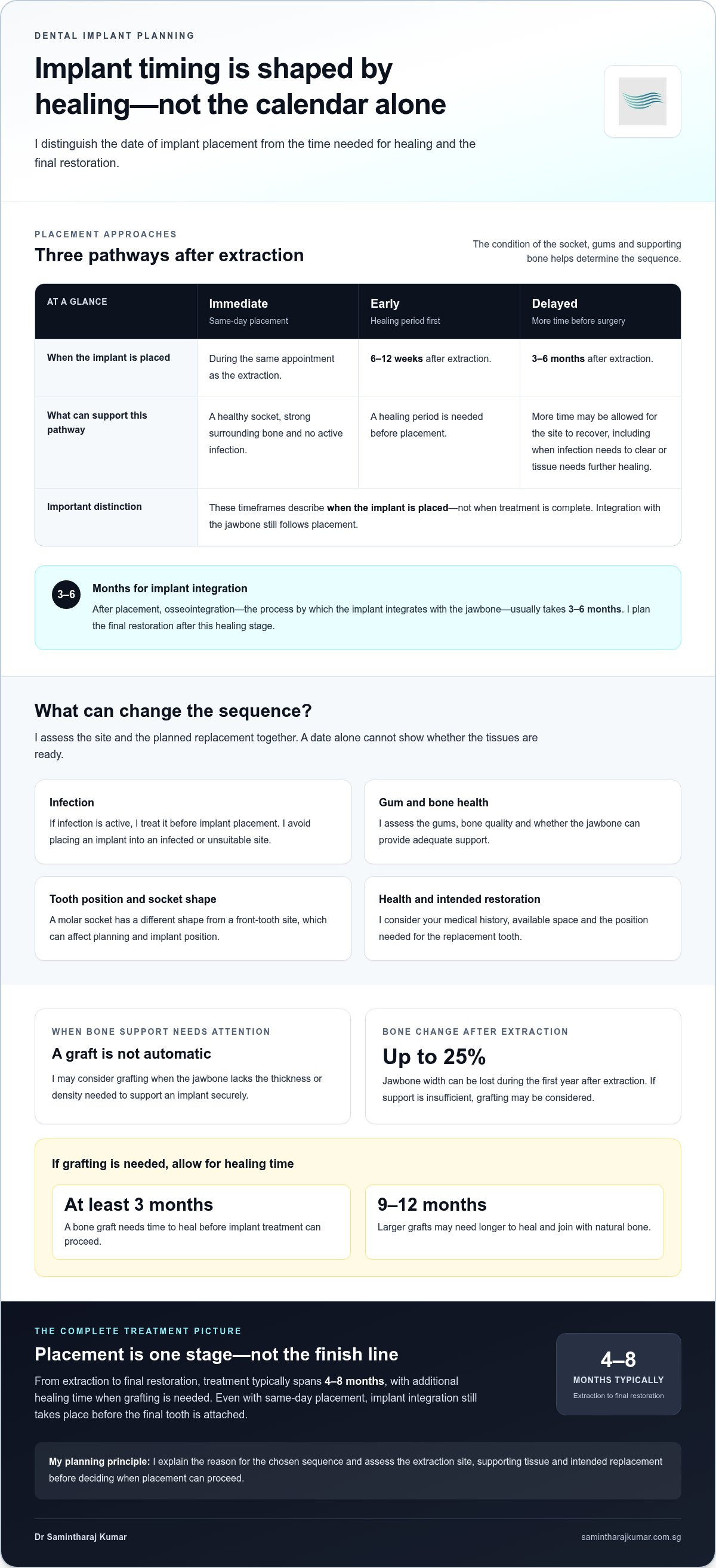
I distinguish the date of implant placement from the time needed to complete treatment. The sequence depends on whether the extraction site can support immediate placement or needs to heal first.
Immediate, Early, and Delayed Placement
These approaches are defined by when placement happens after extraction. Immediate placement takes place on the same day; early placement follows a healing period; delayed placement allows more time before surgery. I consider the condition of the socket, gums and supporting bone when discussing which pathway may suit you. This distinction helps set realistic expectations for the stages ahead.
Typical Wait Before Placement
For early placement, I generally explain a timeframe of 6-12 weeks after extraction. Delayed placement typically takes place 3-6 months after extraction. Immediate placement can remove the wait before implant surgery when the site is suitable. I make clear that these timeframes describe placement, not completion. Patients should also account for the healing that follows implant surgery.
With delayed placement, I allow the extraction site time to recover before inserting the implant. This may be important when infection needs to clear or the tissue needs further healing. The aim is to choose a sequence that supports healing, rather than shorten the timeline at the expense of the site.
After placement, osseointegration, the process by which the implant integrates with the jawbone, usually takes 3-6 months. I plan the final restoration after this healing stage. Even when placement happens on extraction day, integration still needs to occur before the final tooth is attached.
While you wait, temporary tooth-replacement options may be considered. I take the gap’s location and the healing site into account when discussing an interim solution. It can address the missing tooth during treatment without changing the biological steps needed for implant integration. A clear sequence gives each stage a purpose and helps you understand what comes next.
Is a Bone Graft Necessary After a Tooth Extraction?
A bone graft isn’t automatically needed after every extraction. I consider one when the jawbone lacks the thickness or density needed to support an implant securely.
Immediate dental implant placement means inserting an implant during the same appointment as tooth extraction. I consider it when the socket is healthy, the surrounding bone is strong and there is no active infection.
I avoid placing an implant into an infected or unsuitable site, as this can increase complications, including infection and potential implant failure. Before considering immediate placement, I assess the extraction site and supporting tissue.
After a tooth is removed, the jawbone naturally remodels. A person can lose up to 25% of jawbone width during the first year after extraction. If that change leaves insufficient support, I may consider grafting to rebuild the site before implant treatment.
To decide whether grafting is needed, I assess bone quality and the planned implant position. A bone graft needs at least three months to heal before implant treatment can proceed. Larger grafts may need nine to 12 months. I plan implant placement after the graft has healed and joined with natural bone.
The cost of a dental implant in the United States, including extraction and bone grafting, depends on the case and is provided after a quote request. Factors include the complexity of the extraction, grafting needs and the planned restoration.
Discuss your implant plans before extraction so I can assess the tooth, surrounding tissue and intended replacement together. During extraction, I may perform socket preservation to help limit jawbone deterioration. This can inform later placement, although I still assess healing before proceeding.
From extraction to final restoration, treatment typically spans 4-8 months, with additional healing time when grafting is needed. Discussing dental implant planning before a tooth is removed can help me explain the sequence and factors that shape your timeline.
Extraction & Implant: How Soon Can You Replace a Tooth?
An implant may be placed after extraction once the site and treatment plan support it. When you ask how soon you can get an implant after a tooth is pulled, I look beyond the calendar to the factors that affect placement.
Factors Affecting Implant Timing
I consider the tooth’s position, the extraction site, implant design and your overall health. A molar socket, for example, has a different shape from a front-tooth site, which can affect planning. The intended restoration matters too: I plan placement around the position needed for the replacement tooth, rather than treating surgery as an isolated step.
Implant Eligibility
To assess whether you’re a suitable candidate, I consider whether your health and local tissues can support the procedure and healing. I review your medical history alongside your gums, jawbone and the space available for the replacement. This broader assessment matters because a suitable plan must account for both the surgical site and how the restored tooth will function with neighbouring teeth.
Infection and Bone Loss
If an infection is active, I treat it before implant placement. Bone loss does not automatically rule out an implant, but it can change the preparation needed to create adequate support. I assess the remaining bone alongside the intended implant position. This helps determine whether the site is ready for placement or needs preparatory treatment first.
My aim is to explain the reason for the chosen sequence, not simply give you a date. I discuss what the examination shows, which clinical findings influence placement and how those decisions shape the next stage. This gives you a clearer understanding of your options and why one approach may suit your needs better than another.
Dental implant treatment steps
A dental implant process is a sequence of assessment, surgical placement, healing and restoration. In my clinical experience, understanding each stage helps patients see how a replacement tooth is planned, not simply when surgery happens.
Assess the site and treatment goals. The first step is reviewing the missing tooth, gum tissue, jawbone and medical history. A front tooth, for example, may require different restoration planning from a back tooth used for chewing. This assessment helps shape the surgical approach and the design of the replacement.
Plan the extraction and implant sequence. If the tooth is still present, its condition and the surrounding bone inform whether extraction and implant placement can be coordinated. Where bone grafting is needed, the plan accounts for graft healing before implant surgery. The aim is to prepare a stable foundation, rather than rush to the next procedure.
Place the implant. During surgery, the implant is positioned in the jawbone according to the treatment plan. The gum tissue is then allowed to heal around the site. The precise placement matters because it affects how the future tooth sits and functions.
Monitor healing and integration. Follow-up visits are essential for monitoring progress while the implant integrates with the jawbone. These appointments allow the healing site to be reviewed before treatment advances. A temporary tooth-replacement option may be used during this period, depending on the treatment plan.
Complete the final restoration. Once integration is adequate, the planned crown or other restoration can be attached. The clinician checks its fit and function, including how it meets neighbouring teeth when you bite. This final stage turns the implant into a working tooth replacement.
Each stage informs the next. If healing changes the condition of the site, the plan can be adapted before restoration. That is why follow-up is part of treatment, not an administrative extra. For a considered plan covering implant placement and restoration, discuss your dental implant treatment.
Dr Samintharaj Kumar: Ceramic Dental Implants
Dr Samintharaj Kumar offers Ceramic Dental Implants and Dental Implants for tooth replacement after extraction. I assess the extraction site, gum health and available jawbone to plan implant timing and discuss a suitable treatment approach.
Bring your questions about healing, bone grafting and the steps from implant placement to the final restoration. A clear plan connects these decisions, so you can understand what happens next and why the proposed timing fits your oral health. Ceramic Dental Implants may be discussed alongside other dental implant options.
For a personalised discussion about implant treatment after extraction, contact me or visit samintharajkumar.com.sg.
Make Your Next Step an Informed One
Planning a tooth replacement is an opportunity to consider more than the empty space. The decision can shape how your bite feels, how your smile functions and how comfortably treatment fits into everyday life. In my clinical experience, patients feel more assured when they understand the reasoning behind their individual plan.
How soon you can get an implant after a tooth is pulled depends on the condition of the site and the sequence of care that best supports healing. A personal assessment can make the next steps clearer, giving you time to discuss your priorities and understand the choices ahead.
If you’re ready to explore your options, contact Dr Samintharaj Kumar to discuss your dental implant needs. A thoughtful conversation is a constructive first step towards restoring comfort, function and confidence.
Frequently Asked Questions
Is it better to wait after an extraction before getting an implant?
Waiting is preferable when the extraction site needs to heal or an infection requires treatment before implant surgery. For example, active gum disease may need to be addressed before placement. If the socket is healthy and has strong supporting bone, immediate treatment may be possible. The aim is to choose timing that supports stable healing, rather than prioritise the earliest possible appointment.
What Happens in Your Mouth After Tooth Extraction?
After extraction, a blood clot forms in the socket and protects the healing tissues. The gum gradually closes over the area while the jawbone remodels where the tooth root once sat. This natural change explains why the socket’s shape and bone support can differ over time. Keep the area clean according to your dentist’s instructions, and report increasing pain or swelling instead of assuming healing is progressing normally.
Are tooth implants worth the wait?
For people seeking a fixed replacement, an implant can restore everyday functions such as chewing and speaking. It replaces the tooth root and stimulates the jawbone, unlike a replacement that rests only on the gums. Its value depends on how well the treatment suits your oral health, function and restoration goals. Discuss those priorities during planning so the expected benefits and treatment stages are clear.
Can I get a dental implant the same day my tooth is pulled?
Yes, an implant can be placed during the same appointment as extraction when the socket is healthy, the surrounding bone is strong and there is no active infection. Same-day placement means the implant is inserted at extraction, not that the finished crown is necessarily attached that day. The implant still needs to integrate with the jawbone before the final restoration is fitted.
Do I always need a bone graft before getting an implant?
No, a bone graft isn’t required for every implant. It may be recommended if the jawbone isn’t thick or dense enough to support the implant in its planned position. For example, a healed extraction site with adequate bone may not need grafting, while bone loss can make rebuilding necessary. The assessment considers the available bone and the position needed for a functional restoration.
How long should you wait for a delayed dental implant after extraction?
Delayed implant placement typically takes place 3-6 months after extraction. This period allows the extraction site to heal before implant surgery. If the site needs a bone graft, healing that graft adds time before placement can proceed. The overall treatment also includes integration of the implant and fitting the final restoration, so the placement date is only one milestone in the process.


Comments