
Is Gum Contouring Permanent? How Long Can Results Last

For most people, gum contouring results are permanent: reshaped gum tissue rarely grows back. Still, the answer to “is gum contouring permanent?” depends partly on changes over time, such as gum recession and ageing. These changes are different from the treated tissue regrowing.
It’s natural to wonder whether a change to your smile will last, especially when your gums frame the shape and balance of your teeth. I’ll explain what gum contouring changes, why regrowth is rare, and how gum health and treatment planning can affect the result. You’ll also learn what recovery involves and how aftercare supports healing, so you can better understand the process and its lasting impact.
Table of Contents
Recovery and aftercare
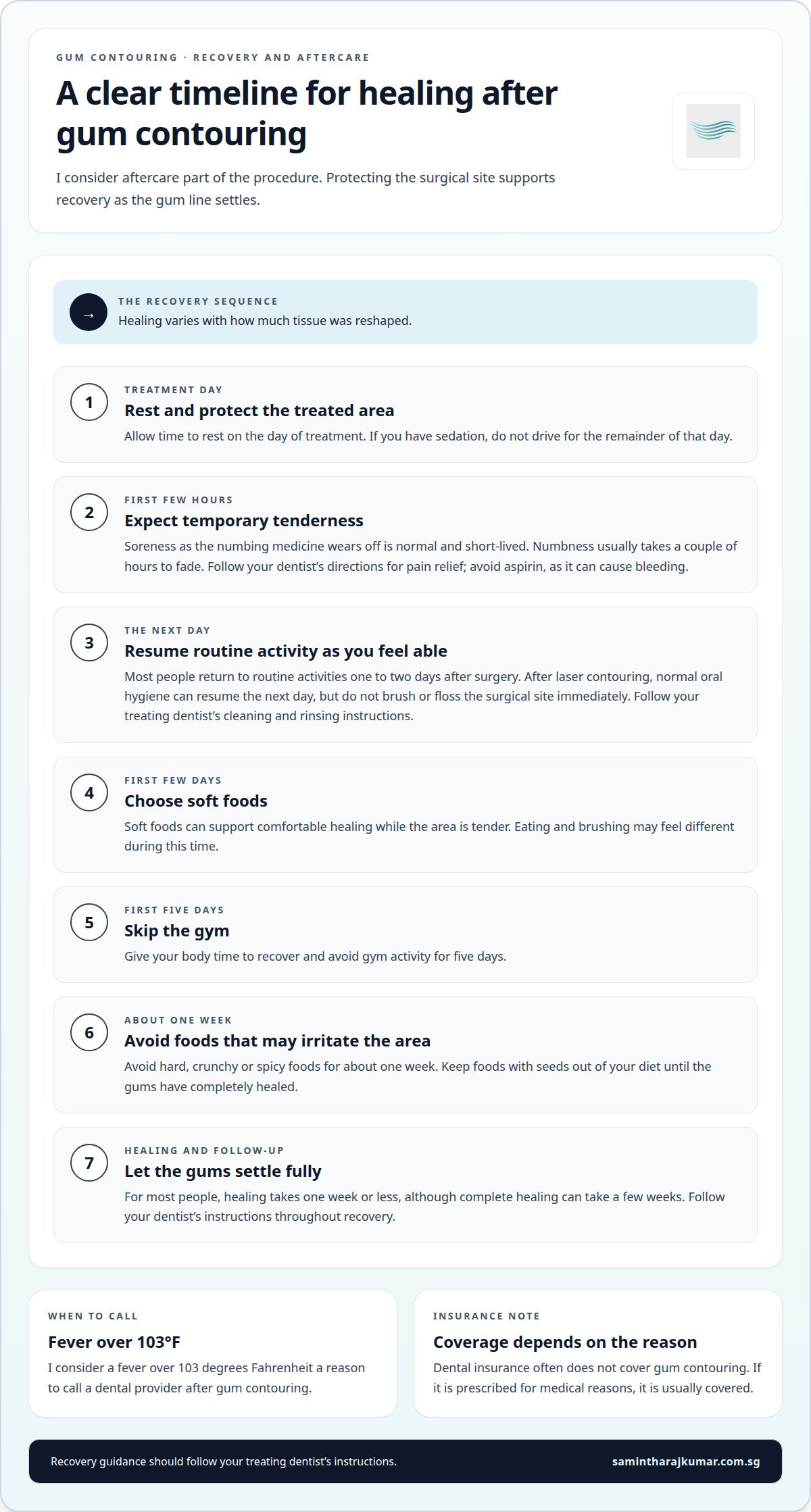
After gum contouring, discomfort and healing depend partly on how much tissue was reshaped. I consider aftercare part of the procedure: protecting the surgical site supports recovery as the gum line settles.
Recovery Discomfort
Recovery discomfort is the temporary soreness that can follow gum contouring surgery. Soreness as the numbing medicine wears off is normal and short-lived; numbness usually takes a couple of hours to fade. This matters because eating and brushing may feel different while the area is tender. Some dentists use dental lasers to remove and sculpt gum tissue, which can help reduce pain, swelling and recovery time. I encourage patients to follow their dentist’s directions for pain relief. Avoid aspirin, as it can cause bleeding.
Healing Time and Recovery Advice
Healing time is how long the gums need to recover after the procedure. For most people, healing takes one week or less, although complete healing can take a few weeks. Most people return to routine activities one to two days after surgery. Allow time to rest on the day of treatment and skip the gym for five days.
Choose soft foods for the first few days. Avoid hard, crunchy or spicy foods for about one week, and avoid foods with seeds until the gums have completely healed. After laser contouring, normal oral hygiene can resume the next day, but don’t brush or floss the surgical site immediately. Follow the treating dentist’s instructions for rinsing and cleaning.
Does dental insurance cover gum contouring? Dental insurance often does not cover gum contouring. If it is prescribed for medical reasons, it is usually covered.
After sedation, don’t drive for the remainder of that day. I consider a fever over 103 degrees Fahrenheit a reason to call a dental provider after gum contouring.
Are the Results of a Gum Contouring Procedure Permanent?
Gum contouring is an oral surgical procedure that reshapes the gum tissue around the teeth. A dentist removes or sculpts excess tissue to create a more even gum line while preserving healthy support. The aim is not simply to remove tissue. I consider how the gum margin relates to each tooth and to the overall smile.
Patients often consider contouring for excessive gingival display, commonly called a gummy smile. Reducing excess gum can make teeth appear longer and bring the visible gum line into better balance. Uneven margins may also affect smile symmetry, even when the amount of visible gum is average. Each treatment plan should reflect the individual’s anatomy rather than aim for a uniform shape.
Gum reshaping may be cosmetic, but it can also serve a health purpose in selected cases. It may be considered alongside other cosmetic dental treatment. Existing tooth decay or gum disease should be addressed before contouring. Assessing dental and gum health first helps inform a sound treatment plan.
Precision matters: removing too much gum tissue can expose tooth roots and put them at risk. Later gum recession may expose more root and change the appearance, even if the original reshaping was successful. I assess the gum line, tooth roots and tissue levels before planning what can be safely reshaped. For a broader view of how gum contours relate to tooth proportions, consider the elements of smile design.
Whether gum contouring is permanent
Long-term care after gum contouring is less about maintaining a fixed appearance and more about protecting gum health. Keep up daily brushing and flossing, and attend regular dental check-ups. These habits support the tissues around the teeth and help maintain the result.
A change in the gum line deserves careful assessment rather than an assumption about its cause. I consider the pattern across the smile, gum health and how the teeth relate to the visible margin. For example, a change around one tooth may call for a different assessment from one affecting several teeth. That context can help distinguish an isolated concern from a broader change in oral health.
You can also raise changes you notice at your usual dental appointments, such as a newly uneven margin or a tooth looking different in photographs. A dentist can compare the current appearance with the treatment plan and assess the surrounding tissues. This grounds the discussion in a clinical assessment rather than memory or a single snapshot.
From a biological perspective, the gum line is part of a living oral environment, not a cosmetic border that can be considered separately from dental health. My approach is to weigh appearance alongside tissue health and function. That balance matters because a cosmetic objective should not take priority over preserving healthy support for the teeth.
Regular check-ups also offer a chance to review brushing and flossing, especially around the treated area. If cleaning is uncomfortable, discuss it with your dentist rather than avoiding that part of your routine. Ongoing care does not mean expecting the gum line to remain visually identical. It means giving the tissues consistent attention and addressing concerns in the context of your individual mouth.
Gum tissue regeneration after contouring
Gum tissue regrowth after contouring is extremely rare, but it can happen. The appearance of the gum line depends partly on how much excess tissue is removed and on the bone around each tooth. This helps explain why a change in appearance does not always mean the tissue has regrown.
What factors affect gum tissue regrowth after contouring? The amount of bone surrounding the teeth matters, as does whether a small amount is removed during the procedure. If excess bone remains around a tooth, the gums can grow back towards their pre-procedure position. Removing a small amount of bone can reduce that risk.
In many cases, contouring also involves removing a small piece of bone near each tooth root. This addresses the underlying support around the gum margin, rather than only reshaping visible tissue. The dentist’s assessment of bone and gum position therefore informs the treatment plan. The goal is to preserve healthy support and protect oral health.
A scalpel and a dental laser reshape tissue in different ways, but the instrument alone does not determine whether gum tissue regrows. The bone around the teeth and the extent of reshaping are central considerations. A later change in the gum line may also reflect recession, which exposes more of the tooth root, rather than regrowth of removed tissue.
It takes time for the gum line to settle after surgery. Patients may need to wait about eight to 12 weeks before a provider can determine whether another procedure is needed. This interval allows the healing tissue and final contour to be assessed, rather than judging the result during early recovery. A follow-up assessment can clarify whether the concern is regrowth, recession, or healing.
If you’re concerned about tissue returning or the appearance changing, arrange an assessment of your gum contour. A careful review of the gum line and supporting bone helps guide the next decision.
Dr Samintharaj Kumar: Ceramic Dental Implants
Dr Samintharaj Kumar offers Ceramic Dental Implants for patients exploring tooth replacement. Implants address a different concern from gum contouring, which reshapes gum tissue rather than replacing a tooth. If you’re considering both treatments, discuss how each relates to your oral health and overall smile plan.
In my clinical experience, the first step is understanding the concern behind the change you want. A gum line concern calls for an assessment of the tissues and tooth proportions; a missing tooth raises a separate question about replacement. Keeping those needs distinct supports clearer decisions and a treatment plan centred on your priorities.
To discuss whether Ceramic Dental Implants suit your needs, contact Dr Samintharaj Kumar.
Make your next decision with clarity
If you’re still asking whether gum contouring is permanent, the more useful next step is to understand what is shaping your gum line now. A change may relate to the original contour, later recession or another shift in oral health. Identifying the cause helps focus any future decision on the right concern, rather than appearance alone.
My approach connects aesthetic goals with the health and function that support them. If you’re considering a change to your smile or want to understand how your gum line fits into your wider dental needs, a considered conversation can help clarify your options. The right approach depends on the concern being addressed.
Contact Dr Samintharaj Kumar to discuss your dental concerns. A clear understanding is a strong foundation for confident decisions about your oral health.
Frequently Asked Questions
What is gum contouring?
Gum contouring is a dental procedure that reshapes gum tissue to alter the visible gum line. For example, a dentist may sculpt uneven margins so the teeth appear more balanced when smiling. It’s commonly used for excessive gum display, but the plan depends on the relationship between teeth and gums. The aim is a harmonious outline while retaining healthy tissue that supports the teeth.
How Gum Lifts Are Done: What Is the Procedure?
A gum lift is performed with local anaesthesia to numb the gums while a dentist reshapes tissue along the teeth. Some procedures use a laser; others use instruments such as a scalpel. The method and treatment area depend on the gum line and oral anatomy. The procedure takes one to two hours on average and typically takes place during one office visit.
The Cost of Gum Contouring: Is It Worth the Investment?
Whether gum contouring feels worthwhile depends on the concern, the area involved and the expected benefit to appearance or oral health. The price depends on the case and is provided after a quote request; factors include the number of teeth treated, location and dentist’s experience. Cosmetic gum contouring is often not covered by dental insurance, while medically prescribed treatment is usually covered.
What Is a Gum Lift?
A gum lift is another name for cosmetic gum reshaping that removes unwanted gum tissue, helping teeth look longer or more symmetrical. It may be considered when excess tissue obscures part of a visible tooth or when the gum margins look uneven. It is different from treating gum recession, which exposes more of the tooth root rather than removing excess tissue.
When can I go back to work or school?
Most people can return to work, school and routine activities one to two days after gum contouring. The treated gum may still feel tender, so plan meals and speaking commitments with comfort in mind. If sedation was used, avoid driving for the rest of that day. Your return should also take account of the procedure’s extent and the recovery instructions provided.
Is gum contouring permanent?
In most cases, yes: reshaped gum tissue does not grow back, and regrowth is extremely rare. That does not mean the gum line can never change. Ageing or gum recession may alter its appearance over time. If the contour looks different later, distinguishing recession from regrowth helps clarify what has changed and what assessment may be appropriate.

Comments