
Managing pain after oral surgery and understanding recovery time

Recovery usually unfolds over days: pain after oral surgery is typically worst during the first 2 to 3 days, then starts to improve, while normal side effects after a tooth removal should settle within a week. Managing pain after oral surgery is therefore about easing discomfort while protecting the healing site.
Soreness and swelling after an extraction are common, and it’s natural to wonder whether one pain reliever is enough. Ibuprofen and acetaminophen (paracetamol) taken together may provide more effective dental pain relief than either medicine alone. The right choice depends on your health and the instructions you’ve been given.
This guide explains why extraction pain happens, what healing may feel like and how long recovery can take. It also covers pain relief options, how combining medicines works and signs that mean you should seek dental advice.
Table of Contents
Arnica for swelling and bruising
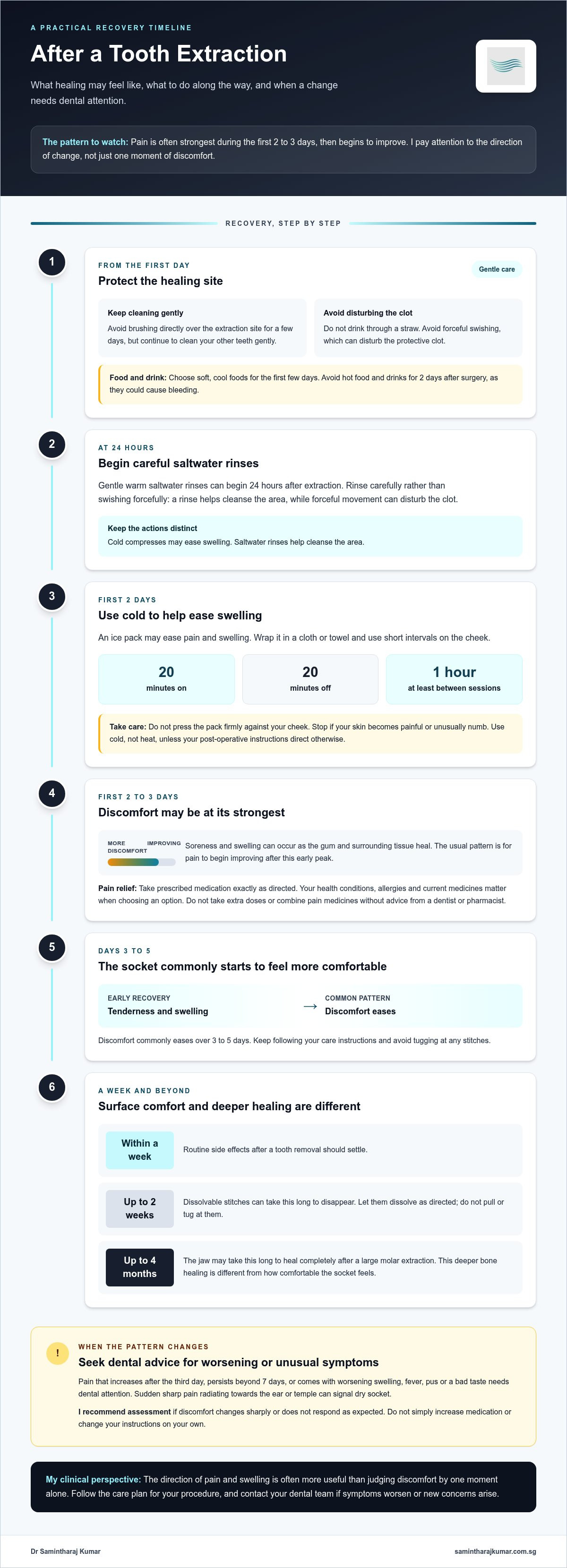
Cold compresses can ease pain and swelling after oral surgery. Apply an ice pack for 20 minutes, then remove it for 20 minutes. Keep a cloth or towel between the pack and skin to help prevent an ice burn. After an icing interval, take a break for at least an hour before another session. Ice is most useful during the first two days, when swelling can be most noticeable.
Use cold, not heat, as the early measure for swelling; don’t apply heat unless your post-operative instructions direct it. Gentle warm saltwater rinses can begin 24 hours after tooth extraction. Rinse carefully rather than swishing forcefully, since disturbing the clot can affect healing. These steps support comfort, but they serve different purposes: a cold compress may ease swelling, while a saltwater rinse helps cleanse the area.
Arnica may help reduce bruising and swelling during recovery, but it is a complementary treatment, not a substitute for your dentist’s instructions or prescribed pain relief. Use it only in a form and manner suitable for your surgical site. For example, don’t place a product directly into an extraction socket unless your post-operative instructions say to do so. Acetaminophen may be used for pain relief after an extraction, following your care instructions.
Keep an ice pack wrapped, apply it for short periods, and stop if your skin becomes painful or unusually numb. Don’t press the pack firmly against your cheek or the surgical area. These precautions can help limit irritation while reducing swelling. If your surgeon has given you a different schedule, follow those instructions rather than extending an icing session.
Arnica and cold compresses may support comfort, but they don’t explain every change in swelling or bruising. Monitor whether symptoms improve as recovery progresses and follow the care plan for your procedure. If swelling worsens or new concerns arise, contact your dental team for advice.
Why Does Pain Happen After an Extraction?
After an extraction, the gum and surrounding tissues need time to heal, so tenderness can occur. In my clinical experience, the character and direction of pain matter as much as its intensity. An ice pack may ease discomfort, but pain that changes sharply or worsens needs attention rather than simply more medication.
Over-the-counter acetaminophen or ibuprofen may help after a tooth extraction. Prescription non-narcotic medication may also be recommended when the procedure and your circumstances call for it. Before choosing pain relief, your dentist should consider your health conditions, allergies and current medicines to assess possible interactions and side effects.
Take prescribed medication exactly as directed, including the stated timing and duration. Don’t take extra doses or combine pain medicines without guidance from a dentist or pharmacist. If discomfort continues despite following instructions, tell your dentist what you have taken and how the pain has changed. The next step is to assess the cause, not simply increase medication.
In the United States, medication costs vary depending on the prescribed drug and where it is dispensed. Insurance coverage also depends on the plan and prescription, so check the relevant benefit details to understand whether it is covered.
A dentist may prescribe opioids when they are considered appropriate for pain control. They can cause dizziness, drowsiness, constipation, hallucinations, muscle rigidity, nausea and vomiting. Addiction can occur even when they are taken as prescribed. A dentist should discuss these risks and your health history before considering opioid pain relief.
Dry socket is one possible cause of pain that needs dental review. If discomfort changes suddenly or does not respond as expected, contact your dentist rather than changing medication on your own. An examination can help identify the cause and guide appropriate care.
Normal post-extraction pain and healing
After an extraction, tenderness and swelling can occur as the gum and surrounding tissue heal. In my clinical experience, the direction of change is more useful than judging discomfort by one moment alone.
Healing After an Extraction
Normal post-extraction healing means the surgical site gradually settles while the socket and surrounding tissue repair. Pain is often strongest during the first 2 to 3 days, then begins to improve. Discomfort commonly eases over 3 to 5 days, and routine side effects should go away within a week. A large molar can take up to four months for the jaw to heal completely. I distinguish this deeper bone healing from how comfortable the socket feels.
Foods and Drinks to Avoid
For the first few days, choose soft, cool foods such as yoghurt, applesauce, smoothies or mashed potatoes. Avoid hot food and drinks for 2 days after surgery, as they could cause bleeding. Don’t drink through a straw after tooth extraction; suction can disrupt the protective clot and contribute to dry socket. These choices help protect the site while chewing feels tender.
Oral hygiene still matters during recovery. For a few days, avoid brushing directly over the extraction site, but continue cleaning your other teeth gently. An antimicrobial mouthwash may be used two to three times a day after extraction. Follow your surgical instructions for rinsing and cleaning, as forceful swishing can disturb the clot.
If stitches were used, dissolvable ones can take up to 2 weeks to disappear. Don’t pull or tug at them; let them dissolve as directed. Honey is sometimes suggested for healing and pain, but I advise against placing food products on an extraction site unless included in your care instructions. Keep the socket clean and follow your post-operative guidance.
Notice the trend. Pain that increases after the third day, persists beyond 7 days, or comes with worsening swelling, fever, pus or a bad taste needs dental attention. Sudden sharp pain radiating towards the ear or temple can signal dry socket. I recommend assessment for these changes rather than assuming they are routine healing.
Combining ibuprofen and acetaminophen for dental pain
Managing pain after oral surgery may involve medicines that work in different ways. Ibuprofen is a non-steroidal anti-inflammatory drug (NSAID) that reduces inflammation at the affected site. Paracetamol, known as acetaminophen in the United States, acts centrally by blocking pain-signal transmission in the central nervous system. Together, they may provide more effective dental pain relief than either medicine alone.
This complementary action may help ease discomfort around an extraction site, where inflammation can contribute to tenderness. Pain relief does not treat an infection or explain why a socket is getting worse. Medication may ease symptoms while surrounding tissue heals, so changes in your symptoms still matter.
Before combining medicines, consider your prescription instructions and any other medication you take. Ask your dentist or pharmacist whether the combination is appropriate for you. They can consider your health circumstances and explain how to follow the directions safely. Don’t add doses or combine products without checking their ingredients and instructions.
If you have been advised to avoid ibuprofen or paracetamol, follow that advice. Don’t exceed the directions on the packaging or prescription, even if discomfort continues. Worsening or unexpected changes in pain need attention, not unsupervised changes to medication. A dental assessment can help determine whether the extraction site needs further care.
When managing pain after oral surgery, distinguish symptom relief from treating its cause. Ibuprofen targets inflammation, while paracetamol acts on pain signalling. Their combined effect may help some people, but the safest choice depends on the individual and their medicines. Follow professional instructions and report persistent or changing pain.
If pain after oral surgery is difficult to control or changes unexpectedly, seek an assessment for oral surgery concerns so the cause can be considered alongside medication.
Dr Samintharaj Kumar: Ceramic Dental Implants
Dr Samintharaj Kumar offers Ceramic Dental Implants for patients exploring tooth replacement after an extraction. Pain management supports early recovery, while a separate conversation about replacing a missing tooth can address longer-term function and restoration. The right option depends on a clinical assessment and the condition of your mouth.
I also offer standard Dental Implants, Teeth in A Day, and Zygomatic Dental Implants. These are distinct treatment options, not interchangeable solutions. In my clinical approach, the starting point is understanding each patient’s needs and examining the factors relevant to their treatment plan.
If you’re considering tooth replacement after an extraction, contact Dr Samintharaj Kumar or visit samintharajkumar.com.sg to learn more.
Make recovery part of the wider care plan
Recovery is part of treatment. It’s where careful clinical decisions meet daily life: eating comfortably, resting well and returning to familiar routines. My approach considers both immediate comfort and the longer-term function of the mouth. Managing pain after oral surgery should therefore begin with a clear understanding of the procedure, the healing site and the patient’s needs.
If pain or healing concerns are affecting your confidence about what comes next, a personalised assessment can clarify your priorities. If you’re considering tooth replacement, the discussion can also cover suitable restorative options based on your oral health and goals. Good decisions start with understanding your individual clinical picture, rather than relying on a general expectation of recovery.
Contact Dr Samintharaj Kumar to discuss your oral health concerns and possible next steps. With clear information and thoughtful care, you can move forward with greater confidence.
Frequently Asked Questions
How long does recovery take?
After a tooth extraction, many people return to routine activities within 48 to 72 hours, while deeper healing continues beyond that. If dental surgery involved general anaesthetic, most people need 2 to 4 days off work. Your recovery also depends on the procedure and how your mouth responds, so plan a lighter schedule and resume normal demands gradually.
How to Speed Up the Healing Process?
Support healing by resting during the first three days, avoiding exercise for a few days, and not smoking or vaping after extraction. These choices help protect the surgical site while tissue repairs. Follow your prescribed care plan instead of adding home remedies, and avoid activities that could disturb the socket. Healing takes time, and careful aftercare helps prevent setbacks.
What If the Pain Doesn’t Go Away?
If pain persists beyond seven days after extraction, arrange a dental review rather than continuing to manage it alone. Pain that increases after the third day also warrants a call. A dentist can examine the socket and consider causes such as dry socket or infection. Describe when the pain began, how it has changed and whether you have any new symptoms.
What Is Dry Socket?
Dry socket occurs when the protective blood clot is lost or dissolves too soon, leaving bone and nerves exposed. It often causes sudden, sharp pain that may radiate towards the ear or temple. A dentist can clean the socket and apply a medicated dressing to relieve pain and support healing. Don’t try to treat the socket by placing products inside it yourself.
When should I call my healthcare provider?
Call your dentist after extraction for a fever of 100.4 degrees Fahrenheit (38 degrees Celsius) or higher, pus, a bad taste, or excessive swelling. Seek advice if pain is worsening rather than settling, particularly alongside these symptoms. When calling, explain the procedure, when symptoms started, and any medicines you’ve taken. This helps the dental team understand the change and advise on assessment.
What pain and swelling are normal after oral surgery, and how long do they last?
Some soreness, swelling and a small amount of blood in saliva can occur after oral surgery. Pain is commonly strongest during the first 2 to 3 days, while swelling may appear within 48 hours and last 5 to 7 days before improving. The key is the trend: symptoms should ease, not progressively intensify. Follow your post-operative instructions if your procedure has specific guidance.

Comments