
Missing Back Teeth and Chewing: How Tooth Loss Changes Eating

A painless gap can still change how you eat. Missing a back tooth may make chewing less efficient, lead you to favour one side and put extra strain on the teeth that remain. Understanding how missing teeth affect chewing means looking beyond discomfort at how your bite and everyday food choices may change.
It’s understandable to assume a gap needs attention only when it hurts. But teeth can shift and your bite can change without obvious pain, so comfort alone does not show how well your mouth is functioning.
I’ll explain how tooth loss can affect chewing, why the number of natural teeth matters, and how changes in eating may influence food choices and nutrition. You’ll also learn why a painless gap can still merit a dental assessment, and what factors help guide decisions about restoring function. The aim is not to suggest that every missing tooth requires the same treatment, but to help you recognise what may be changing and why a considered evaluation can support your long-term oral health.
Table of Contents
How losing a back tooth affects chewing efficiency
A missing back tooth can reduce chewing efficiency and change how bite forces are distributed. Dentures are removable, bridges rely on neighbouring teeth, and implants anchor replacements in the jaw.
Changes in Chewing Efficiency
Chewing efficiency describes how effectively your teeth break food into manageable pieces before swallowing. Losing a molar can make firm foods, such as meat or raw vegetables, harder to break down. You may chew for longer, avoid that side or rely more on other teeth. The effect depends on which tooth is missing and how your remaining teeth meet when you bite.
Uneven Chewing Forces and Tooth Wear
Favouring one side to work around a gap can create uneven chewing forces. For example, repeatedly chewing on the opposite side puts more work on those teeth and jaw muscles. Over time, extra loading may contribute to tooth wear, fractures or muscle fatigue. Notice whether chewing feels different on each side, especially with foods that need more pressure.
Chewing changes can affect oral health-related quality of life, not just meals. The authors of the Brazilian observational study (not identified in the research) reported that, in this sample, having fewer natural teeth was correlated with higher OHIP-14 scores, indicating poorer quality of life (Spearman's rho = -0.26, P = 0.001). OHIP-14 measures the reported impact of oral health on daily life. A difficult meal or avoiding certain foods can therefore matter beyond the immediate sensation of chewing.
Circumstances such as income, appointment availability and access to preventive care can affect when a damaged tooth receives attention. These factors do not determine an individual’s outcome, but they may influence whether a problem is identified early or addressed after chewing has changed. The type and position of the missing tooth also guide restoration decisions.
Q1: If it doesn’t hurt, does a missing tooth still need to be replaced?
A missing tooth can affect your bite or jaw support without causing pain. I assess the gap and how your teeth meet, rather than relying on comfort alone to judge whether it needs attention.
In the United States, replacement costs depend on the case and are provided after a quote request. The number and position of missing teeth, the restoration selected, and the condition of the surrounding teeth and jawbone all influence the plan.
I recommend seeing a dentist if chewing becomes difficult, your bite feels different or nearby teeth appear to shift. An examination can identify changes even when the gap feels comfortable.
Facial Shape and Jaw Support
Jaw support refers to the bone and surrounding structures that help maintain the lower face. After tooth loss, reduced chewing pressure on the affected bone can contribute to resorption, which begins within weeks. In the first year after tooth loss, the jaw can lose up to 25% of its bone width in the affected area. I consider the gap’s location and extent when assessing possible effects on facial shape.
Missing Front Teeth and Molars
Front teeth help you bite into foods such as apples or sandwiches, while molars grind food. Losing a front tooth can affect airflow and tongue placement for sounds such as “s”, “f” and “th”. A missing molar may make meat harder to chew. I consider these different functions when discussing how a gap may affect eating, speech and appearance.
Oral health-related quality of life includes effects beyond pain, such as changes to daily activities and social interactions. One study associated chewing disability with poorer results in five of seven OHIP domains. I consider these experiences alongside dental findings, since the effects of a gap can extend beyond a single meal.
Dietary preferences and nutritional status
Changes in chewing can influence which foods feel practical to eat. Someone who finds firm textures difficult may choose softer meals, such as porridge instead of crisp cereal. This helps explain why everyday food preferences sometimes change after tooth loss.
You might choose tender fish over chewy meat, or cooked vegetables over crisp raw ones. If you repeatedly avoid certain textures, your overall range of foods may narrow. That does not automatically mean you have a nutritional deficiency, but eating patterns are relevant when considering oral health and wellbeing.
Food preparation can help you maintain variety. Cutting ingredients into smaller pieces, cooking vegetables until tender or choosing softer protein may make meals easier to manage. These adjustments can help you avoid relying on a limited range of easy-to-chew foods. Notice whether you make these changes occasionally or at most meals.
In my clinical experience, it helps to consider more than whether you can manage a meal. Can you comfortably eat different textures, such as cooked grains, fruit, vegetables and protein? A brief food diary can reveal patterns. Note which foods you avoid, which side you use and whether meals take longer than usual.
These observations give a dentist practical context alongside an examination. Avoiding crisp foods, for example, may relate to difficulty biting, while avoiding chewy foods may reflect difficulty breaking them down. The position of missing teeth and the contact between upper and lower teeth help explain why experiences differ.
Appetite, general health and access to suitable meals also shape nutrition. Still, persistent chewing difficulty can make varied food choices harder to maintain. If you’re adapting meals more often, share specific examples with your dentist. Understanding how missing teeth affect chewing can connect these daily changes with your dental function and guide a considered discussion about next steps.
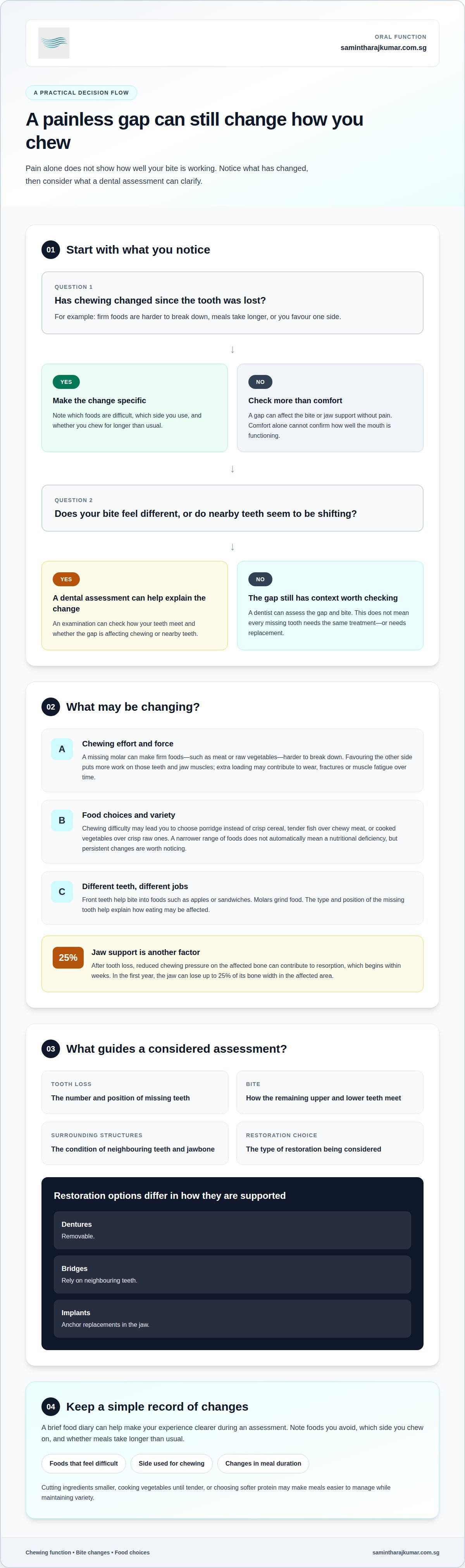
Number of natural teeth and chewing ability
The number and position of your remaining teeth both shape chewing ability. Losing several teeth can reduce the contact points available to break food down, while a single gap may matter more if it affects an important biting or grinding tooth. Understanding how missing teeth affect chewing means considering location as well as total tooth count.
A Brazilian observational study assessed chewing with a five-item index. Participants were asked whether they could chew foods of increasing difficulty. Those who managed all five foods scored 5 and were classified as having competent chewing ability. Scores from 0 to 4 indicated chewing disability. This approach considers what a person can eat, rather than relying on tooth count alone.
The authors of the Brazilian observational study (not identified in the research) found that fewer natural teeth were associated with chewing disability (P < 0.001). Participants had an average of 13.3 natural teeth, with individual counts ranging from 0 to 32. These figures describe that study sample, not a target number every person needs for comfortable chewing.
Location matters as well as the total number of teeth. A gap among the molars can reduce the surfaces available for grinding, while missing front teeth can affect biting into food. You may manage soft foods but struggle with firmer textures. The pattern of your remaining teeth and how they meet during a bite help explain why people with similar tooth counts can have different experiences.
Age-group averages in the study also varied: participants aged 21-30 years had 24.2 natural teeth, compared with 10.4 among those aged 51-60 years. These are sample findings, not predictions for an individual. In my clinical experience, the useful assessment considers chewing function, tooth position, bite contact and the condition of the remaining teeth. An implant may form part of a restoration discussion, but suitability depends on the clinical findings.
For an assessment, describe which foods you avoid and where chewing feels difficult. These details help identify what is limiting function and give your dentist a practical starting point for discussing how missing teeth affect your bite beyond what tooth count alone can show.
Dr Samintharaj Kumar: Ceramic Dental Implants
Ceramic Dental Implants with Dr Samintharaj Kumar may be a restorative option to discuss if a missing tooth affects chewing or bite function. The right approach begins with assessing the gap, neighbouring teeth, jaw support and your overall dental condition, rather than choosing a replacement based on material alone.
In my clinical experience, a careful assessment helps connect what you feel while eating with what the examination reveals. We can discuss whether a ceramic implant or another dental implant approach suits the missing tooth and your needs. Where tooth loss is more extensive, options such as full-arch restorations or Zygomatic Dental Implants may also be relevant to the treatment conversation.
If a gap is affecting how you eat, contact me or visit samintharajkumar.com.sg to discuss your concerns.
Move towards a clearer plan for eating well
Understanding how missing teeth affect chewing is a starting point, not a treatment plan. My clinical philosophy is to consider how your teeth meet, your priorities and which restoration fits your oral health and long-term function. This keeps decisions centred on your needs rather than a single solution.
I offer Ceramic Dental Implants, Dental Implants and All on 4/ Teeth in A Day. Each has a different role in tooth restoration. The right discussion begins with your individual circumstances, so you can understand the options and make an informed decision. That clarity matters as much as the treatment itself.
If you’re ready to explore what may suit your goals, contact Dr Samintharaj Kumar. A considered conversation can help you decide what to explore next. With a clear plan, you can move forward with greater confidence in your oral health.
Frequently Asked Questions
What happens to the teeth around the gap?
Teeth beside a gap can tilt or drift into the space, while the opposing tooth may move towards it. This can change how your upper and lower teeth meet and make some areas harder to clean. For example, food may catch more easily beside a tilted tooth. A dentist can assess tooth movement and bite contacts during an examination.
How do missing teeth affect chewing ability and bite force?
Missing teeth reduce the surfaces available to grip, crush and grind food. The effect on bite force depends on the number and position of missing teeth and the condition of those that remain. You may manage soft foods comfortably but struggle with denser textures. A dentist evaluates how your teeth meet and whether chewing pressure is distributed effectively.
Which foods are hardest to chew with missing teeth?
Foods that need biting or sustained grinding can become more difficult to eat. Examples include crisp apples, raw carrots, crusty bread, nuts and chewy meat. The challenge depends on which teeth are missing: gaps in the front can affect biting, while gaps among the back teeth can make grinding difficult. Cutting food into smaller pieces or cooking it until tender can make meals easier to manage.
How does tooth loss change chewing on the remaining teeth?
You may favour one side or shift food to another part of your mouth. This can concentrate chewing work on particular teeth and muscles. For instance, someone missing a tooth on the left might routinely chew on the right. Tell your dentist if one side feels tired, sensitive or less comfortable. These details help explain changes in your chewing pattern.
Can missing teeth cause jaw pain or changes in facial structure?
A changed bite can place uneven demands on the jaw muscles, and some people experience discomfort while chewing. Tooth loss can also affect jawbone support, which contributes to facial structure. These effects vary from person to person. Describe where discomfort occurs, when it appears and whether it relates to eating, so an assessment can consider both jaw movement and the missing tooth.
What are the health and nutrition effects of difficulty chewing due to missing teeth?
Chewing difficulty can lead you to avoid foods that feel too firm, crunchy or chewy. If your meals become less varied, it can be harder to maintain a broad range of food choices. For example, you might replace raw vegetables with softer cooked options. Keep track of foods you avoid and mention these changes to your dentist, especially if they affect everyday meals.

Comments