
Treatment for Severely Worn Teeth: Causes and How to Fix Them

A veneer is not always the right answer for a worn front tooth. Treatment for severely worn teeth depends on how much structure remains and whether the bite is placing excess pressure on the teeth. Depending on the damage, options may include bonding, veneers, crowns or a broader plan to restore the bite.
It’s understandable to focus first on uneven edges, sensitivity or a smile that looks shorter than before. But lost enamel does not grow back, so restoring appearance works best when the cause of wear is understood too.
In this article, I explain how grinding, acid exposure and bite problems can wear teeth down, what changes to look for, and how treatment differs for front teeth and more extensive damage. I’ll also explain why protecting restored teeth matters for comfort and long-term function.
Table of Contents
What are the effects and causes worn teeth?
A treatment plan for severely worn teeth depends on how much tooth structure remains and whether the bite is adding pressure. Depending on the damage and chewing function, I may consider veneers, crowns, inlays or onlays.
Patients often ask whether dental insurance covers treatment for severe tooth wear. Coverage depends on the policy and how the restoration is classified. A plan may treat restorative care differently from treatment considered primarily cosmetic, such as veneers chosen to improve appearance.
People also ask how much treatment costs in the United States. The cost depends on which teeth are treated, the restoration selected and the complexity of rebuilding the bite. The extent of the damage and the materials used are among the factors that affect the cost.
To see how tooth wear can affect treatment planning, watch this video:
When I examine worn teeth, I look for thinning enamel and exposed dentine, which can cause sensitivity to cold drinks, heat or sweet foods. Uneven edges or shorter-looking front teeth may also be signs of wear. Deep grooves or damaged dentine can create conditions for decay and inflammation inside a tooth.
I assess possible causes, including grinding or clenching, acidic foods and drinks, stomach acid from reflux, aggressive brushing and poor bite alignment. Bruxism can flatten teeth during waking hours or sleep. A misaligned bite may concentrate chewing pressure on certain teeth, speeding up wear in those areas.
For moderate to severe wear, I may use a crown to restore a tooth’s outer structure. A crown can rebuild a severely worn chewing surface and protect the remaining tooth structure. If a molar’s walls are intact, an inlay can rebuild its grooved centre; an onlay can cover worn cusps. If the inner pulp is affected, root canal treatment may be needed before a crown.
For worn, short or uneven front teeth, a porcelain veneer can cover the front surface and restore some lost structure. Veneers do not address every cause of wear. If grinding or bite pressure continues, those forces can damage the restorations too.
I discuss risks based on each tooth’s condition and the proposed restoration. These may include sensitivity, changes to the bite or further damage if the underlying cause remains active. If the pulp is inflamed, root canal treatment may be recommended before crowning the tooth.
Crowns for severely worn or cracked teeth typically last 10-20 years. Ceramic crowns used to restore severely broken-down teeth can last 20 or 30 years; ceramic veneers and onlay restorations are also reported to last 20 or 30 years. These figures relate to different restoration types, not a guaranteed lifespan for every case.
Worn down teeth - How to fix tooth wear?
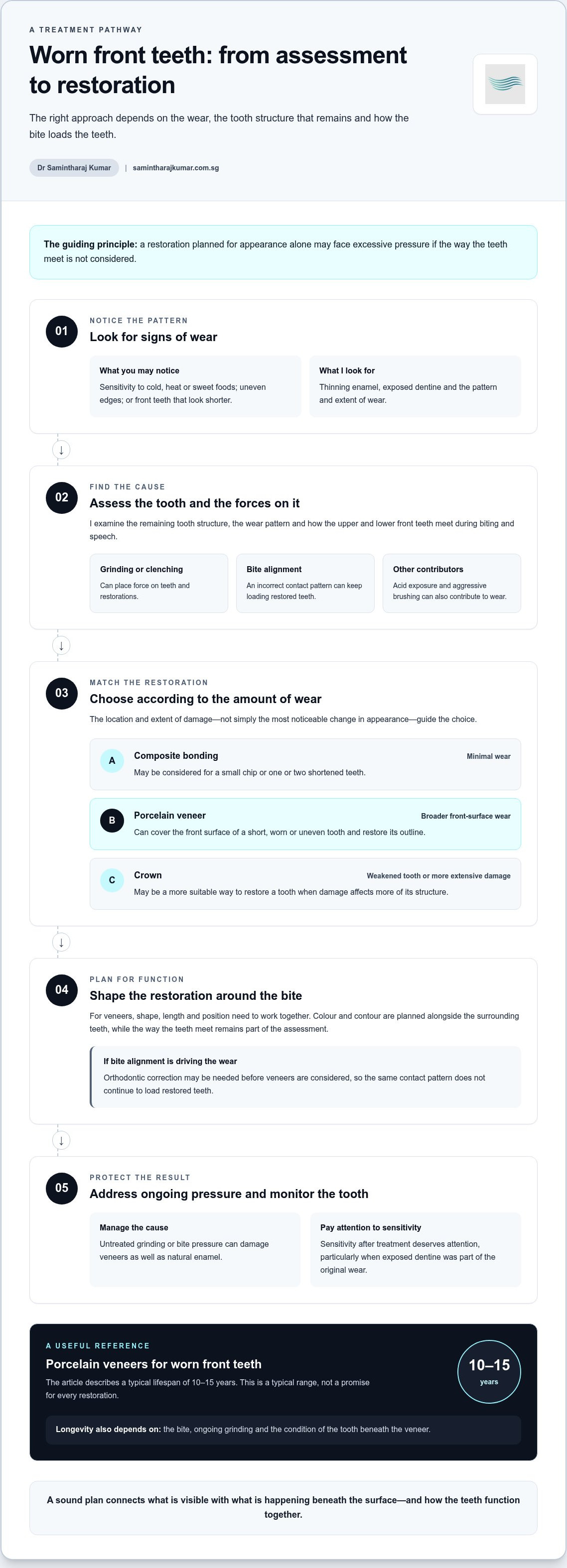
For worn front teeth, porcelain veneers can restore visible tooth structure and reshape the smile. A veneer is a ceramic covering placed over the front of a tooth. It may suit teeth that look short, worn or uneven when the aim is to improve appearance while respecting how the teeth meet.
Planning starts with examining each tooth, its remaining structure and the bite. I also consider the pattern of wear, because the edges of the upper and lower front teeth meet during biting and speech. A veneer planned for appearance alone may face excessive pressure if those contacts are not considered. The restoration’s shape, length and position need to work together, not be treated as separate cosmetic details.
Porcelain veneers can provide a carefully shaped surface to restore the outline of a worn tooth. Their colour and contour are planned alongside the surrounding teeth, so the result fits the overall smile rather than drawing attention to one restored edge. Porcelain is stain-resistant, but that does not make it immune to damage. The health of the tooth beneath the veneer and the forces placed on it still matter.
Not every worn front tooth needs a veneer. For minimal wear, such as a small chip or one or two shortened teeth, composite bonding may be considered. When wear is more extensive, a ceramic veneer can cover a broader front surface. If the tooth is weak or damage affects more of its structure, a crown may be a more suitable restorative approach. The choice depends on the location and extent of the damage, not simply on which option changes appearance most.
Bite assessment is especially important when front teeth have worn unevenly. If an incorrect bite is driving the wear, orthodontic correction may be needed before veneers are considered. Otherwise, the same contact pattern can continue to load the restored teeth. For someone who grinds, managing that force is also part of protecting the restoration, because untreated bruxism can damage veneers as well as natural enamel.
Porcelain veneers for worn front teeth typically last 10-15 years. This is a typical range, not a promise for every restoration. The long-term implication is clear: material choice matters, but so do the bite, ongoing grinding and the condition of the underlying tooth. Sensitivity after treatment also deserves attention, particularly if exposed dentine was part of the original wear.
At an appointment, discuss what you want to restore and whether the front teeth meet evenly. A dental assessment of worn front teeth can help connect appearance with function before a treatment plan is made.
Full-mouth reconstruction and bite rehabilitation
When wear affects multiple teeth, I plan around the overall pattern, its cause and how the bite functions. The aim is a coordinated restoration, not a collection of unrelated repairs.
Full-Mouth Reconstruction
I use full-mouth reconstruction, also called full-mouth rehabilitation, to describe a coordinated plan for restoring several damaged teeth and their function. This approach matters when treating each tooth in isolation would overlook how the teeth work together. I assess which teeth remain restorable and how their condition affects the wider plan. Crowns, veneers and bite correction may be combined according to each patient’s needs.
Bite Rehabilitation
Bite rehabilitation restores how the upper and lower teeth meet during chewing. I assess the bite when bruxism, grinding or misalignment places excess force on particular teeth. For example, a patient with severe bruxism and significantly worn teeth received ceramic crowns on the damaged teeth. This illustrates why restoration planning must account for the forces acting across the bite.
Full-Arch Replacement
Full-arch replacement restores a complete upper or lower arch with a fixed prosthetic supported by dental implants. I consider this approach when multiple teeth are damaged and cannot be restored individually. An implant-supported fixed bridge may be supported by four or six dental implants. This differs from reconstruction that preserves restorable teeth, because replacement is reserved for teeth that can no longer be restored.
My assessment begins by mapping which teeth have lost structure and how the wear is distributed. Wear limited to chewing surfaces calls for different planning from wear affecting both front and back teeth. I also look for factors that may continue to affect the teeth, including grinding, acidic exposure or bite imbalance. This context helps me plan for more than the visible damage.
I then consider what remains sound. Crowns may rebuild severely worn teeth, while veneers may restore selected front surfaces. If the bite contributes to excessive pressure, correction may form part of the plan. I coordinate these choices rather than treating each tooth as an isolated repair.
Not every worn tooth needs replacement. I first consider whether it can be restored and whether its condition supports preservation. The number and distribution of affected teeth help me decide between individual restorations and a broader approach.
Identifying the cause helps me plan around the remaining tooth structure. If grinding continues, restorations remain exposed to those forces; acidic exposure may also contribute to ongoing wear. I therefore consider each tooth’s condition alongside the overall bite and the factors affecting it.
Full-mouth rehabilitation involves coordinated decisions about preservation, restoration and replacement. I consider how each choice relates to chewing function and the surrounding teeth. This whole-mouth perspective helps align the treatment plan with the patient’s immediate needs and the long-term condition of their remaining teeth.
Attrition, erosion, and abrasion
Tooth wear has three main patterns: attrition, erosion and abrasion. Attrition occurs when teeth rub together, often through grinding or clenching. Erosion is chemical damage from acids, while abrasion is physical wear from external contact. A person may experience more than one pattern, so identifying where and how enamel has been lost helps guide prevention.
With attrition, bruxism can flatten biting edges and chewing surfaces over time. Teeth may become shorter, and existing restorations can face the same grinding forces as natural enamel. Erosion softens enamel when acids repeatedly contact the teeth. Examples include acidic drinks or foods, or stomach acid reaching the mouth through reflux. Abrasion can result from aggressive brushing, particularly when a hard-bristled brush and repeated pressure scrape tooth surfaces.
Enamel erosion matters because lost protective enamel cannot grow back. As erosion advances, dentine may become exposed, bringing sensitivity and greater vulnerability to further damage. Porcelain restorations can rebuild the shape of a worn tooth, but they do not remove the cause. If grinding or acid exposure continues, the restoration remains under stress, and further wear may affect its longevity.
Yes, grinding and acid erosion can damage restorations by exposing them to the same forces or acidic conditions that harmed natural teeth. To help prevent further wear, address the cause, use a night guard when recommended, rinse with water after acidic food or drinks, and wait 30 minutes before brushing.
Daily habits can reduce avoidable enamel stress. After acidic food or drinks, rinse with water and allow 30 minutes before brushing, when softened enamel is more vulnerable. Brush gently for two minutes, twice daily, with fluoride toothpaste and a soft-bristled toothbrush. Floss daily to support oral hygiene around the teeth and restorations.
For patients with bruxism, a dentist may recommend a mouthguard or night guard to protect the teeth during grinding. Limiting acidic and sugary foods and drinks also reduces repeated exposure. Sugar-free gum after meals can stimulate saliva, which helps clear acids. These measures support prevention, but they do not replace addressing reflux, dry mouth or other contributing causes.
Prevention starts with finding the pattern, not simply covering the worn surface. A dental assessment can consider tooth shape, diet, brushing technique and signs of dry mouth or grinding. Regular check-ups help identify changes early, while lifestyle adjustments can reduce the forces or acids acting on the teeth. This is particularly relevant when several teeth show similar wear.
Ageing can contribute to natural tooth wear, but progressive flattening, sensitivity or chipped edges still deserve attention. Worn enamel cannot regenerate, so early detection helps preserve the remaining structure. Whether the cause is attrition, erosion or abrasion, the practical aim is to reduce ongoing damage and protect both natural teeth and restorations.
Treatment of worn front teeth
Worn front teeth can affect appearance, speech and the way the front teeth guide biting. Treatment starts by identifying what caused the wear and checking how upper and lower teeth meet. In my clinical experience, restoring the visible edges without considering function can leave the source of uneven pressure unaddressed.
For minimal damage, composite bonding uses tooth-coloured resin to rebuild a small chip or one or two shortened teeth. The procedure can be completed in a single visit. Bonding typically lasts 5-7 years for minor wear, and composite may need refurbishment or touch-ups every few years. It offers a conservative option when the affected area is limited.
Bonding is not suited to every worn surface. When wear exposes dentine, the resin may not adhere well. That affects the restorative decision: a dentist needs to assess how much enamel remains and whether the tooth can support the chosen material. Sensitivity can also signal exposed dentine or deeper damage, so it should be part of the assessment.
Porcelain veneers can restore the front surface of worn, short or uneven teeth. A veneer covers the front of the tooth with ceramic, replacing some lost structure while reshaping the visible smile. Porcelain veneers for worn front teeth typically last 10-15 years. They are cosmetic restorations, but their position and edge must also work with the bite.
Crowns cover more of the tooth than veneers. They may be considered when damage extends beyond the front surface or leaves less sound structure. The decision is not simply about choosing the strongest-looking restoration. It involves balancing the remaining tooth structure, the extent of wear and the forces created during biting.
If an incorrect bite caused the front teeth to wear, orthodontic correction may be needed rather than veneers alone. Correcting alignment can reduce excessive pressure on affected teeth. For patients who grind or clench, managing that force before placing veneers is important, because untreated bruxism can damage natural enamel and restorations alike.
A patient in her late 40s had severely worn upper front teeth restored with composite bonding. The example shows how a targeted approach can rebuild worn edges without automatically treating every tooth. The appropriate plan depends on the wear pattern, the bite and whether the damage is limited or part of a wider functional problem.
At an assessment, I connect the patient’s concern about appearance with the causes of wear and the teeth’s function. If worn front teeth are affecting your smile or bite, arrange an assessment of worn front teeth to discuss the restorative options.
Dr Samintharaj Kumar: Ceramic Dental Implants
Dr Samintharaj Kumar: Ceramic Dental Implants may be relevant when severe damage leaves a tooth no longer restorable and replacement becomes part of the plan. I consider implants only after assessing whether the natural tooth can be preserved and how replacement will support function.
Ceramic Dental Implants and Dental Implants are options for replacing missing teeth. If several teeth are missing or cannot be restored, All on 4/ Teeth in A Day may be relevant to full-arch restoration. Zygomatic Dental Implants are another implant option within complex treatment planning. These approaches address tooth replacement, not the causes of wear in teeth that remain.
My approach is to preserve restorable teeth and plan replacement around the wider bite. If you’re weighing restoration or replacement, you’re welcome to contact me to discuss your situation.
Take the Next Step Towards Lasting Oral Health
Deciding how to restore worn teeth is also an opportunity to think beyond the immediate repair. The aim is to protect what remains, support comfortable function and make choices that account for your long-term oral health. That starts with understanding your priorities and discussing how the condition of your teeth affects them.
Choosing treatment for severely worn teeth is a personal decision, shaped by your dental health, concerns and goals. A thoughtful conversation should clarify those factors, so you can understand the reasoning behind a proposed approach and feel informed about what comes next.
If you’re ready to explore your options, contact Dr Samintharaj Kumar to discuss your concerns and next steps. A considered decision today can help you move towards a healthier, more confident smile.
Frequently Asked Questions
Can You Repair Ground Down Teeth?
Ground-down teeth can often be rebuilt if enough healthy structure remains. The repair may address one tooth or several, depending on how widespread the wear is. For example, a dentist may assess whether a flattened front tooth needs its edge restored, or whether the chewing surfaces and bite require a broader plan. The priority is preserving restorable teeth while addressing the forces that contributed to the damage.
Can worn-down teeth be fixed, or do they have to be replaced?
Worn teeth can often be restored; replacement is generally reserved for teeth that are no longer restorable. The decision depends on the remaining tooth structure, the damage and the tooth’s condition. For instance, a tooth with wear confined to its surface may be suitable for restoration, while extensive breakdown can change the options. An examination helps distinguish teeth that can be preserved from those that need replacement.
How worn down should teeth be before they become a concern?
There isn’t a single visible amount of wear that applies to everyone. Seek an assessment if you notice new sensitivity, chipped edges, flattened surfaces or front teeth that look shorter. A change in chewing comfort or a bite that feels different also matters. Comparing current findings with earlier dental records can help show whether wear is progressing or reflects a stable tooth shape.
What causes severe tooth wear and how is it diagnosed?
Severe wear can result from grinding or clenching, repeated acid exposure, forceful brushing, or several causes together. Diagnosis involves examining which surfaces are worn and whether the pattern fits the suspected cause. A dentist can also discuss acidic foods and drinks, reflux, dry mouth, medications and grinding habits. Assessing the bite alongside the teeth helps connect visible damage with its likely causes.
What treatments are available for severely worn teeth?
Options include composite bonding, veneers, crowns, inlays, onlays and, for widespread damage, full-mouth reconstruction. The choice depends on the tooth’s location, the remaining structure and whether the bite needs correction. For example, a small chip on a front edge may call for a different restoration from damage affecting several chewing teeth. Managing grinding or acid exposure is also part of protecting the result.
When do severely worn teeth need crowns, veneers, or full-mouth reconstruction?
Veneers may suit worn front surfaces when the tooth can support a facing and the bite is suitable. A crown may be considered when damage involves more of the tooth or weakens its structure. Full-mouth reconstruction is relevant when multiple teeth and the bite need coordinated restoration. The number and pattern of affected teeth, along with their condition, guide whether treatment is local or comprehensive.
Can worn teeth be repaired with composite bonding or fillings?
Composite bonding can repair mild wear, such as a small chip or a limited area of shortened tooth. A filling may restore localised damage, but it will not necessarily address wear across the bite. Bonding may be less suitable where wear exposes dentine, because adhesion can be less reliable. The amount and position of lost structure help determine the material.
How do dentists restore a severely worn bite and vertical dimension?
Dentists assess the tooth-wear pattern, its cause and how the teeth meet before planning bite reconstruction. Restorations such as crowns or veneers can rebuild lost tooth surfaces; treatment may also include bite correction when misalignment contributes to pressure. The goal is to coordinate tooth shape and contact across the mouth, rather than lengthening teeth in isolation. The plan depends on the remaining structure and the distribution of wear.



Comments