
Trial smile before cosmetic dentistry: preview shape and fit

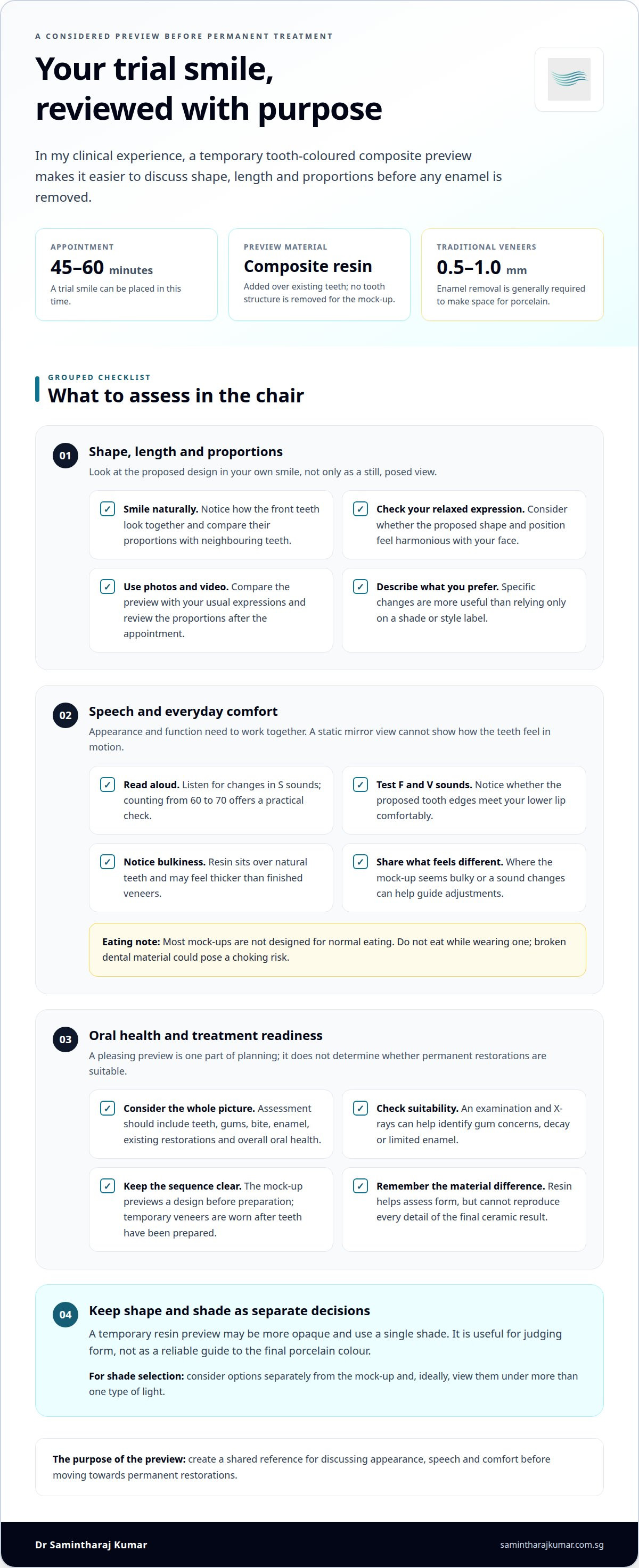
The preview should come before the preparation. A trial smile before cosmetic dentistry uses temporary tooth-coloured composite over existing teeth to show a proposed shape, size and position without removing tooth structure. It can be placed in a 45- to 60-minute appointment, giving you and your dentist a chance to assess the design before any irreversible enamel removal.
It’s natural to want to know whether the smile you’ve imagined will feel right in everyday life. In my clinical experience, seeing a temporary version can make that conversation more precise: you can consider how the teeth look together and whether their proportions feel comfortable.
A resin preview isn’t the same as porcelain veneers. The mock-up sits over your existing teeth, while traditional veneers generally require removing 0.5 to 1.0 mm of enamel. I’ll explain what a trial smile can reveal, how the materials differ, and why evaluating shape and fit before tooth preparation matters.
Table of Contents
What else do people ask about trial smiles and veneers?
The key distinction is timing: a mock-up previews proposed changes before preparation, while temporary veneers protect teeth after preparation.
Pre-Preparation Mock-Ups and Temporary Veneers
A pre-preparation mock-up places a temporary design over natural teeth; temporary veneers are worn after teeth have been prepared for definitive veneers. The difference matters because only a mock-up previews a proposed smile before enamel is removed. A dentist may transfer a design with a mould, then remove the mock-up. Temporary veneers instead cover prepared teeth while the final restorations are made.
Temporary Composite Resin Mock-Ups
A temporary composite mock-up uses tooth-coloured resin added to existing teeth to represent proposed changes. The dentist shapes, cures and sculpts the material, allowing you to see the outline in your mouth. Temporary composite bonding can demonstrate changes to tooth shape and length without removing tooth structure. Because the resin sits over natural teeth, it may feel thicker than finished veneers.
Trial Smile Fees and Treatment Credits
In the United States, a trial smile’s fee depends on the case and is provided after a quote request; planning, materials and clinical time affect the cost. A trial smile is an additional expense, not an automatic part of veneer treatment. Its fee is not automatically credited towards veneers or crowns, so treat it as a separate charge unless the agreed treatment plan explicitly applies it as a credit.
Viewing and Testing a Trial Smile
Yes, you can see and test a trial smile before veneers or crowns. During the preview, look in a mirror as you smile and speak, then read aloud and test S, F and V sounds. These checks can reveal whether the tooth edges affect your speech or feel awkward. Most mock-ups aren’t designed for normal eating; don’t eat while wearing one, as broken dental material could pose a choking risk.
Differences between resin previews and porcelain veneers
A resin preview shows a proposed design on existing teeth; porcelain veneers are definitive restorations bonded after preparation. A diagnostic wax-up can guide the mock-up’s shape, but resin sits over the natural tooth and may look thicker than finished veneers. The preview helps patients discuss proportions before treatment moves towards an irreversible step.
Traditional veneers generally require removing 0.5 to 1.0 mm of enamel to create space for porcelain. The resin mock-up itself is added without removing tooth structure, so it cannot reproduce every detail of the final ceramic result. Temporary composite may also appear more opaque, which makes it useful for judging form, rather than selecting the final shade.
Choose your veneer shade separately from the mock-up, ideally viewing options under more than one type of light. A temporary resin preview may use a single, fairly opaque shade, so its colour isn’t a reliable guide to how porcelain will look. Separating these decisions helps distinguish questions about tooth shape from preferences about brightness.
Cosmetic treatment can involve veneers, crowns or other smile enhancements. Before recommending veneers, assessment should include the teeth, gums, bite, enamel, existing restorations and overall oral health. An examination and X-rays can help identify gum concerns, decay or limited enamel that may affect suitability. A visually appealing preview doesn’t replace these checks.
Dental insurance coverage for a trial smile depends on the policy’s benefit categories, exclusions and classification of the procedure. Review how your plan treats cosmetic planning services; coverage cannot be assumed just because veneers or crowns are being considered.
In my clinical experience, the preview is most useful when it supports a wider conversation about appearance, oral health and treatment choices. A considered smile makeover plan brings those factors together before decisions about permanent restorations.
Evaluating tooth shape, length, and proportions
A trial smile lets you consider proposed changes to tooth shape, length, size and position in your own face. Review the design while smiling and speaking, not only in a still mirror view.
Reviewing Appearance With Photos and Video
Photos and video help you compare the proposed smile with your usual expressions, rather than with a single posed image. Digital photographs of the teeth and face can support smile planning, while a mirror lets you view the mock-up directly.
Look at the smile from the front and during natural movement. For example, notice whether the front teeth look balanced when you smile, then review a short video of yourself speaking. A photograph can also help you reflect on the proportions after leaving the chair, instead of relying on memory alone.
Checking Appearance and Function
Assess the preview while smiling, speaking and relaxing, because appearance and function need to work together. Check whether the proposed tooth length feels comfortable and whether the edges meet your lower lip during F and V sounds.
For S sounds, air passes between the teeth, so reading aloud can reveal changes that a static photograph misses. Counting from 60 to 70 offers a practical speech check. Tell the dentist which sounds feel different and where the mock-up seems bulky; those observations can guide adjustments before permanent restorations.
Assessing Natural-Looking Results
A natural-looking result considers tooth proportions alongside facial features and your existing smile. During the preview, compare the proposed shape and position with neighbouring teeth, then notice whether the design feels harmonious when your face is relaxed.
“Beautiful” is personal, so describe what you want changed rather than relying on a shade or style label. You might prefer a subtle adjustment to your front teeth instead of a uniform, highly prominent look. The mock-up gives you and the dentist a shared reference for discussing those preferences before permanent treatment.
Trial smile timing before tooth preparation
Timing matters because a smile makeover involves decisions with different consequences. A trial smile before cosmetic dentistry creates a planning stage before tooth preparation, when you can discuss the proposed design against your preferences. The preview is not a commitment to veneers; it is a reference for a more informed conversation about whether to proceed and what to change.
Use the review to turn your observations into clear points. You might approve the overall outline but want a less prominent look, or feel uncertain about how the design suits your smile. Specific feedback gives the dentist something practical to consider. If your response is “I’m not sure,” identify which feature feels unfamiliar.
Approval should mean the design reflects your aims, not simply that you are ready to move forward. The dentist can consider the proposed shape alongside your dental anatomy and treatment goals, then discuss how the agreed plan relates to permanent restorations. Precision matters: an aesthetic preference guides planning, while clinical assessment informs treatment decisions.
If you want changes, raise them before preparation rather than treating the first version as final. A revised design can provide a clearer basis for discussion, especially when you are weighing a subtle alteration against a more noticeable one. A trial smile before cosmetic dentistry is most useful when your feedback informs the plan, rather than being treated as a final verdict on the finished result.
In my clinical experience, a thoughtful pause between visualising a change and preparing a tooth protects the quality of the decision. The useful question is not only whether you like the preview, but whether you understand the proposed treatment and feel ready to discuss its next stage. If you’re considering a smile makeover, discuss your smile design options before preparation begins.
Dr Samintharaj Kumar: Smile Makeovers
Dr Samintharaj Kumar’s Smile Makeovers offer a considered next step when you want to turn a trial smile into a personalised treatment plan. I consider appearance, tooth proportions and function together, so decisions about cosmetic changes are grounded in your goals and oral health. A preview can clarify what feels right, but clinical assessment guides the next stage.
If you’re ready to explore changes, or are still weighing the shape and fit you prefer, a discussion can help define the options and sequence. My philosophy is to make decisions carefully before permanent treatment begins. To discuss your smile goals, contact Dr Samintharaj Kumar.
Make Your Next Decision With Clarity
A trial smile before cosmetic dentistry can support a more thoughtful conversation about the changes you want and the treatment that may suit your smile. The next step is not simply choosing a particular look. It is connecting your preferences with a clinical plan that respects your oral health and how your teeth function.
I believe good dentistry gives patients the understanding to make considered decisions without rushing towards permanent treatment. Bring your questions, concerns and the details that matter most to you. Together, we can discuss how a smile makeover may address your goals and what the planning process involves.
Contact Dr Samintharaj Kumar to discuss your smile goals. A clear conversation is a meaningful place to begin.
Frequently Asked Questions
What is a trial smile, and why should it come before any enamel is removed?
A trial smile is a temporary preview of a proposed tooth design, assessed before irreversible preparation begins. It gives you a chance to discuss details such as the outline of your front teeth or how visible they are when you speak. That conversation helps clarify your preferences while your natural tooth structure is still intact. The preview informs planning, but it doesn’t replace an oral health assessment.
How can you tell whether a trial smile will look natural on your face?
Consider how the proposed teeth relate to your facial features and expressions, rather than judging them in isolation. For example, notice whether the centre of your smile appears balanced with your facial midline, and whether the design suits both a relaxed expression and a full smile. Share specific observations with your dentist, such as one tooth seeming more prominent than its neighbour.
Can a Trial Prove the Final Bite Will Feel Comfortable?
No. A trial smile can reveal concerns about contact or comfort, but it can’t prove that the finished bite will feel identical. Temporary composite sits over natural teeth, while final restorations have different contours and materials. Ask your dentist to assess how your teeth meet and discuss any pressure or interference you notice. Bite comfort requires clinical evaluation, not appearance alone.
Does Liking the Preview Mean Your Teeth Are Ready for Veneers?
No. Liking the appearance is useful feedback, but it doesn’t establish that veneers are clinically suitable. Readiness also depends on factors such as enamel condition, gum health, decay, existing restorations and bite. For instance, a preferred design may still need reconsideration if examination findings affect tooth support or the planned treatment. Aesthetic approval and clinical suitability are separate decisions.
How Should You Use the Trial Before Deciding?
Use the preview to make your preferences specific. Note what you would keep, what feels unfamiliar and what you would change, such as the outline of one front tooth. Separate essential changes from optional preferences, then discuss them with your dentist. Ask how each requested adjustment would affect the proposed design and whether it can be reflected in the permanent treatment plan.
What is a trial smile in cosmetic dentistry?
In cosmetic dentistry, a trial smile is a temporary planning aid that helps you and your dentist discuss a proposed result before choosing treatment. It gives you a shared visual reference for communicating preferences, rather than asking you to imagine changes from a description alone. A trial can inform discussion of options such as veneers or crowns, but it doesn’t determine which treatment is appropriate.

Comments