
Understanding Dental Specialist Fees, Costs, and Coverage

In my experience, the lowest quoted specialist fee may not be the lowest amount you ultimately pay. When comparing dental fees, I encourage patients to consider what treatment is included, what diagnostic work is needed and how their insurance arrangements may affect their share.
I understand that you want clarity before deciding. In this article, I explain how fee-for-service dentistry works, how insurance limits can affect your costs and what common billing terms mean, so you can assess the financial side of care more clearly.
Table of Contents
What is fee-for-service dentistry?
There is no single typical fee for every dental specialist: charges vary with the procedure, clinician, location and insurance arrangements. In fee-for-service dentistry, the practice sets a charge for each treatment, and patients pay the practice directly.
Standard and Contracted Fee Comparisons
I distinguish a standard fee, the practice’s full charge, from an insurance contracted fee, the rate an in-network dentist agrees to accept. This difference matters because standard fees should be higher than the practice’s highest contracted fee, and insurance-contract discounts can reduce them by 40% to 50%. Payers often use the plan’s allowable fee or the reported fee, whichever is lower. For in-network care, the contracted-rate difference is written off.
Treatment Estimates and Insurance Pre-Estimates
I recommend understanding what each estimate represents. A treatment estimate lists planned procedures and charges; an insurance pre-estimate asks the insurer to indicate likely coverage before treatment. A dentist can submit one before major treatment, but it is not a processed claim. Fee-for-service patients may pay first and seek reimbursement afterwards.
Using Insurance Out of Network
An out-of-network dentist does not accept the plan’s contracted fee schedule, though the policy may still provide benefits. The practice may issue an itemised receipt or superbill for reimbursement and may help submit a claim. Because the insurer applies out-of-network terms, you may owe more. A plan may also allow a referral from its general dentist to see a specialist outside the network.
Insurance and Membership Plan Costs
Insurance combines premiums, deductibles and coverage rules. A practice membership plan instead charges an annual fee and may discount treatment. Such plans may have no waiting periods, annual maximums or claim denials. To compare options, weigh expected treatment against the membership fee, insurance premiums, limits and reimbursement. A fee-for-service dentist may also accept insurance and help submit claims.
Costs and coverage limits for complex dental care
Specialist fees depend on the procedure, diagnostic work, location and insurance terms. Compare the proposed treatment with the contribution your plan may make, rather than relying on the quoted fee alone.
In-Network and Fee-for-Service Costs
In-network care is billed using the provider’s contracted fees; fee-for-service care uses the practice’s individual charges. This matters because out-of-network reimbursement may leave you responsible for more of the balance. Contracted in-network fees can make costs more predictable. Compare the estimate with the insurer’s expected contribution and your remaining annual maximum.
Routine Care and Specialist Fees
In my practice, I distinguish routine care from specialist treatment by the clinical needs involved. General dentists often provide examinations and preventive care; specialists address focused or complex conditions. There is no single standard amount by which specialist fees exceed general dentist fees. The procedure, its complexity and the diagnostic work all shape the proposed charge. Dental plans typically cover preventive care at 80-100%, while many use a 100-80-50 structure.
Costs Across Dental Specialties
There is no single typical fee for orthodontists, periodontists, endodontists, oral surgeons or prosthodontists because their procedures differ. Consultation and diagnostic costs also depend on the assessment and tests required. When reviewing an estimate, consider the treatment scope, imaging needs and proposed follow-up. An itemised plan shows which services contribute to the overall charge and helps you avoid comparing unlike appointments.
Coverage Limits and Out-of-Pocket Costs
I explain that dental insurance may cover specialist visits according to the plan’s terms; copays and reimbursement vary by policy. In one root-canal example, the patient’s share is 20%. Annual maximums are often $1,000 to $2,000 per calendar year, and exclusions may leave some treatments uncovered. I consider network status, procedure complexity, diagnostic needs and remaining benefits when discussing potential out-of-pocket costs.
Patients with dental insurance may pay a 20-50% share of covered services after premiums and deductibles; check coverage, reimbursement rates and required steps, as plans may limit service frequency regardless of clinical need.
Budgeting and dental savings
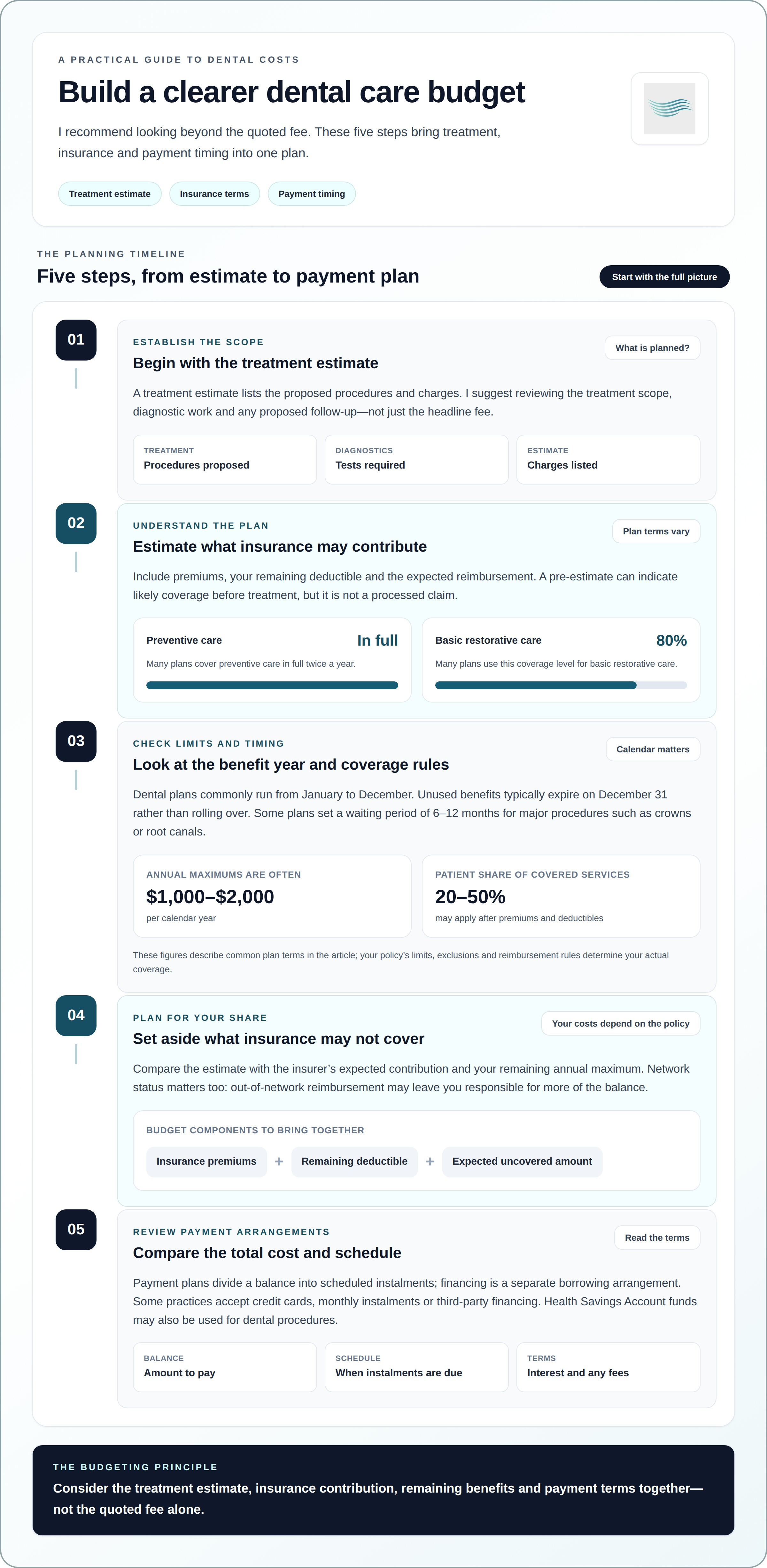
In my experience, a dental budget should include insurance premiums, deductibles, expected treatment and the portion insurance may not cover. Considering these together helps you prepare for specialist care without treating the quoted fee as the only expense. This is a practical part of understanding dental specialist fees.
Planning a Dental Care Budget
I recommend starting with your treatment estimate, then setting aside savings for the amount insurance may leave you paying. Your deductible varies by plan, so include its remaining balance in your estimate. Many plans cover preventive care in full twice a year and basic restorative care at 80%, which can help you anticipate routine expenses alongside specialist treatment.
Timing matters, too. Dental plans commonly follow a January-to-December calendar year, and unused benefits typically expire on December 31 rather than rolling over. A waiting period can delay coverage for major procedures such as crowns or root canals; some plans set it at 6-12 months. I encourage patients to include those terms when deciding when treatment fits their budget.
Payment Plans and Low-Cost Options
Payment plans divide a treatment balance into scheduled instalments; financing covers costs through a separate borrowing arrangement. In my experience, some dental offices offer low- or no-interest payment plans, and fee-for-service practices may accept credit cards, monthly instalments or third-party financing. These options can spread payments over time, but the terms determine the total owed and when each instalment is due.
Before choosing an arrangement, I suggest comparing the treatment balance, payment schedule, interest and any fees. Health Savings Account funds may also be used for dental procedures. If you have dental insurance, submit claims or pre-treatment estimates promptly, then include the plan’s reimbursement and annual maximum in your budget. This wider view makes understanding dental specialist fees more useful for planning care and managing costs.
Dental bill terminology
I explain dental bills by distinguishing the practice’s charge from the insurer’s contribution. Understanding the deductible, co-payment and Explanation of Benefits can help clarify what you may owe.
Understanding Dental Bill Terms
I describe a deductible as the amount you pay each year before dental insurance contributes to treatment. A co-payment is usually a smaller amount paid at the time of service, before the insurer pays its share. These terms describe different parts of your expenses and are not interchangeable.
An Explanation of Benefits, or EOB, is an insurance summary, not a bill. I advise patients to use it to see how the insurer processed a claim, while the dental office’s statement shows the charges and any balance due. Compare the procedure, allowed amount and insurer payment across both documents. An EOB may, for example, show a covered service while indicating that a deductible or other patient share remains.
Evaluation terminology can vary. In my experience, a comprehensive evaluation after a three-year absence may be categorised separately from a new-patient evaluation. This distinction may explain why the bill’s description differs from what you expected.
Itemized Bills and Fee Disputes
An itemised bill lists individual procedures and charges rather than a single combined total. If a specialist fee is unclear, I recommend asking the dental office for an itemised statement. Compare each description with your treatment estimate and EOB, then identify the specific line or amount you want explained.
If the insurer’s payment differs from the estimate, compare the plan’s processing details with the practice statement. I suggest asking the dental office to explain any difference between the billed procedure, the payment and the remaining balance. A fee discussion is more productive when you identify a specific charge, coding description or calculation rather than question the total without detail.
In fee-for-service dentistry, an itemised receipt may also support an out-of-network reimbursement claim. I encourage patients to keep the estimate, bill and EOB together to reduce surprises and make the payment trail easier to follow. If you need clarity about charges connected with your dental treatment plan, raise the specific line item for discussion.
Dr Samintharaj Kumar
I provide dental implantology and oral surgery, including single, multiple and full-mouth implants, Teeth in a Day, Zygomatic Implants, wisdom teeth and difficult extractions. I clearly explain the purpose of each recommended procedure, the diagnostic work involved and the factors shaping the plan. This can help you consider the treatment scope, expected costs, insurance and next steps.
For complex restorative needs, I provide Dental Implants, Ceramic Dental Implants, Full-Arch Fixed Prosthetics and Zygomatic Dental Implants. The appropriate approach depends on the oral examination, diagnostic findings and treatment goals. A considered plan should make the clinical reasoning clear, rather than reducing a complex decision to a single figure.
To discuss a dental treatment plan and its fees, please contact me.
Make your next dental decision with clarity
Financial clarity is part of thoughtful dental care. Connect the proposed treatment with your priorities, the clinical reasoning and the financial arrangements that shape your decision. This makes understanding dental specialist fees a practical starting point for a conversation, rather than a figure considered in isolation.
As a clinician, I believe patients should be able to understand why a treatment is recommended and how its scope relates to their needs. That perspective supports informed decisions and care planning built around function and long-term wellbeing. It also leaves room to discuss questions openly before moving forward.
If you would like to talk through your dental fees and treatment plan, contact Dr Samintharaj Kumar. A considered conversation can help you take your next step with greater confidence.
Frequently Asked Questions
Can a dentist charge more for out-of-network specialist care?
In my view, it is important to understand that an out-of-network specialist may charge the practice’s fee rather than the insurer’s contracted rate, leaving you responsible for a larger share. Before treatment, I recommend comparing the proposed charges with your plan’s out-of-network reimbursement method. Ask how the insurer calculates its payment and whether any part of the fee exceeds the plan’s recognised amount. This helps clarify your potential balance.
How can patients compare dental specialist fees and get an estimate before treatment?
I recommend comparing estimates for the same proposed procedures, noting differences in treatment scope, diagnostic work and follow-up. Then consider each estimate alongside your plan’s reimbursement terms and remaining benefits. For a complex plan, request an insurance predetermination before treatment. This can distinguish the practice’s proposed charges from the insurer’s estimated contribution and give you a clearer basis for budgeting and discussion.
Comments