
How to Choose a Dentist in 2026: A Specialist’s Evaluation Checklist

What if the primary metric you use to evaluate dentists today is actually leading you toward clinical obsolescence? I understand how exhausting it's to sift through thousands of generic search results, only to feel a lingering anxiety that you're being sold an unnecessary treatment plan rather than a genuine solution. You want to feel certain that your clinician isn't just fixing a tooth, but is instead considering how that intervention affects your entire biological system. In my 20 years of clinical practice, I've found that the best outcomes aren't found in the loudest marketing, but in the quiet precision of a visionary clinician.
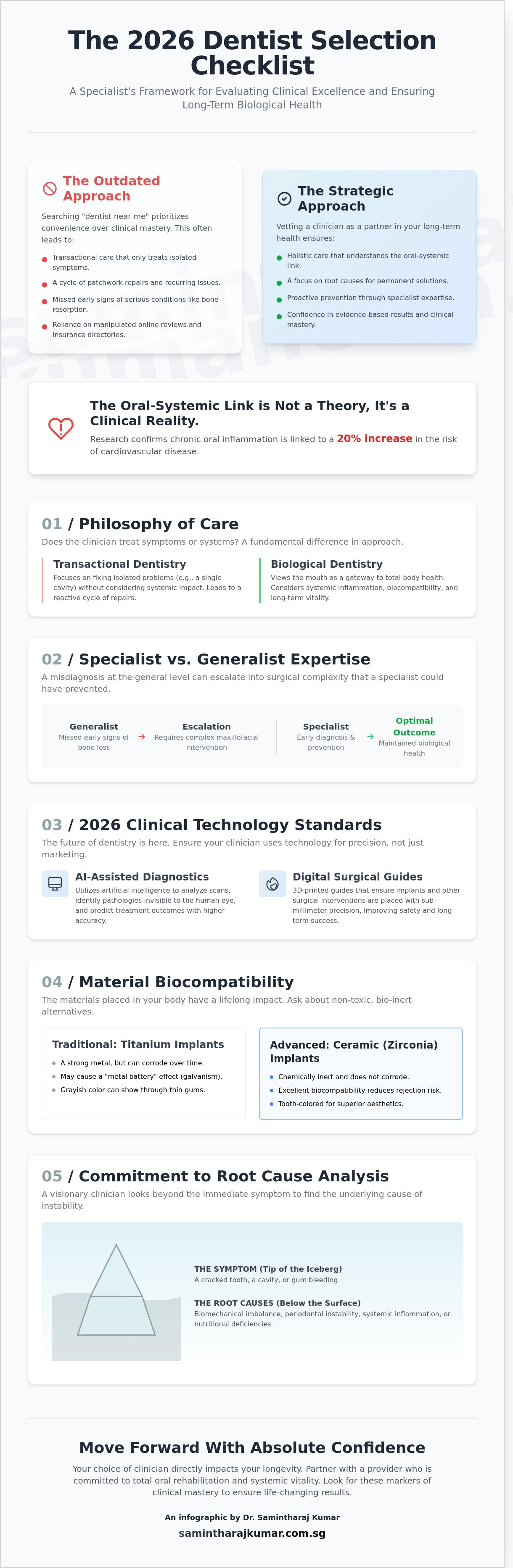
I'll provide you with my specialist evaluation checklist to help you identify a provider who prioritises biological health and total oral rehabilitation. You'll gain a clear framework for vetting clinical expertise, ensuring your chosen partner looks at total body health rather than just isolated symptoms. We'll examine the critical markers of clinical mastery, from AI-assisted diagnostics to the nuances of zygomatic protocols and international standards, so you can move forward with absolute confidence in your long-term results.
Key Takeaways
Understand why moving beyond simple proximity is essential for finding a provider who prioritises strategic, long-term health over transactional care.
Learn how to evaluate dentists based on their commitment to biological dentistry and their understanding of the profound oral-systemic health link.
Identify the specific clinical markers that signal when your care requires the precision of a multi-disciplinary specialist team.
Discover the 2026 criteria for excellence, including how AI-assisted diagnostics and digital surgical guides are redefining clinical mastery.
Gain insight into a founder-led philosophy that focuses on treating root causes to achieve a seamless, life-changing transformation.
Table of Contents Beyond the Search: Why Choosing a Dentist Requires a Strategic Approach The Science of Biological Dentistry: Evaluating a Provider’s Philosophy Specialist Expertise vs. General Care: Assessing Your Clinical Needs The 2026 Dentist Selection Checklist: 7 Criteria for Excellence My Perspective: The Future of Total Oral Rehabilitation
Beyond the Search: Why Choosing a Dentist Requires a Strategic Approach
Choosing a provider based on a three-mile radius is the most common error I see in modern healthcare. While convenience is a factor, the "dentist near me" search filter prioritises geography over clinical excellence. In my clinical experience, proximity is a poor indicator of a practitioner's ability to manage complex biological systems. Selecting from the available dentists in your area requires a shift from convenience-seeking to a strategy focused on long-term outcomes.
To better understand the complexities of selecting a provider, watch this helpful video:
We are currently witnessing a divide between transactional dentistry and holistic care. Transactional care treats symptoms in isolation, often resulting in a cycle of patchwork repairs. Conversely, a strategic approach views the mouth as a gateway to systemic health. A simple routine cleaning can be a revealing diagnostic tool; it shows whether a practice adheres to rigorous clinical standards or if they're merely rushing through a high-volume schedule. When a clinician takes the time to measure periodontal pockets and explain biofilm significance, they're demonstrating a commitment to preventative excellence.
My Perspective: The Cost of Misdiagnosis I have often treated patients requiring complex maxillofacial intervention because a generalist missed early signs of bone resorption or periodontal instability during a standard check-up. In my clinical experience, a misdiagnosis at the general level frequently escalates into surgical complexity that could have been avoided with a specialist's eye. True clinical standards are found in the details that most patients never see.
The Limitations of Digital Directories
Many patients rely on insurance-led directories, yet these lists often overlook clinical innovation and advanced certifications. For those seeking a comprehensive overview of the dental profession, it becomes clear that regulatory minimums aren't the same as clinical mastery. Unverified online reviews can be easily manipulated; it's essential to look past the polished marketing to find actual surgical substance and evidence-based results.
Defining Your Oral Health Goals
You must decide if you're looking for reactive maintenance or proactive total rehabilitation. Your choice of dentists directly impacts your longevity. Research from the American Academy of Periodontology indicates that chronic oral inflammation is linked to a 20% increase in the risk of cardiovascular disease. As a clinician and founder, I view the patient as a partner in a journey toward systemic vitality. The best outcomes begin with understanding the root cause.
The Science of Biological Dentistry: Evaluating a Provider’s Philosophy
When you are interviewing prospective dentists, you must look beyond the clinical chair to understand their underlying philosophy of care. Biological dentistry is a discipline that prioritises non-toxic materials and physiological harmony. From a biological perspective, I view the mouth as an integrated gateway to the rest of the body rather than an isolated system of teeth and gums. This oral-systemic link is backed by decades of research; for instance, chronic periodontitis is clinically linked to a 20% increase in the risk of cardiovascular disease. If a provider treats a cavity without considering your systemic inflammatory load, they are only solving half the problem.
I believe that the materials we place in your body matter for your long-term vitality. This is why evaluating a clinic’s stance on biocompatibility is essential. Many forward-thinking dentists now favour ceramic (zirconia) implants over traditional titanium. Ceramic is chemically inert and does not corrode; it prevents the "metal battery" effect that some patients experience with galvanism. In my clinical experience, choosing materials that align with your body’s natural chemistry reduces the risk of rejection and promotes seamless integration with the jawbone.
Diagnostic Innovation and AI
Precision is the hallmark of modern biological care. I've integrated 3D CT scans (CBCT) and AI-assisted diagnostics into my practice because they reveal what the naked eye cannot. AI algorithms can now identify bone density variations and early-stage infections with 95% accuracy, significantly higher than traditional film X-rays. These digital workflows are not just about gadgets; they reduce human error in complex oral surgery by providing a 1:1 digital map of your anatomy. When a clinic invests in this level of technology, it's a marker of their commitment to your safety and surgical success.
The Foundation of Preventive Care
True health starts with the basics. I often tell my patients that scaling and polishing singapore is the biological baseline for all restorative work. It isn't just a cosmetic cleanup. It's a strategic disruption of the pathogenic biofilm. Ignoring this biofilm leads to periodontal instability, which can compromise even the most expensive implants. A dentist’s approach to gum health should be rigorous and data-driven, focusing on maintaining the structural integrity of your natural dentition before suggesting invasive replacements.
My Perspective:
As a clinician and founder, I've spent years refining a "Total Rehabilitation" approach. I don't just see a missing tooth; I see a disruption in your quality of life and nutritional intake. My philosophy is rooted in the belief that we should only use materials and techniques that I would trust for my own family. Innovation should always serve the patient’s long-term well-being, moving us away from "reactive" dentistry toward a proactive, life-changing model of health. The best outcomes begin with understanding the root cause.
If you are ready to explore how a holistic approach can transform your oral health, starting with a comprehensive evaluation is the first step toward lasting confidence.
Specialist Expertise vs. General Care: Assessing Your Clinical Needs
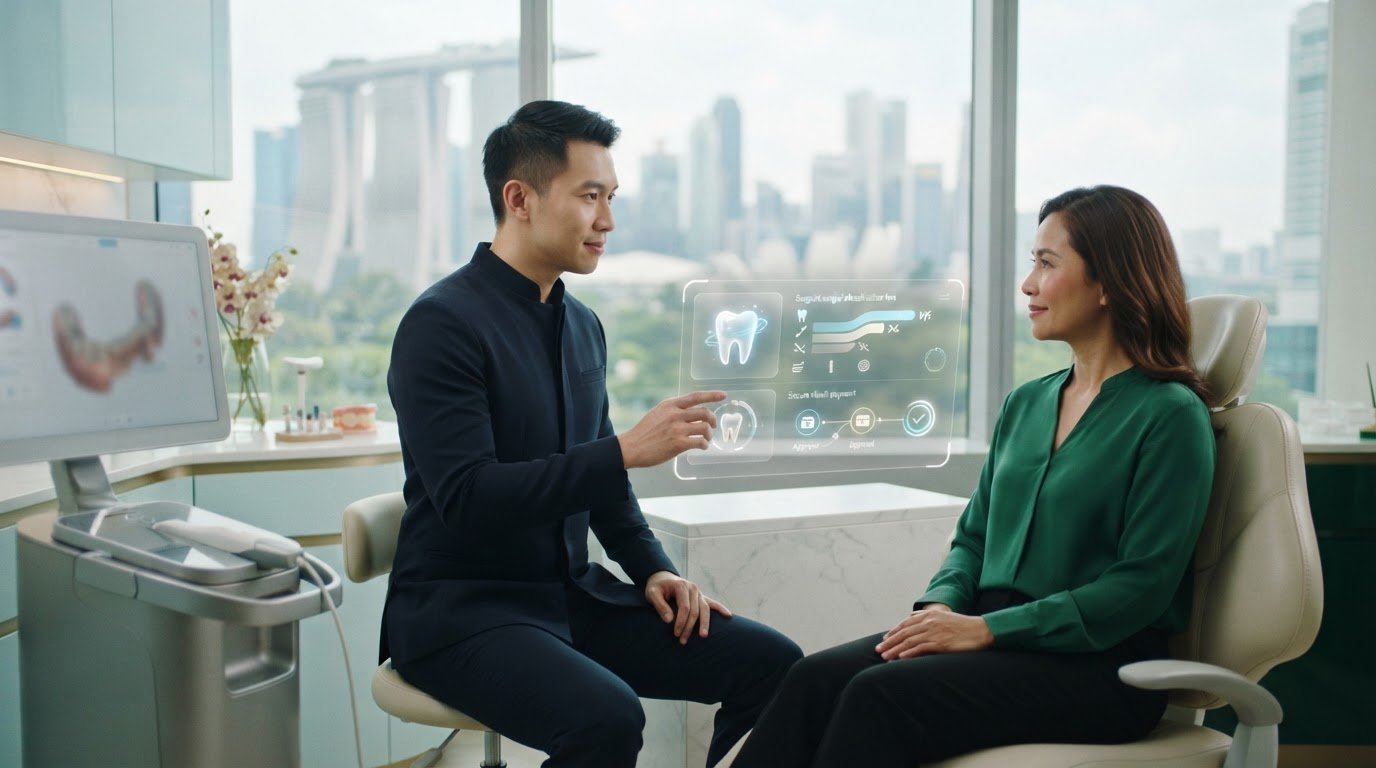
When patients search for dentists, they often assume all practitioners possess identical skill sets for every procedure. In my clinical experience, this is a misconception that can lead to compromised outcomes. A general dentist is excellent for maintenance, preventative care, and simple restorations. However, complex cases require a multi-disciplinary team where surgeons, prosthodontists, and technicians collaborate under one roof. This team-based philosophy ensures that every angle of your oral health is scrutinized by an expert in that specific field.
Treating complex cases without specialist oversight carries significant risks. I've seen clinical consequences ranging from mechanical implant failure to permanent nerve damage. When a provider lacks the depth of training required for advanced surgery, they may miss subtle biological cues. This often results in the need for costly revision surgery. Choosing a clinic that integrates specialists from the outset is an investment in your long-term safety.
The Role of the Oral and Maxillofacial Surgeon
A specialist surgeon views the mouth through a reconstructive lens rather than a purely restorative one. For instance, a wisdom tooth extraction isn't just about removing a problematic tooth; it's about preserving the alveolar bone and protecting the surrounding neural pathways. You should evaluate a specialist's credentials by looking for advanced fellowships and a history of handling hospital-grade trauma cases.
Surgical Mindset: Specialists prioritise the long-term health of the jaw bone and soft tissue.
Implantologist vs. Dentist: A specialist has spent years mastering the biological integration of titanium and bone, whereas a 'dentist who does implants' may only have attended weekend certification courses.
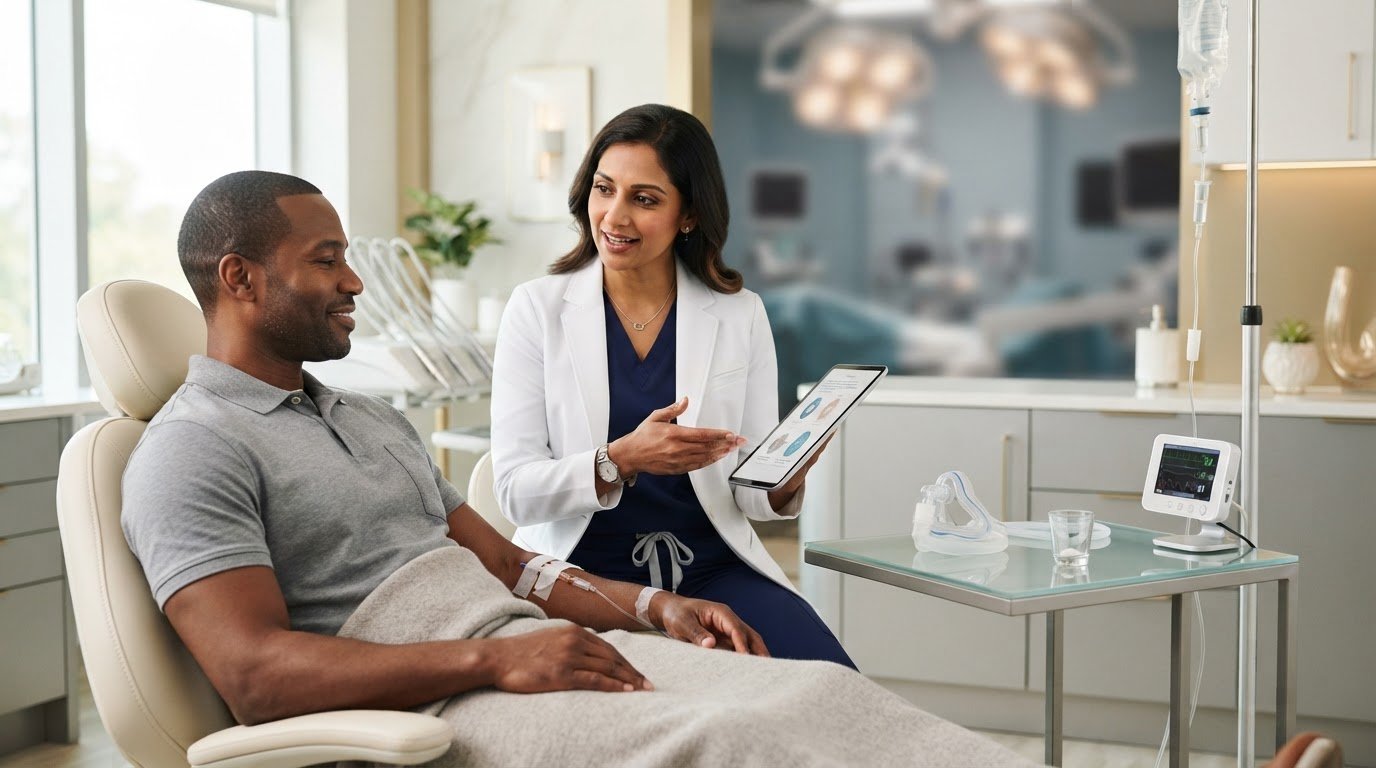
Anaesthesia Management: Specialists are often better equipped to provide deep sedation, ensuring a seamless and anxiety-free experience.
Complex Rehabilitation Frameworks
Navigating the dental implant singapore landscape requires discerning between standard care and visionary rehabilitation. Full-arch cases, such as 'Teeth in a Day' or Zygomatic protocols, demand a lead clinician who can manage bone grafting and sinus lifts with absolute precision. These procedures are not routine; they are life-changing transformations that require a high level of surgical mastery.
My Perspective:
As a clinician and founder, I've observed that the best results occur when we stop treating teeth in isolation. From a biological perspective, every surgical intervention affects the entire craniofacial structure. My philosophy is built on the 'Total Rehabilitation' model. We don't just replace teeth; we restore the foundation of your confidence and quality of life. The right diagnosis changes everything.
The 2026 Dentist Selection Checklist: 7 Criteria for Excellence
In my clinical experience, the gap between traditional dental care and modern specialist practice has widened significantly. Selecting a provider in 2026 requires looking beyond basic hygiene; you need a partner who understands the mouth is the primary gateway to systemic health. When evaluating dentists, look for those who integrate maxillofacial expertise with biological principles to ensure long-term stability.
I've developed these seven benchmarks to ensure patients receive care that aligns with the highest international protocols:
Clinical Philosophy: Does the provider address the oral-systemic link? Research from the 2024 Journal of Clinical Periodontology shows clear correlations between oral pathogens and cardiovascular health.
Technological Suite: 3D imaging and digital surgical guides are non-negotiable for precision in full-arch rehabilitation.
Material Biocompatibility: Seek expertise in metal-free ceramic options like zirconia. These materials promote a healthier soft tissue response compared to traditional alloys.
Specialist Integration: An in-house team for complex oral surgery ensures seamless communication and safer surgical outcomes.
Diagnostic Depth: Comprehensive screenings must include AI-enhanced oral cancer checks as a standard of care.
Sequential Planning: A clear roadmap for the next 5 to 10 years prevents the "patchwork" dentistry that leads to failure.
Biological Focus: As a clinician and founder, I prioritise the preservation of natural bone and tissue architecture through minimally invasive techniques.
Vetting the Consultation Experience
During an initial visit, I always observe if the clinician listens more than they talk. A true specialist doesn't just present a fee; they explain clinical risks and long-term consequences with total transparency. My communication style is intentionally rhythmic and calm. This steady pace allows you to process complex surgical details without feeling rushed. Trust is built in the quiet moments of understanding, not through high-pressure sales tactics.
Reviewing Clinical Outcomes
Ask to see a portfolio of 'Before and After' cases that mirror your specific needs. It's vital to distinguish between a simple aesthetic fix and true functional rehabilitation. A premium practice focuses on the patient journey, ensuring the structural integrity of the jaw is maintained alongside the smile. In my work with the Nuffield legacy, I've seen how focusing on the root cause leads to life-changing results that last decades. Elite dentists in 2026 don't just fix teeth; they restore quality of life through meticulous, evidence-based care.
The best outcomes begin with understanding the root cause of your dental concerns.
My Perspective: The Future of Total Oral Rehabilitation
As a clinician and founder, I believe the best outcomes begin with understanding the root cause rather than merely addressing a visible symptom. My treatment philosophy centres on balancing clinical mastery with AI-assisted diagnostic precision to eliminate the guesswork often found in traditional restorative work. By 2026, the gap between generalists and specialist-led dentists will be defined by this technological integration. We use AI to detect bone density variations that the human eye might miss, ensuring every implant placed has the highest probability of long-term success.
The long-term impact of choosing a visionary provider on your quality of life cannot be overstated. It's the difference between a temporary fix and a permanent transformation that lasts for twenty or thirty years. At Nuffield Dental, we focus on ecosystem-building and ethical scale. We aren't just a collection of clinics; we're a specialised network where global standards, such as those established by the Malo Clinic, are the baseline for every procedure. This institutional approach ensures that excellence is repeatable and predictable.
A Legacy of Innovation
In my clinical experience, the integration of ceramic implants and zygomatic protocols represents the pinnacle of modern maxillofacial surgery. From a biological perspective, ceramic options provide a biocompatible, metal-free solution that integrates seamlessly with soft tissues. For patients with up to 80% bone loss in the upper jaw, zygomatic protocols allow us to provide full-arch rehabilitation without the need for traumatic bone grafting. I have spent the last 10 years developing leadership pipelines within our organisation to ensure these clinical standards remain consistent as we expand. Your smile is the ultimate asset for your future self; it's the anchor of your confidence and systemic health.
Taking the Next Step
The right diagnosis changes everything. It serves as the foundation of trust, providing a clear, evidence-based roadmap for your transformation. When you transition your care to a specialist-led environment, you're choosing a team that understands the intricate relationship between oral health and your overall well-being. Our approach is designed to lower the barrier of fear by replacing anxiety with a measured, rhythmic pace of care. The best outcomes begin with understanding the root cause. This philosophy ensures that your journey toward total oral rehabilitation is as predictable as it is life-changing.
Securing Your Legacy of Oral Health
As a clinician and founder, I've observed that the landscape of oral healthcare is evolving rapidly. By 2026, the distinction between general care and specialist intervention will become the defining factor in patient longevity. Selecting from the available dentists in today’s market requires more than a cursory search; it demands a strategic alignment with a provider who masters complex Zygomatic and All-on-4 protocols. My work focuses on bridging the gap between sophisticated AI-assisted diagnostics and a deeply human, biological approach to treatment. We don't just solve immediate pain. We architect long-term transformations that respect the delicate balance of your systemic health.
I believe that true excellence is found in the meticulous details of a total rehabilitation plan. When you choose a partner who values innovation as much as empathy, you're investing in a future where your smile remains a pillar of your confidence. The best outcomes begin with understanding the root cause. Explore our clinical philosophy at Nuffield Dental to see how we're redefining the standards of modern dentistry. Your journey toward a renewed quality of life is a collaborative path we're ready to walk together.
Frequently Asked Questions
Is a dentist considered a medical doctor in Singapore?
In Singapore, dentists are not medical doctors, though we are registered healthcare professionals under the Singapore Dental Council. My training involves 5 years of rigorous clinical education to earn a Bachelor of Dental Surgery. While we don't hold an MBBS, we operate under the same high regulatory standards as medical practitioners to ensure your safety during every clinical procedure.
What is the difference between a dental clinic and a dental surgery?
The terms are often used interchangeably, but a dental surgery specifically refers to the clinical room where your procedures occur. In my practice, I view the surgery as a sterile, high-tech environment designed for surgical precision and patient safety. A dental clinic encompasses the entire facility, including the patient lounge and diagnostic suites where we plan your 3D digital transformation.
How often should I visit a dentist for scaling and polishing?
I recommend visiting dentists every 6 months for scaling and polishing to maintain optimal oral health. Data from the Ministry of Health suggests that regular 182-day intervals prevent 80% of preventable periodontal issues before they escalate into serious infections. If you have a history of gum disease, I might suggest a 3-month recall to monitor your progress and ensure long-term stability.
Can a general dentist perform dental implant surgery?
General dentists can perform implant surgery if they've completed the necessary postgraduate training and certification. However, for complex cases like full-arch rehabilitation, I believe a specialised touch is vital for the best outcome. As a clinician who focuses on advanced implantology, I prioritise the 98% success rate associated with specialist-led protocols and advanced bone grafting techniques that ensure your long-term comfort.
What should I bring to my first consultation with a new dentist?
You should bring your NRIC or passport, a full list of current medications, and any dental X-rays taken within the last 24 months. Providing your complete medical history allows me to tailor a treatment plan that's biologically compatible with your body's unique chemistry. This preparation ensures our first 45-minute session is productive and focused entirely on your long-term oral health goals.
How do I know if I need a specialist like a periodontist or oral surgeon?
You need a specialist if your general dentist identifies complex issues like Grade 3 periodontitis or deeply impacted third molars. In my clinical experience, patients requiring zygomatic implants or sinus lifts benefit most from an oral surgeon's expertise. Early referral to a specialist can prevent the 15% complication rate often seen in mismanaged complex cases, ensuring a much more seamless recovery process.
What are the signs of a high-quality dental practice in 2026?
A high-quality practice in 2026 utilises AI-assisted diagnostics and 3D digital workflows for every single patient. Leading dentists now focus on biological dentistry, ensuring all materials used are biocompatible and minimally invasive for the body. You'll notice a shift toward total rehabilitation rather than just fixing a single tooth, reflecting a 100% commitment to your overall health and quality of life.
Are ceramic dental implants better than traditional titanium ones?
Ceramic dental implants are an excellent, metal-free alternative for patients with specific sensitivities or aesthetic concerns in the smile zone. From a biological perspective, zirconia is highly biocompatible and resists bacterial adhesion better than traditional titanium options. I often recommend them for the 10% of patients who prefer a holistic, metal-free approach to their permanent dental rehabilitation. The right diagnosis changes everything.

Comments